The assault on the Flotilla, from within: "We heard loud bangs, as if they were smashing everything"
La Vanguardia reconstructs the Israeli interception in international waters of the civilian mission through six testimonies and the reports of Open Arms
-
CAT -
CAST
BarcelonaThe night of April 29 to 30, the Israeli navy stormed the Global Sumud Flotillathe Israeli navy boarded the Global Sumud FlotillaApril 29, 5 p.m.
The Flotilla is divided into two groups. The main group sails southeast to interfere with the passage of a merchant ship suspected of transporting weapons to Israel, while a smaller group, where the Saf-saf, the coordination boat, remains in position, next to the Open Arms.April 29, 8:30 PM
The small group sees drones flying over the area, and a few minutes later an Israeli military vessel broadcasts a message on VHF radio emergency channel 16 identifying itself as the Israeli navy and threatening all vessels: "Sailing to Gaza endangers your safety and leaves the Israel Defense Forces with no option but to take all security measures at their disposal to ensure the legitimate maritime blockade. If you continue and attempt to break the blockade, we will stop your vessel and detain you for legal proceedings. You will be held responsible for your actions.

April 29, 9:20 PM
An Israeli frigate passes by the ships and launches drones from its deck. The Flotilla's command orders a course to a meeting point within Greek territorial waters to protect themselves from the attack.
April 29, 11:02 PM
First contact with the Saf-Saf, the coordination boat, is lost. Then connection is lost with several vessels as they are attacked. The student and waiter from Girona, Manaia Lasnier, a member of Arran, who was on board the Hula, recalls the moment like this: "There were dozens of drones around us: some were flashing, some were getting very close to us. We all put on our life jackets and started navigating in zig-zags. And suddenly, out of nowhere, a military frigate appeared. We saw that fast boats were coming out". Later, they detected another, larger military ship at the stern, which was following them at a distance and from which inflatable boats were also emerging. The Flotilla vessels that could, issued an SOS; but they never received a response from the Greek coastguard. A Frontex plane was flying over the area at that moment.
April 30th, in the early morning
Lasnier thus recalls the moment Israeli soldiers boarded his vessel. "First we lost all communications and a few seconds later we had a boat with about ten soldiers alongside. We were in international waters about 1,100 km from Gaza. We were on deck with our life vests, I bent down to get my phone and saw green laser dots pointing at my chest. They ordered us to put our hands up and made us go to the bow and kneel facing the land." He counted five soldiers: "There were four men and one woman. Some were pointing guns at us, others were watching the captain, whom they ordered to stay at the helm, and the rest entered the boat: we heard loud bangs, as if they were destroying everything".

Also remember that the soldiers tied two lights emitting orange flashes to each side of the boat. Then they made them board the speed boat and from there they took them to the large ship that was following the operation from a distance. Later they discovered it was a floating prison, where they transferred the 176 captured activists. At that moment, the Israeli government announced that they would transfer them to the port of Ashkelon and that they would be prosecuted, as with last summer's Flotilla. All visible leaders of the movement were captured, including Saif Abukeshek and Thiago Ávila.
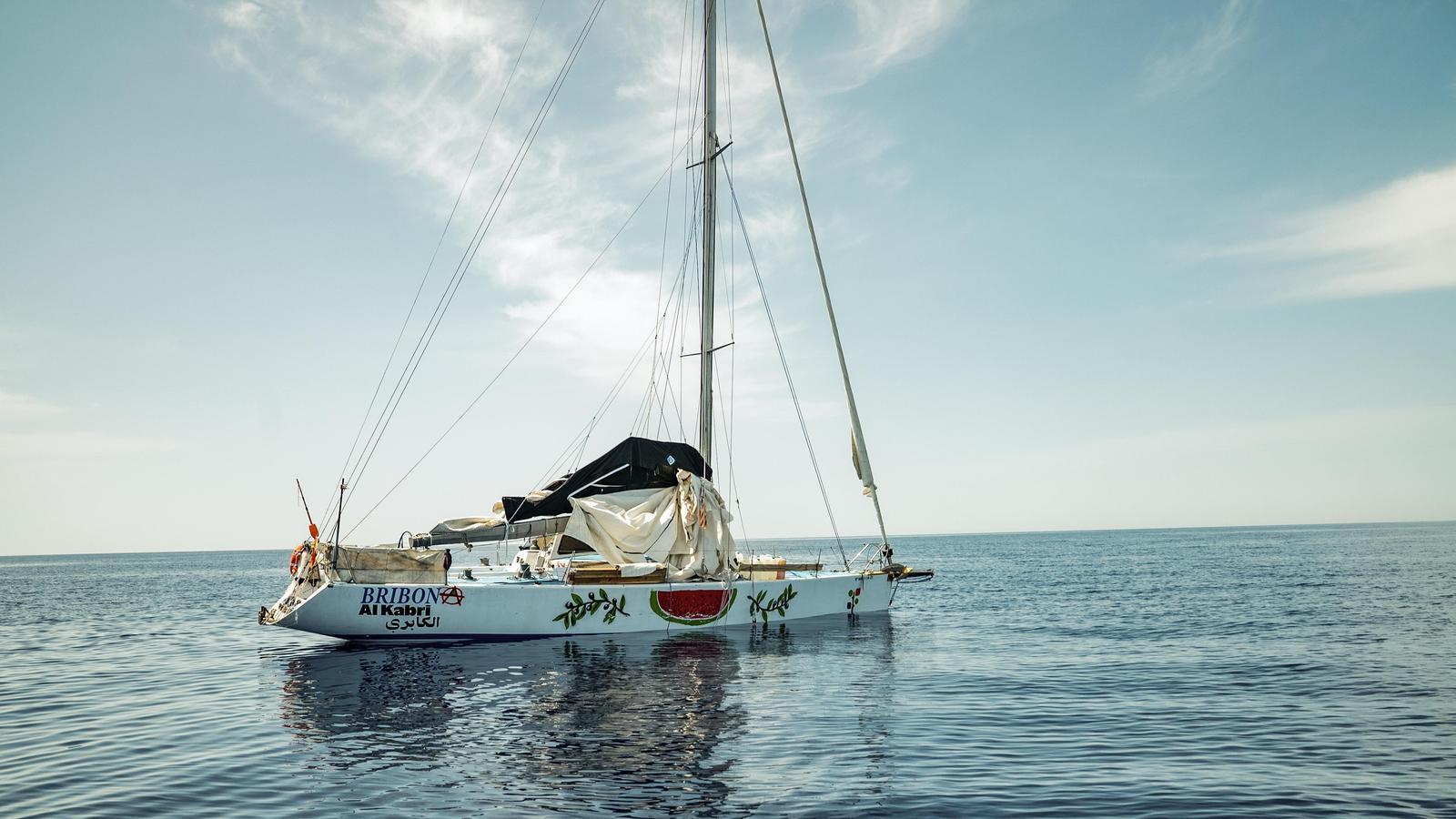
The operation was repeated, according to testimonies from different vessels that the ARA has been able to speak with, on a total of 22 boats, which were left empty adrift, destroyed. Among them was the Bribona, which had belonged to King Juan Carlos I and was ceded to the Flotilla by a company. In the assault, the soldiers broke the sails, disabled the engines (in some cases using angle grinders) or opened water inlets.

The last boat boarded was the Tam-tam. At dawn, soldiers assaulted them and damaged the engine, but left them adrift. One of its crew members explained that they were shot at "at least three times in the hull". "But they left, we saw the boats going from one place to another, and around three in the morning they boarded us, pointed guns at us, and ordered us to get our passports and medication. When it seemed like they were going to take us, they abandoned the boat and told us to go back to Barcelona," he recalls.
Everything indicates that the Israeli military operation was interrupted because it became day. They were left adrift without communication until another boat, which had had technical problems before the assault and arrived in the area at dawn, found them. Later they were rescued by the Open Arms, who checked all the abandoned boats to verify that no one was left. They tried to tow those in better condition, but a strong storm prevented them from leaving them at sea. At this point, the rest of the Flotilla boats enter the territorial waters of Greece, on the coast of Crete: there were 35 boats left, in addition to the Greenpeace and Open Arms observer boats.
April 30th in the morning
Judit Piñol, an activist from Terrassa per Palestina, recounts that when they arrived at the Israeli ship where all the captured participants were transferred. they identified them one by one and put a zip tie on their wrist with a number. They describe the place as a sort of open-air prison yard, where metal containers had been installed. Many had to spend the night outdoors, on a kind of mattress, without blankets, with little water and no food. Soldiers separated two participants from the rest of the group after they led some chants.
Israel's Ministry of Foreign Affairs confirmed the capture of the activists and published a video of a moment when they were doing gymnastic exercises, trying to discredit them, and talking about "the Condom Flotilla" after assuring that they had found condoms and drugs on one of the ships.
Javi Aparicio, an activist from Madrid, has recounted the moment Israeli soldiers took the Catalan-Palestinian activist: "During one of the headcounts, they called Saif's name and took him. They used Thiago as an intermediary with all of us. They ordered me to remove the mattresses and I dropped my arms saying I wouldn't cooperate. They locked me in the same container and I saw him lying on the ground with his hands tied behind his back while they stepped on his head. He complained that he couldn't feel his hands and they kicked and hit him and hurt him with scissors. He said he couldn't breathe well".
Afternoon and night of April 30th
According to the consistent testimony of various activists, in the afternoon they hear several explosions and an Israeli squad enters the place where they are captured. They take a new count and through the loudspeaker they call for Abukeshek, who presents himself and they take him away. "It was dystopian: hooded snipers were pointing at us, we were among barbed wire, it was very cold at night and very hot during the day. But we did not stop demanding that the detained comrades be released," recalls the Argentine deputy of Izquierda Socialista Mónica Schlotthauer.
May 1st in the morning
The Israeli government announces that it will release activists in Greece, after reaching an agreement with the Greek government. The members of the Flotilla do not know where they are or where they are being taken, and they demand that Saif also be released. "Thiago approached to dialogue and they subdued him, handcuffed him and took him away at that moment. The rest of us returned to protest," recalls audiovisual technician Koki Gassiot, from the Intersindical Alternativa de Catalunya. At that moment the squad returned and shots were heard. Some sat on the ground, in an attitude of peaceful resistance and received kicks or blows with rifles to make them leave the boat: they left about thirty injured.One by one and with violence they were forced to board a smaller boat, which in a short time transported them in several trips to a port in Crete. All the testimonies consulted agree that they were in Greek territorial waters and that they repeatedly warned the coastguards that Ávila and Abukeshek continued inside the prison-ship. But they could not announce it to the Flotilla organization because they were incommunicado.

The legal teams of the movement have called for an investigation into the responsibility of the Greek authorities in the events. On the same day as the assault, they filed a petition with the Greek Public Prosecutor's Office and the European Court of Human Rights (ECtHR) requesting precautionary measures to allow the Israeli ship to leave Greek waters. The ECtHR has requested explanations from the government in Athens.
