"Security on Earth depends on security in space": Brussels calls for more investment in the space sector
Von der Leyen and Macron demand international rules for space in a summit marked by the boycott of the United States
-
CAT -
CAST
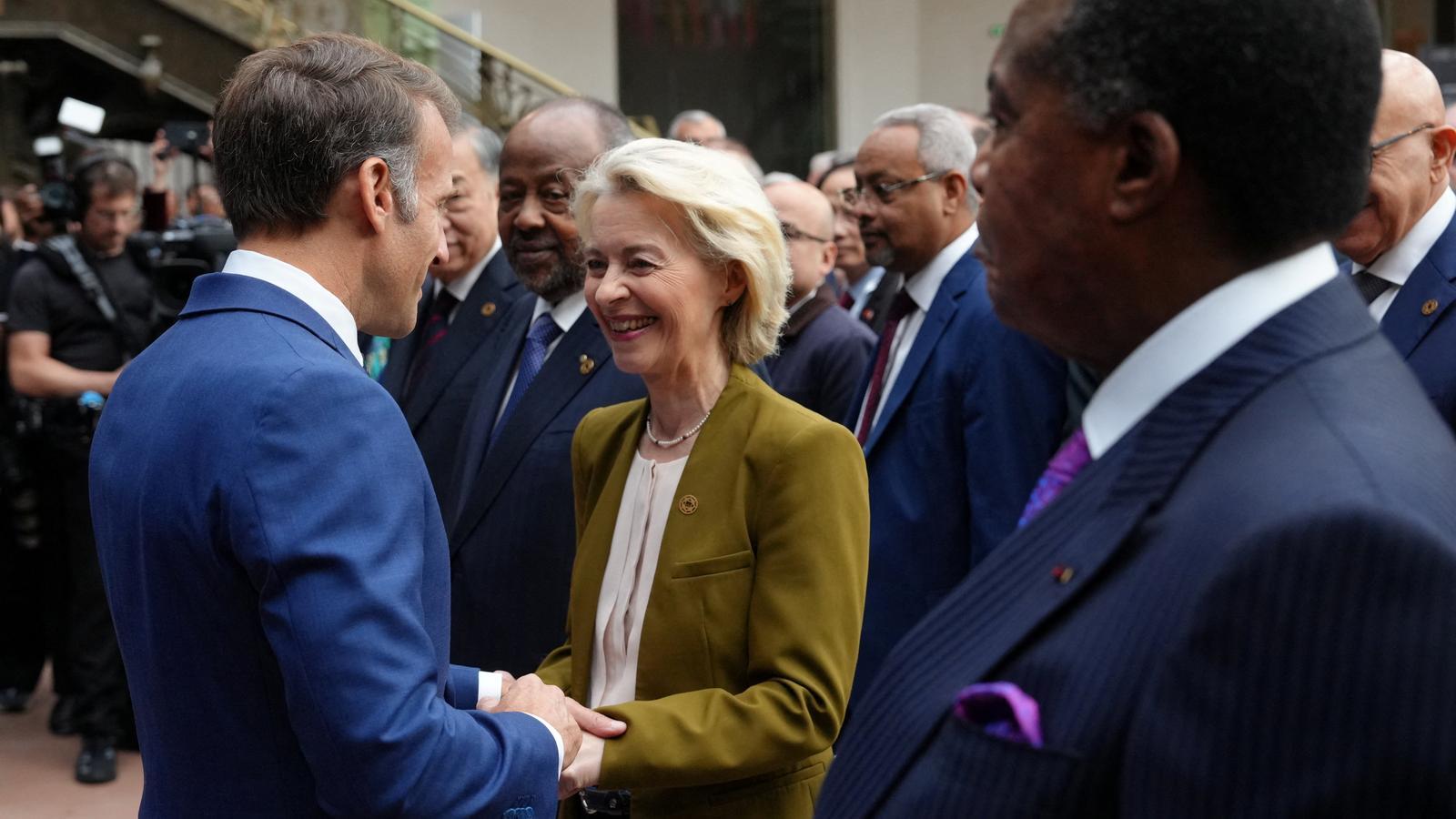
BarcelonaInvestment in the space sector is key to security and independence. With this argument, the President of the European Commission, Ursula von der Leyen, requested this Thursday that the European Union invest "on a large scale" in this sector. In her speech at the International Space Summit being held in Paris, which aims to boost European space autonomy, the head of the European executive warned that space is strategic and that current investments "will determine the competitiveness" of the community bloc in the future. The global space economy is expected to almost triple by 2035, to 1.8 trillion dollars.
Von der Leyen warned that there are "capabilities that are too important to depend on others" and that space technology is key to security and defense. "As Russia's war against Ukraine demonstrates, what happens in our orbits is increasingly central to our security," the European president stated. She illustrated this with two examples from the Ukrainian front itself, where space technology allows for maintaining communication between soldiers and where satellite images reveal troop and armament movements hundreds of kilometers away. "The message is clear: our security on Earth depends more and more on our security in space," the German official insisted.
To address signal interference and spoofing, the President of the European Commission also highlighted efforts in the European Space Shield, with which Brussels intends to combine the capabilities of all member states to improve surveillance and strengthen defense against such attacks. The intention is for this union of capabilities to address the "critical capacity gaps" that the EU currently has in this area.
Von der Leyen stressed that European institutions are already mobilizing 2 billion euros for European space companies and, in the next community budget, space will occupy a central place in the European Competitiveness Fund, she assured. Her executive has proposed allocating 131 billion euros to defense, security, and space, a figure that is five times higher than the funding currently available. "We must maintain our ambition and push this proposal forward because the technologies we fund now will determine the competitiveness of tomorrow," she stated.
International norms in space
In this "new space age", Von der Leyen has called for "robust universal rules for the safe, secure, and sustainable use" of space. She recalled that "space does not belong to any country" and is a "beautiful, yet fragile and shared home". "This is the vision for space that should guide us", said the President of the European Commission, who cited European cooperation as an example of success. "The greatest possibilities of space will only become reality when we work together", she warned regarding the possibility of space disputes.
French President Emmanuel Macron has also joined Von der Leyen's call. "Space remains the only major global common good that is not subject to rules commensurate with what is at stake", warned the French president, who insisted that "shared governance is needed to face these challenges".

In the European sphere, Macron has warned that the space sector is "fragile". "We must be stronger. We must accelerate", the French president warned regarding the need to give a boost to the European space race. Looking to the United States as a mirror, Macron has also proposed building a European front for space launches.
Boycott by the United States
At the Paris summit, which has been attended by representatives from around ninety countries, it is expected that more than 50 agreements will be signed, with investments of 20 billion euros. However, the meeting is being held marked by the boycott of United States companies, and also by the absence of the German opposition leader, Friedrich Merz. Several American companies have decided not to participate in the event due to the "political positions of the European Union".
Among the companies that have withdrawn from the summit are SpaceX and Blue Origin, of Elon Musk and Jeff Bezos, respectively, which reportedly received pressure from the White House not to attend. Stoke Space and Starcloud are also not present. In the case of Merz, who initially co-chaired the summit, his absence has been justified by scheduling reasons, but it has given rise to fueling speculations due to the frictions between Germany and France over defense.
