Rutte threatens with new "ways to convince" Spain to spend more on defense
The Spanish government downplays a future military withdrawal of the United States from the State
-
CAT -
CAST
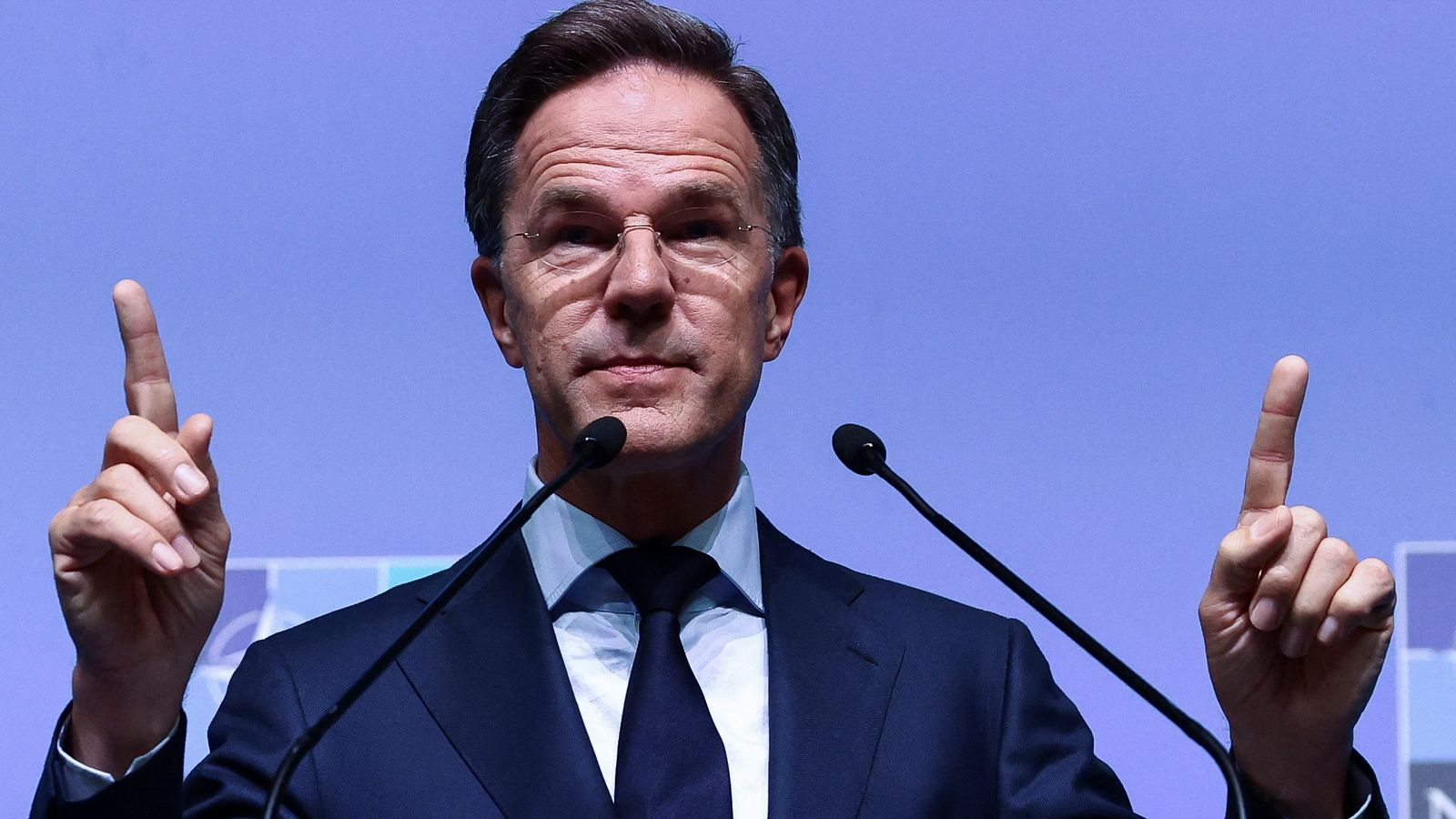
Ankara (Turkey)NATO has no court or coercive power that can force a member state to reach 5% of its gross domestic product (GDP) in military spending. However, the rest of the allies, especially the United States, can exert all kinds of diplomatic pressure, economic and military to pressure countries like Spain, which refuses to accept Donald Trump's demands and wants to stay at 2.1%. And this is what the Secretary General of the Atlantic Alliance himself, Mark Rutte, has hinted that the White House will do against Pedro Sánchez's government.
The Dutch leader paves the way for Trump even before he arrives at the NATO summit in Ankara (Turkey) this Tuesday and Wednesday. At the press conference prior to the leaders' meeting, Rutte congratulated himself that the vast majority of allies are complying with the path of increased spending and military capabilities demanded by Washington, but he lamented – in an implicit reference to Spain – that there are still "one or two who are still to be convinced" and that there are new "ways" for them to eventually give in.
The NATO Secretary General avoided specifying what "ways" are on the table and limited himself to replying that it is a matter within the competence of the allies. Thus, Rutte has taken up the gauntlet from the Trump administration and the warnings it has been issuing for days before the Ankara summit. The clearest in this regard was the United States Ambassador to NATO in Brussels, Matthew Whitaker, who on Wednesday assured that the Pentagon "would benefit" allies who spend more on defense and, conversely, would punish those who allocate less of their GDP to it.
In this way, the White House plans to prioritize contracts and tenders for military equipment, and give more access to American leaders, to governments that comply with the military spending agreement reached at last year's NATO summit in The Hague. For the moment, however, neither Rutte nor Whitaker have wanted to detail what punishments are on the table to apply against allies like Spain. An announcement that Trump himself may make public this Wednesday in Ankara, where he is expected to confront European leaders face to face, according to diplomatic sources from the Atlantic Alliance.

Despite warnings from Trump and Rutte, Moncloa maintains that no more than 2.1% of GDP will be allocated to defense and that Spain will be the only ally that will achieve NATO's military capability objectives without reaching 5%. In fact, sources from the Spanish government downplay the statements of the Secretary General of the Atlantic Alliance and consider that, in large part, the criticisms they receive are due to it being a progressive executive.
The same sources from the Spanish executive celebrate that there are more allies who do not facilitate compliance with NATO's military spending increase path or who, directly, refuse to assume it. In fact, Moncloa claims that Sánchez is no longer alone in the Atlantic Alliance in this regard and points out that, as has happened with the war in Gaza or the criticisms against the US attack on Iran, more and more countries are joining the opposition to the great rearmament demanded by Trump.
Furthermore, Moncloa also reduces the effects of the future punishments that the President of the United States may announce at the summit against allies he considers non-compliant, such as Spain. Thus, sources from the Spanish government assure that a potential withdrawal of US troops or from the military bases of Rota and Morón de la Frontera would not affect security in the territory of the Spanish state in any case, as it would continue to be under NATO's protection umbrella.
Erdogan's "hospitality"
As usual, Rutte began the annual NATO summit's opening press conference by thanking the host country of the meeting. In this case, Turkey. However, what is not usual – and the Dutch leader has overlooked – is that in the preceding days the government organizing the meeting of allied leaders has preventively repressed journalists, activists, and the opposition in general. The Secretary General of the Atlantic Alliance has limited himself to recalling that a democracy not only implies that elections are called from time to time, but that "also, among other things, journalists can be in the press room and ask the questions they want".

At the press conference, various Turkish media journalists asked questions, but some could not even access it because Recep Tayyip Erdogan's government has taken it upon itself to detain information professionals critical of the regime. It has also exercised extraordinary control over the country's public media, and the Turkish Supreme Council of Radio and Television itself has issued a statement assuring that "all broadcasts are supervised, inspected and evaluated with the utmost diligence" for the NATO summit.
In Ankara itself, Turkish police arrested at least one hundred people who were demonstrating against the NATO summit. Furthermore, the security for the meeting is extreme. Normally, at these summits, the area where the leaders meet is cordoned off, helicopters fly overhead, and, among other measures, snipers can be seen on rooftops. In this case, however, the Turkish government has cut off circulation in a large part of the city, has prohibited all kinds of parties and celebrations, has suspended classes and exams, and has given all civil servants a day off. Ankara seems almost like a ghost town in many parts, with only police and military vehicles, shuttle buses for the meeting, and official cars circulating.
