Russia abuses the fight against terrorism to punish dissent
Activists ensure that the Kremlin increasingly uses this label to stigmatize and punish those critical of Putin

-
CAT -
CAST
MoscowOn July 30, Viktor Kalinin, aged 14 years and three months, became the youngest person to be included in Russia's list of terrorists and extremists. His crime: having set fire to a railway signaling system box. Although he stated that he had acted under coercion, the police accused him of terrorism. That same day, Pavel Durov, founder of Telegram, was also accused of collaborating with terrorism, in the latest episode of his war with the secret services.
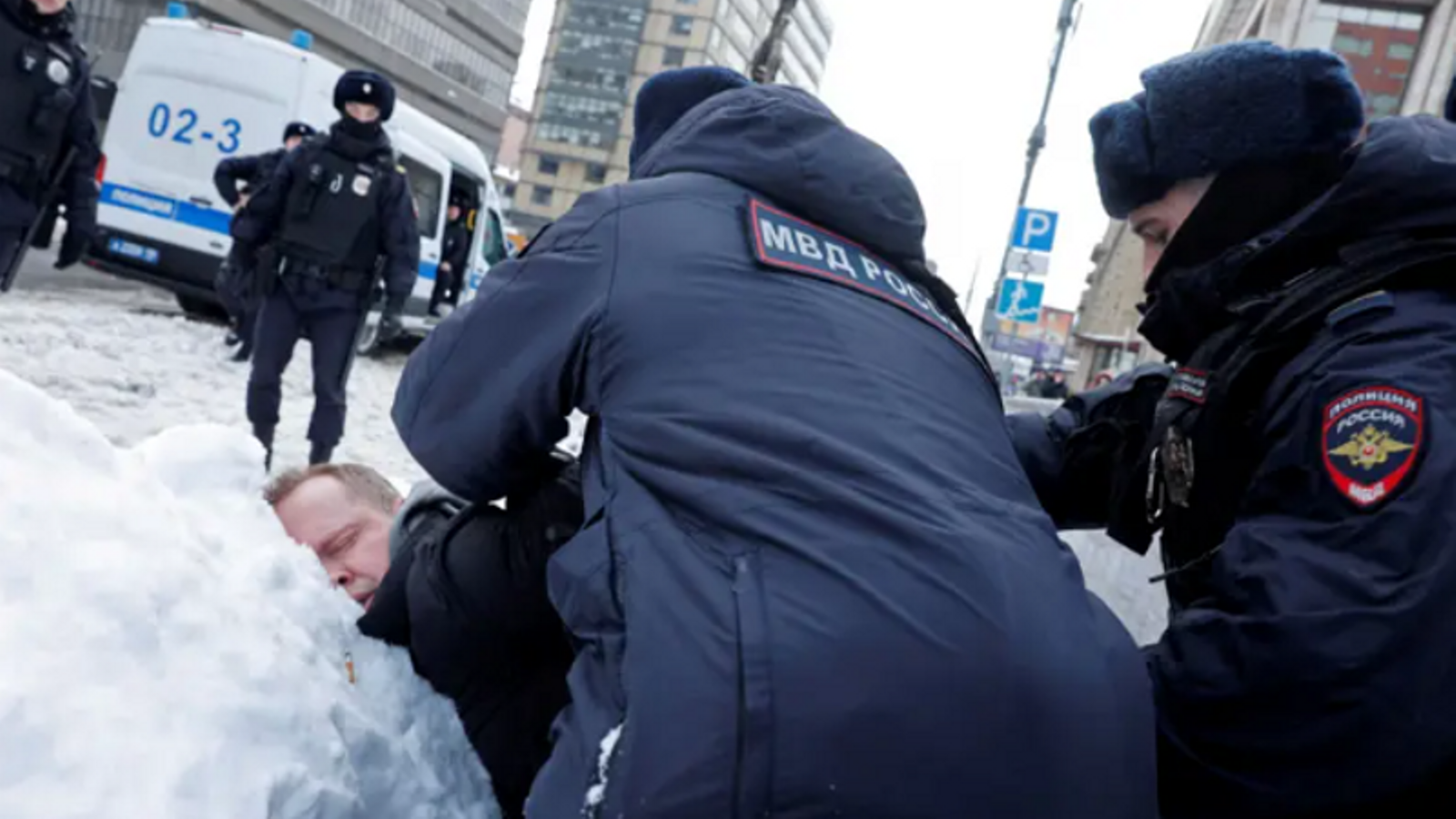
These two examples show to what extent the Kremlin is twisting legislation against violent radicalism to suppress expressions of dissent, a trend that has intensified since the invasion of Ukraine. According to experts, this category allows for the stigmatization of the guilty, the imposition of harsher sentences, and the intimidation of society.
Of the 22,000 people labeled as terrorists and extremists, 5,000 have been added over the last year. The rate of daily registrations is 44% higher than in August 2025. Like Kalinin, 493 minors under 18 are part of it, and of these, nearly a hundred are no older than 16. It is also estimated that between 15% and 20% of the new cases have a political motivation.
Regarding convictions, a study by activists from Pervi Otdel and Parubets Analytics has counted more than 1,200 in the first six months of 2026, 58% more than in the same period of 2025. This allows them to state that this will be "the year with the highest number of convictions for terrorism cases in the entire history of the modern Penal Code".
Sergei Davidis, head of the project to support political prisoners at Memorial –an entity considered extremist–, denounces to ARA the "growing" use by Russian authorities of articles regarding extremism and, especially, terrorism. Regarding sabotage, he warns that they are usually failed attempts to damage state facilities and that it would be "legally more appropriate" to prosecute the perpetrators for destruction of property. Instead, he laments, they are given "disproportionately high" sentences for crimes that "have caused practically no damage".
However, it is not necessary to resort to violence to apply anti-terrorism legislation. 29% of the convictions handed down since January 2026 have been for justification, propaganda, or incitement to terrorism. According to Davidis, "any criticism of those in power can be classified as extremism if there is a will to do so". In this way, he adds, the mere act of expressing rejection of the authorities can amount to extremism and, increasingly now, to terrorism.
Opponents and jihadists
The Kremlin also has a register with more than 850 extremist or terrorist organizations, which includes the Anti-Corruption Foundation, by Alexei Navalny, the company Meta and the international public LGBTI movement. Together with these entities, there are also jihadist groups such as Al-Qaeda or the Islamic State, while in 2025 the Taliban were removed from the list. The main purpose of putting peaceful associations and violent terrorist groups in the same bag is to cut off their means of subsistence in Russia and lead them to civil death. This explains the hundreds of cases of people detained and imprisoned for making contributions to Navalny's foundation, such as a German resident of Saint Petersburg, who was arrested for having made a contribution of 900 rubles (about 9 euros).
At the same time, the secret services pursue everyone who makes positive comments about the Ukrainian army, or who finances some of its units, such as the Azov battalion, whose members are considered terrorists just for belonging to it. Davidis finds it "scandalous" that anti-terrorism legislation is used against people "simply for the fact of serving in their country's armed forces and defending it against aggression". This stance led him to be personally labeled as a terrorist in 2024, and to receive a six-year sentence in absentia because he was in the European Union.
The activist maintains that the main objective of this distortion of anti-terrorism laws is "stigma". If people who criticize the war, the army or Putin are persecuted, he points out, everyone understands what the charges are, but when these other crimes are added "the matter becomes much more difficult to decipher, and this produces a much more terrifying impression on society". He explains that the meaning of the repressions is above all to "send the message of what is the correct behavior and what is the incorrect one" in the eyes of the state and "that people are afraid of being punished".
Terrorism charges also imply longer sentences and worse prison conditions. Davidis, however, warns that one does not need to end up in a penal colony to suffer the consequences of being linked to terrorism. "People included on this list experience strong restrictions on their civil rights, even when they are at liberty," he notes. From his perspective, this drift in Russian justice "has completely emptied the concept of terrorism of its content." The Russian state, he concludes, "has ended up harming itself." The absurdity of these accusations entails a loss of credibility, not only with Interpol, but even with the Russian citizens themselves.
