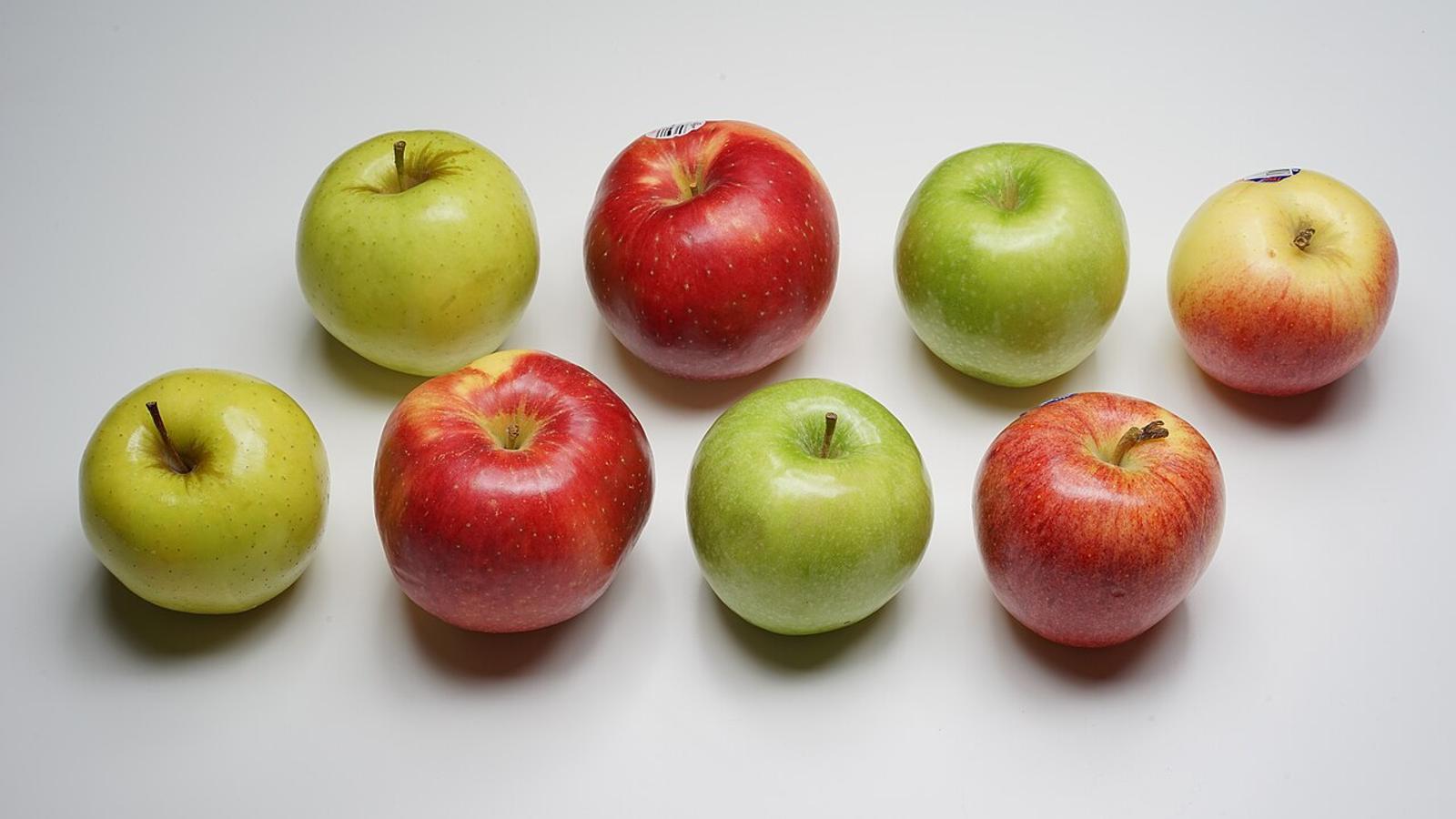
If I tell you to imagine an apple, what do you see?

-
CAT -
CAST
BarcelonaIf I tell you to close your eyes and imagine an apple, what do you see? For most readers, a spherical shape will appear that may be red or green or yellow, more or less clear and more or less fleeting. But there are people who will not see anything, despite knowing what an apple is and being able to describe one. This is called aphantasia, a term coined some years ago by the neurologist Adam Zeman, who gave a name to a phenomenon that Francis Galton, cousin of Darwin and a pioneer in the study of individual differences, had already detected in 1880 when he asked several scientists to imagine the breakfast table and some replied that they did not understand the question. Aphantasia is, therefore, the inability to generate voluntary mental images, and it is not a disease, but a way of thinking that affects about 1% of the population. At the other extreme, we find hyperphantasia, which is the ability to think in images with almost perceptual vividness.
Some time ago I spoke here about the concept of neurodiversity, that is to say, about how there is not a single correct way of thinking or learning, but rather that neurological differences are normal variations of the species; and about how we can transfer this to literature, where it is often considered that the "real" writer is one who writes novels or essays, and not short stories or articles, as if the difference were a deficit. Aphantasia allows us to pull this thread: since 99% of the population can create mental images, it is assumed that this is what happens to all of us when we read. Joseph Conrad, in fact, wrote this in the prologue of one of his novels, as a manifesto: the writer's task is, first and foremost, to "make you see." However, although it may seem surprising, there are aphantasic writers. John Green, the American author of The Fault in Our Stars (Fanbooks, translation by Laia Font Mateu), discovered he was one as an adult, when he stumbled upon the apple question on Twitter: until then, he believed that visualizing meant thinking about the words and feelings associated with something, not actually seeing an image inside the mind. For his part, the British novelist Mark Lawrence explains that, when asked to imagine a horse, he does not see any, but rather a network of everything related to a horse. Paradoxically, critics have praised his books for the vividness of their images.
And just as there are aphantasic writers, we also find aphantasic readers. A study from Radboud University, in the Netherlands, compared aphantasic readers and typical readers with the same story, and found that the former were less engaged with the story and the characters. At the same time, they valued the plot and language more than the landscapes, but they read as many books as the others and liked the same genres.
As we see, there is not just one type of reader, but many, each with their own way of converting written words into experience. And, in the end, this is the very condition of literature and its true richness: that one same text can represent as many things as there are diverse minds reading it.
