john a. powell: "People don't care about democracy: they need someone to make them feel safe"
Professor at Berkeley

-
CAT -
CAST
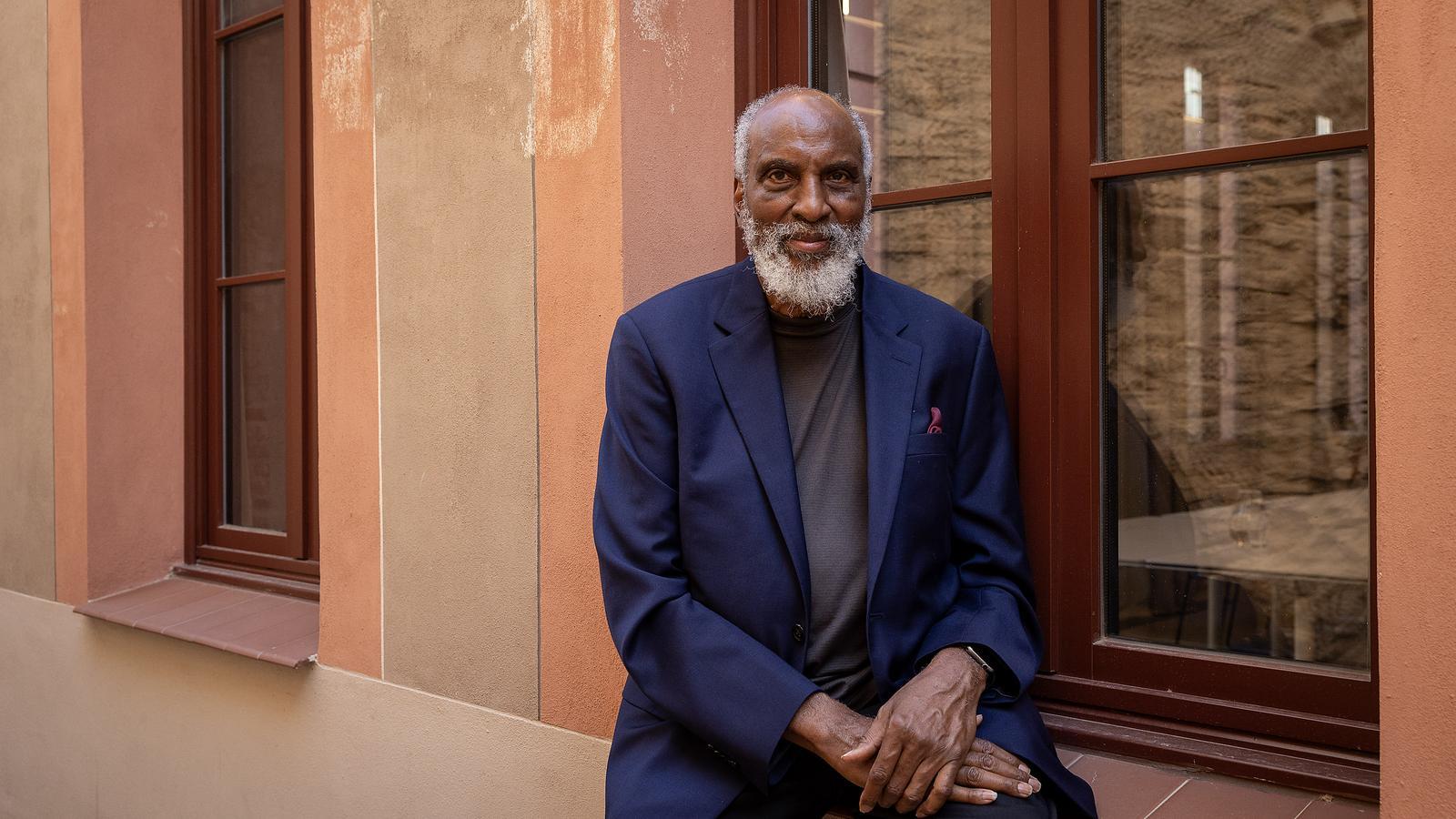
Barcelonajohn a. powell (requests his name be written in lowercase) is the Director of the Othering and Belonging Institute at the University of Berkeley and Professor of African American Studies, Ethnic Studies, and Law. He visited Barcelona at the invitation of BCN4PEACE, the alliance of the Catalan Institute for Peace Studies, Novact, and the Delàs Centre.
Do you see a civil war in the United States?
— It is difficult to say. Trump's popularity is falling: it is now at 36%-37%. Some of his big supporters, part of the MAGA movement, are abandoning him, like Tucker Carlson or Marjorie Taylor Greene. And it is too early to know what will happen. The midterm elections will be very important. Today's Republican Party is no longer really the Republican Party of before. It is Trump's party. Trump is not a conservative: he is a right-wing radical. He has surrounded himself with people who, in reality, do not believe in American values: equality, treating people with dignity, due process, democracy, respect, things we take for granted. Elon Musk says he is worried about white people; Peter Thiel says that perhaps democracy is a bad thing.
Are the United States no longer a democracy?
— The best we can say is that they are not a strong democracy. When the country was born 250 years ago, both the Constitution and the Declaration of Independence spoke of "we the people." But most people were excluded from this "we": women, Black people, white people without property could not participate. Therefore, "we" was really a small group. And over the last 250 years, with advances and setbacks, we have tried to include more and more people. Now the United States Supreme Court has dismantled a large part of voting rights. And now there are Republican states redrawing electoral maps so that many Black people can no longer effectively express themselves through voting. Democracy is when the people choose the leaders. But when leaders choose the people, when leaders decide who votes, that is not democracy.
Or kidnap a president in Venezuela, attack Iran...
— The Constitution of the United States says that only Congress can declare war, not the president. Congress has not declared any war. So, what are we doing? Trump doesn't even explain to the American people why we are at war. And, therefore, the war is illegal. Trump violates international law and anyone who opposes him, like when Spain said they couldn't use their airspace, is punished. Trump has created a cult: the world is a place of uncertainty, and this generates anxiety in people, who are worried about the future. And sometimes this produces an authoritarian, autocratic leader. People don't care about democracy. They just want someone who makes them feel safe. Therefore, our democracy is now faltering.
What is happening between the Trump administration and universities?
— I am at the University of California at Berkeley, which, according to some, is the best public university in the world. What Trump has done is threaten people. We need people from the university, from law firms, from industry, from tech companies, from the community, from schools, to defend our values. What Trump says is: "If you stand up, we will punish you." He threatens to take all their money. And people have been afraid. So what he has done is govern not out of respect, but out of fear. Many universities and law firms, places where we expect the rule of law and American values to be deepest, have capitulated. But there have been counterexamples. I would have liked universities to have done more.
For fear?
— North Americans, like many"advanced democracies", are uneasy about demographic changes. Immigration is absolutely necessary and completely impossible. We need immigrants in the United States. And, at the same time, we don't want them. Trump says to people: "Are you anxious about the future? It's because of those people from Haiti, those people from Nigeria, those people from Turkey." He wanted an opportunity to send in the army and crush people. But when ICE went to Minnesota, everyone, not just immigrants but also white people, black people, Latino people, came together and said: "They are our neighbors. They teach our children. They take care of our parents. They are not drug dealers. They are not criminals." They take care of each other. They stood out in the freezing cold, saying: "You can't take the children out of school." And that completely changed the tone.
How does racism relate to authoritarianism?
— It's not just racism: it's the process of othering. In the United States it has to do with race. In India it's between Muslims and Hindus. In South Africa it's based on tribes. And in Rwanda it had to do with how many cows each community had. We other people and we start telling complicated stories about them: we don't get a story from them, we get a story about them. And so we say Haitians eat our cats. This is just a story, but it taps into our fear. The future is scary. We've just been through a global pandemic, climate change, artificial intelligence technology... And autocratic leaders come with their playbook: "We're not going to lead you into the future but into the past, into how things used to be. You don't have to worry about the future, but about that other one." Sometimes it's immigrants, sometimes it's the gay person, sometimes it's the Muslim. The oldest part of the brain is called the amygdala. It's where fear and anxiety are regulated. We call it the lizard brain. The lizard brain doesn't read reports. It doesn't care about facts. It only cares about survival. And what intellectuals do is try to be rational in the face of fear. But that doesn't work. We have to listen to people. There's a Zulu word, sawubona, which means: "I see you. I see your humanity." How do we get people to find each other? That's what we call building bridges. And not bridges just from the prefrontal cortex, but also from the heart.
What does belonging mean?
— In reality, all of human history has been about belonging. Whether we talk about the nation-state, which is about 500 years old, or the Church, which is thousands of years old, it has always been about creating ever-larger 'us'. Part of that is continuing to expand, telling a different story, and not pitting people against each other, not creating a zero-sum game where I win and you lose. This doesn't mean we agree on everything. But even when we disagree, and even when I can't build a bridge with you, I won't break the bond. I won't deny your humanity. I won't deny your dignity. I won't deny your worth. I won't deny that we are all interconnected.
