The surprising ranking of the municipalities where housing has become more expensive
The crisis expands beyond Barcelona: prices rise 63% in municipalities of more than 5,000 inhabitants

-
CAT -
CAST
BarcelonaThe rise in housing prices is not a problem exclusive to Barcelona and its metropolitan area. In Catalan municipalities with more than 5,000 inhabitants, the value of the built square meter has increased by almost 63% on average between 2015 and 2025. L'ARA has compiled a ranking of the municipalities where prices have risen the most in the last decade, based on sales data collected by the Generalitat.
In twelve town councils, the price has more than doubled. And, in 100 out of the 203 analyzed, the amount has increased by more than the average of 63%. In perspective, the average gross salary in Catalonia has risen by 30% until 2024, the last year with available data.
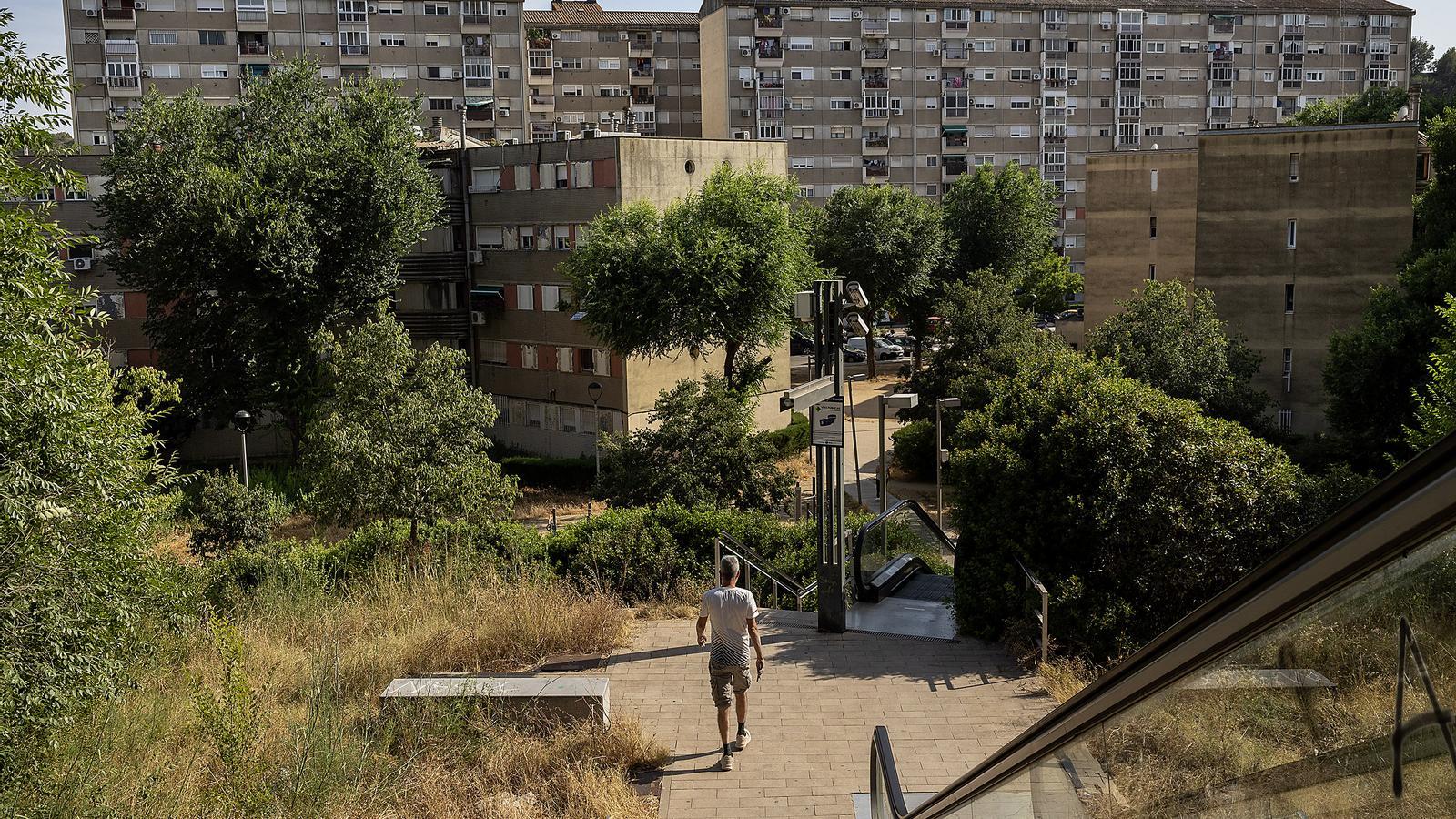
Badia del Vallès is where housing has become most expensive, at 168.3%. Therefore, a 81 m² flat – the average size of homes purchased in the municipality – that ten years ago cost €49,000, was bought last year for €132,430. It is a very exceptional case clearly marked by the entry into the free market of a large volume of protected housing.
Argentona (120.26%) is the second municipality where prices have risen the most, followed by Viella (112.39%), Arenys de Munt (110.61%), and Anglès (110.33%). Llinars del Vallès (108.34%), Montmeló (105.84%), Esparreguera (103.72%), el Masnou (101.65%), Sant Cugat (101.18%), Martorell (101.1%), and Esplugues de Llobregat (100.37%) complete the list.
In contrast, in Barcelona housing has become 61.49% more expensive, slightly below the average. However, it is the third municipality with more than 5,000 inhabitants with the highest price/m²: on average, €4,797.02 has been paid. Sant Cugat del Vallès has snatched the second place from it, which it held ten years ago, when the m² in the Catalan capital cost €2,970.6. Sitges occupies the first place on the podium with €5,378.43.
Jaime Palomera, researcher at the Barcelona Urban Research Institute (Idra), believes the data suggests "a territorial extension of residential pressure, rather than an exclusive concentration in the Catalan capital". "The housing crisis has become widespread everywhere, but it takes different forms depending on the territory," he concludes.
The director of the Chair of Decent and Sustainable Housing at UPF-BSM, Ramon Bastida, warns that, in cities like the Catalan capital and the metropolitan area, "prices continue to rise, but in percentage terms, growth may not be as high" and calls for "taking into account the starting price per square meter".
Which are the most expensive municipalities?
Although prices have soared in municipalities that do not usually make housing headlines, the most expensive town halls remain the same as ten years ago. Sitges leads the podium and, in addition to Barcelona and Sant Cugat del Vallès, there are also Castelldefels, Sant Just Desvern, Esplugues de Llobregat, Alella, Vilassar de Mar and Tiana.
Beyond these, the upper part of the list abounds with municipalities on the Maresme coast: el Masnou, Teià, Montgat, Sant Andreu de Llavaneres and Sant Pol de Mar, among others. Cities close to Barcelona also proliferate here, such as Sant Joan Despí, Sant Feliu de Llobregat, Molins de Rei, el Prat de Llobregat, Cerdanyola del Vallès, Badalona, l'Hospitalet de Llobregat, Sant Boi, Cornellà or Sant Adrià de Besòs. Finally, among the most expensive municipalities in Catalonia are icons of the Costa Brava: Platja d'Aro, Calonge i Sant Antoni, Tossa de Mar, Palamós and Roses.
A double drag effect
Many of the municipalities where the cost of housing has soared are suffering the consequences of the serious crisis plaguing Barcelona and its surroundings, agree the experts consulted by ARA. The associate director of the Observatory of Dignified Housing at ESADE, Raluca Cosmina, summarizes: "The city ends up expelling you and you go to the outskirts".
Although there is no causal relationship, the municipalities closest to Barcelona tend to register more accentuated price increases. Mathematically, the link between two variables is expressed by the coefficient of determination: if there is a perfect causality, the result is 1, while if there is no relationship, it is 0. In this case, the coefficient between the price increase and the proximity to the Catalan capital is 0.242. The scatter plot accompanying this article visually shows the relationship between the two variables. The price hikes are concentrated in municipalities close to the capital.
The housing referent of the Metropolitan Strategic Plan of Barcelona (PEMB), Luisa Fernanda Pinto, underlines that "Catalonia is a territory of polycentric metropolises", where there are several urban centers that condition the dynamics in the surrounding municipalities, for example Granollers, Mataró, Sabadell or Vic. "The surrounding towns suffer a double dragging effect: they receive the pressure of those who can no longer live in Barcelona, and the pressure of their own county center", states Pinto.
Experts consulted by ARA insist that there are many other factors that explain the differences between municipalities, such as the pressure of tourism on the residential market or the proliferation of second homes in each municipality. For Palomera, "the increase in prices seems to respond above all to its own dynamics", such as population and household growth, the scarcity of affordable housing and a "growing" use of housing as an investment asset.

The peculiarities of Badia del Vallès
Leading the housing price increase in Catalonia with an increase that is absolutely out of the norm (168.3%) is the latest of the particularities of Badia del Vallès. Next to the campus of the Autonomous University of Barcelona and a few kilometers from Sabadell, when Badia del Vallès was born, all the homes in the city were official protection housing. The majority lost this qualification in 2023.
Badia has no business activity and has just over 13,500 inhabitants, about 400 more than ten years ago, but far from the 26,000 that fit into 0.93 kilometers in the seventies. In an article in ARA in mid-last year, real estate agents assured that rents were already "through the roof" and that "investors" had begun to arrive, something "unthinkable" until then.
The municipality aims to attract residents with different profiles to change its social reality: 30% of the inhabitants are over 65 years old and its registered unemployment rate is 70% higher than that of the region, while, on the other hand, the immigration rate is practically half.
