The bombings intensify in the Gulf and the US and Iran threaten each other with returning to a worse war
Tehran attacks Washington bases in Bahrain and Kuwait and Trump warns that the Persian country "will cease to exist"
-
CAT -
CAST
BarcelonaThe last few hours in the Middle East have once again been far from a ceasefire. Since Friday, the United States and Iran have been exchanging attacks in the Gulf, around the strategic Strait of Hormuz. This adds more tension to an escalation that threatens to break the path of negotiation to end a war that, despite supposed truces, has been going on for four months. The uncertainty about the future of the region is once again accentuated.
The ayatollah regime, emboldened by the outcome of the conflict, bombed U.S. bases in Kuwait and Bahrain with drones and missiles during the night of Saturday to Sunday, in response to the attacks that the United States also carried out this weekend against Iranian territory. Both Washington and Tehran accuse each other of breaking the ceasefire and making the memorandum of understanding signed between the two countries to end the war into a dead letter. The Iranian regime said this Sunday that it will act "more firmly than before" against ships it considers offenders in the Strait of Hormuz. Tehran, in fact, demands to be solely responsible for coordinating transit in this strategic passage, at least until a new agreement on the control of this route is negotiated, which is essential for global maritime trade and has become the epicenter of the third Gulf War.
The new crisis was triggered after Washington accused Iran on Friday of attacking a merchant ship in the Strait of Hormuz, epicenter of the third Gulf War. The United States responded on Friday night with attacks against missile and drone depots and against Iranian radar systems. Tehran denounced a "flagrant violation" of the agreement reached in mid-June and has been responding with more attacks, which Washington also contests.
"These savage attacks, which constitute a flagrant violation of Article 2, paragraph 4 of the Charter of the United Nations, as well as an express violation of the first clause of the memorandum of understanding for the end of the war, demonstrate that the American regime does not grant the least value or credibility to its commitments," reads a statement released by the Iranian Revolutionary Guard, which has threatened to abandon the ceasefire agreement if U.S. offensive actions continue.
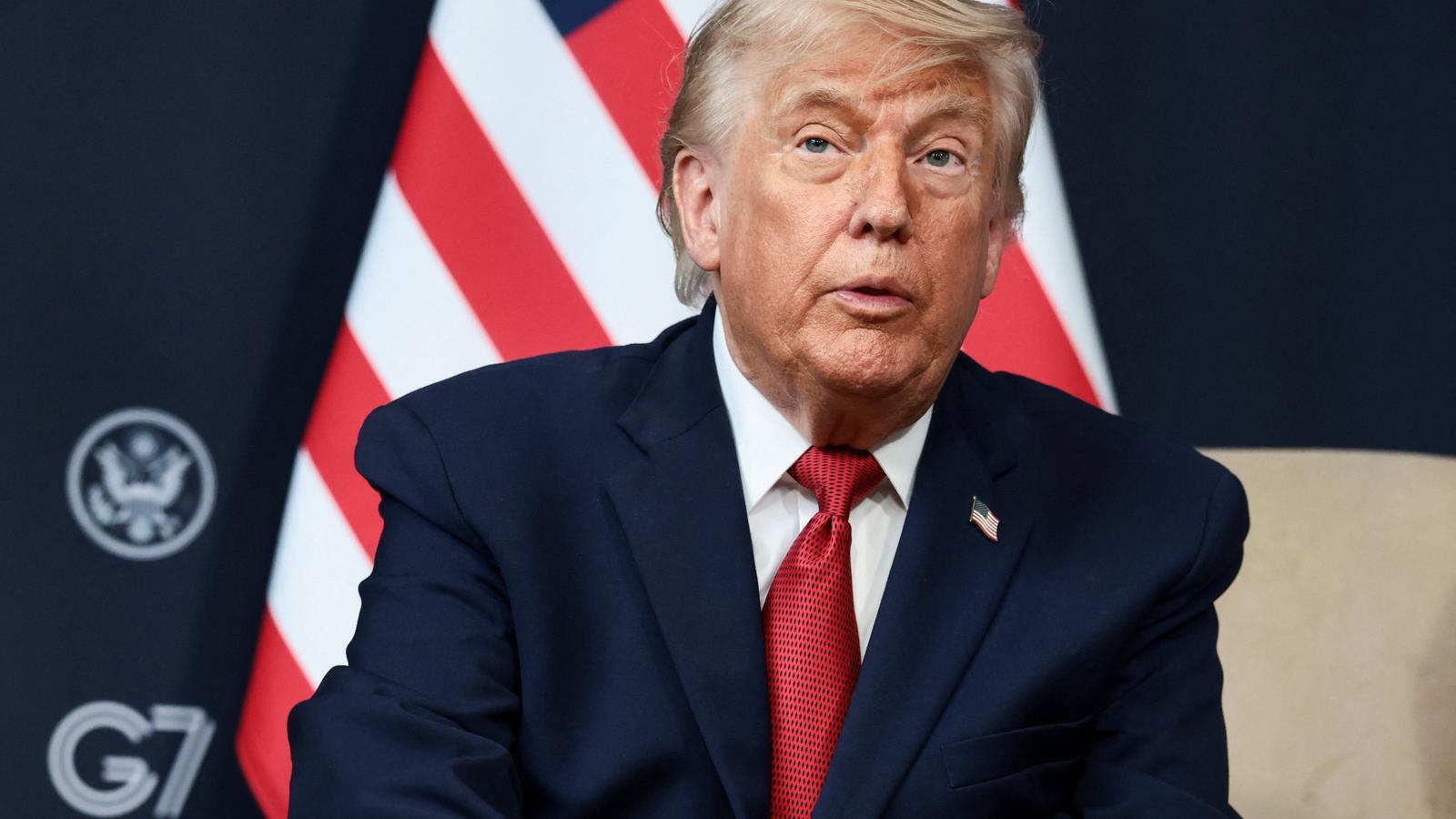
From the White House, the threats have also intensified. On Saturday, U.S. Vice President J. D. Vance warned the theocratic regime that it will respond to violence with more violence. "Iran signed a ceasefire agreement. We have respected it. If they have disagreements about how the memorandum of understanding is being applied, they can pick up the phone – he wrote on X –. Violence will be met with violence." And hours later, President Donald Trump sounded even more forceful on his social network, Truth Social: "It is very possible that they will never learn! A time could come when we can no longer act with reason and we are forced to complete the task we started with great success through military means. If this happens, the Islamic Republic of Iran will cease to exist!".
Hormuz, the epicenter of the war
Beyond the continuous violations of the ceasefire by Israel with its attacks on Lebanon – a fact that Tehran repeatedly denounces – Washington argues that the Iranians were the first to break the agreement, with Thursday's attack on a cargo ship of the Taiwanese shipping company Evergreen and, on Saturday, against a tanker loaded in Qatar. The Iranians, however, consider that they have the right to adopt these measures and to manage transit through the Strait of Hormuz, in accordance with their interpretation of the ambiguous wording of the fifth clause of the agreement.
"After the signing of this memorandum of understanding, the Islamic Republic of Iran undertakes to carry out all necessary preparations to ensure the safe passage of merchant ships – free of charge for sixty days – from the Persian Gulf to the Sea of Oman and vice versa. The transit of merchant ships will begin immediately and, taking into account the need to remove technical and military obstacles, the Islamic Republic of Iran will begin mine clearance within thirty days," the text states.
"This responsibility rests with the Islamic Republic of Iran. There is no other party or other state involved. This is completely clear in the memorandum of understanding, and any intervention or unilateral action will aggravate the situation and delay the reopening of the strait," Iranian Foreign Minister Abbas Araghchi pointed out during an official visit to Iraq.
In recent days, both Tehran and, above all, Washington had celebrated that the reopening of Hormuz was a fact, although reality clashed with these triumphalist pronouncements: the flow of ships crossing the strait was still very, very far from the usual pre-war traffic. The blockade remains almost intact on the northern route, the main one that runs along the Iranian coast. On the other hand, traffic had increased considerably in recent days via the southern route, which runs along Oman's territory. In fact, throughout the week, traffic through Hormuz had been growing until it reached almost 50% of pre-war levels, and more than half of the cargo ships used the southern route to leave the corridor. On the northern route, however, traffic had been reduced mainly to the use of ships flying the Iranian flag.
