Sometimes I have parents in front of me to whom I have to say things they don't like
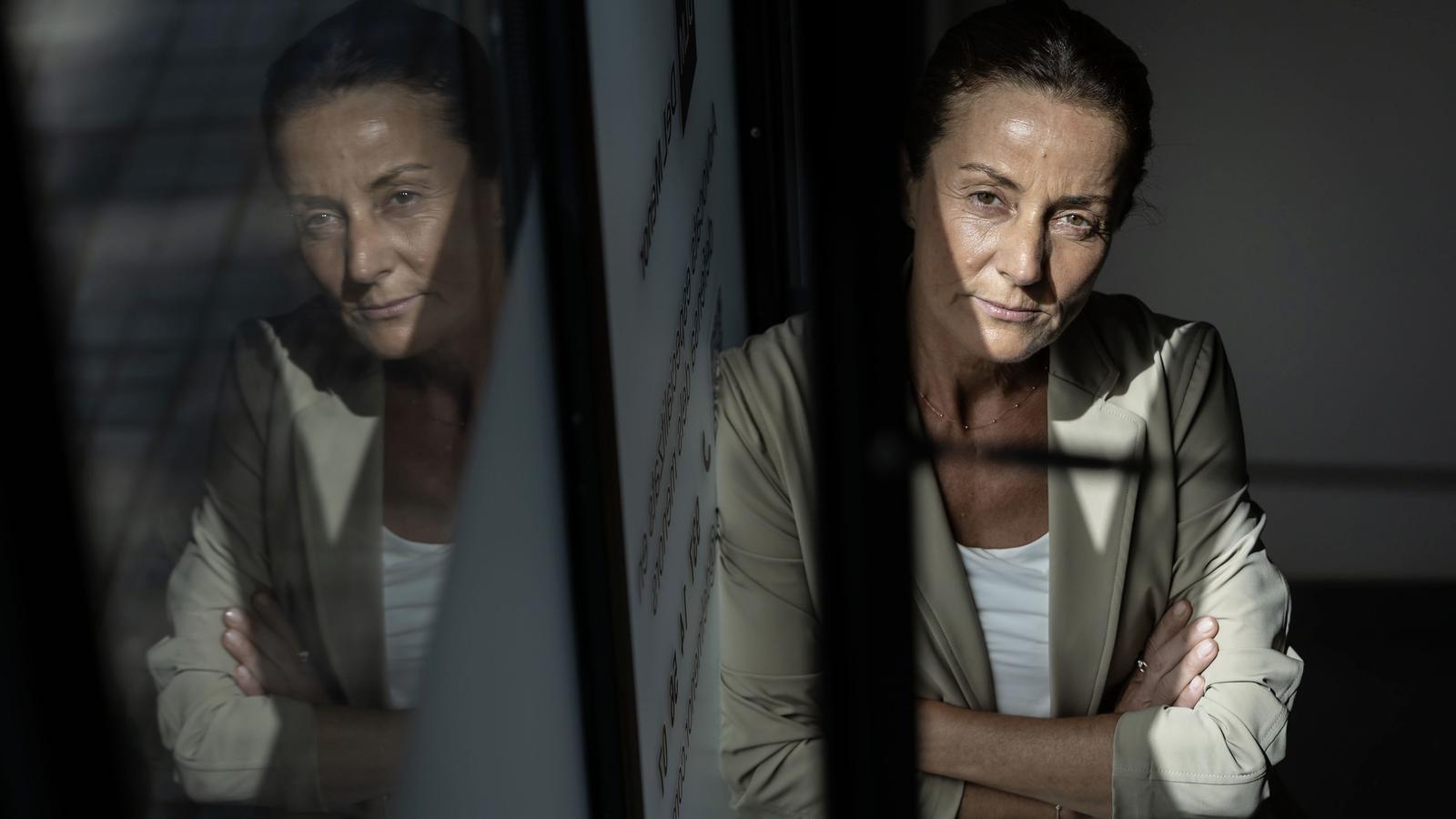
Marta Vergés is a children's lawyer and works with two very clear red lines with the objective of promoting reintegration
-
CAT -
CAST
BarcelonaMarta Vergés is a lawyer specializing in minors, but she has two very clear red lines. The first is that she only represents minors whom she has to defend; she never brings accusations, because she says she feels "unable" to accuse a teenager. However, she never defends the same teenager twice. All the young people she helps know this condition, which she uses to encourage them not to reoffend: "When defending a minor, there is a very high degree of hope for social reintegration, and that is what I love about my job," she explains.
Unlike the ambition to "win trials" that she says reigns in criminal jurisdiction, she explains that she tries to approach her legal defense as a learning process: "When they come to the office with their parents, I tell them: 'Let's try to approach this as a mistake.'" Vergés explains that she highly prioritizes agreements with the accusers, which require the accused to admit the crime they have committed and usually result in a reduction of the sentence or, in juvenile jurisdiction, of the security measures that will be imposed on the offender.
"Obviously, both the victim and other people will think that this mistake has very harsh consequences, and it's true. But I understand that imposing a very harsh sentence on a young person often doesn't make them reflect, and nobody wins," says the lawyer. In fact, she warns that a measure involving confinement in a juvenile center can lead them "to enter a world from which it is sometimes complicated to get out." She insists that educational measures have a better prognosis than confinement: "If you approach it as a mistake and don't penalize them too much from the outset, there are more options for them to find a way out."
Vergés also insists on praising the way the specialist judges and prosecutors for minors in Barcelona work, and emphasizes that, in addition to the crime committed, they also analyze the family situation and the adolescent. A fact that, he assures, "greatly humanizes" the treatment of justice in this jurisdiction specialized in minors.
In fact, he considers that for adolescents, "sometimes it is an opportunity to enter the juvenile justice system", especially by receiving specialized psychological attention, in many cases for the first time. He assures that he has often found adolescents who have not had disorders, such as autism, detected until they have been attended by the team of juvenile justice psychologists.
"Of all profiles"
The role of families also stands out, which she reiterates are "of all profiles". "This is not about social classes, it's very important. I've had business owners tell me: 'I'm managing thousands of workers and I'm not able to manage my son'", assures the lawyer. She explains that she has most often found herself in her office with "people who are very busy, who focus on their work" and who forget that "at the age of adolescence, especially in children with specific personality traits, a lot of attention is needed".
As a lawyer, her work focuses on the adolescent she represents, but since they are minors, the relationship with the family is essential. "Sometimes I have parents in front of me to whom I have to say things they don't like. But always, in the end, they end up understanding it".
