Iran proposes a three-phase plan to the US to end the war
German Chancellor Friedrich Merz believes Tehran is "humiliating" Washington
BarcelonaTehran has taken a step in the attempt to resume negotiations with the United States. Last Tuesday, Donald Trump said he unilaterally extended the truce to Iran, awaiting its leaders to present a "unified peace proposal," using a supposed division in the regime as a pretext. This Monday, Tehran has sent a new proposal to Washington in which, according to American media such as Associated Press and Axios, it commits to ending its blockade in the Strait of Hormuz if the United States also lifts the counter-blockade to Iranian ports and applies a long-term or permanent truce. In the third phase, negotiations would take place on Iran's nuclear program. According to the Lebanese channel, Tehran "refuses to discuss this issue until an agreement is reached on the first two phases." If the US accepts this proposal, Iran will agree to resume negotiations with Washington's envoys.Even so, the fact of leaving the discussions on the Islamic Republic's nuclear program until the end suggests that it could be rejected by Washington, which has stated since the beginning of the war that the main objective is to prevent Iran from developing a nuclear weapon.Hopes for a new round of negotiations between the United States and Iran in Pakistan revived on Friday, but quickly faded again when the Iranian delegation left Islamabad before Donald Trump's envoys arrived. Iran's Foreign Minister, Abbas Araghchi, left the Pakistani capital for Oman, and this Monday continued his tour to Russia.
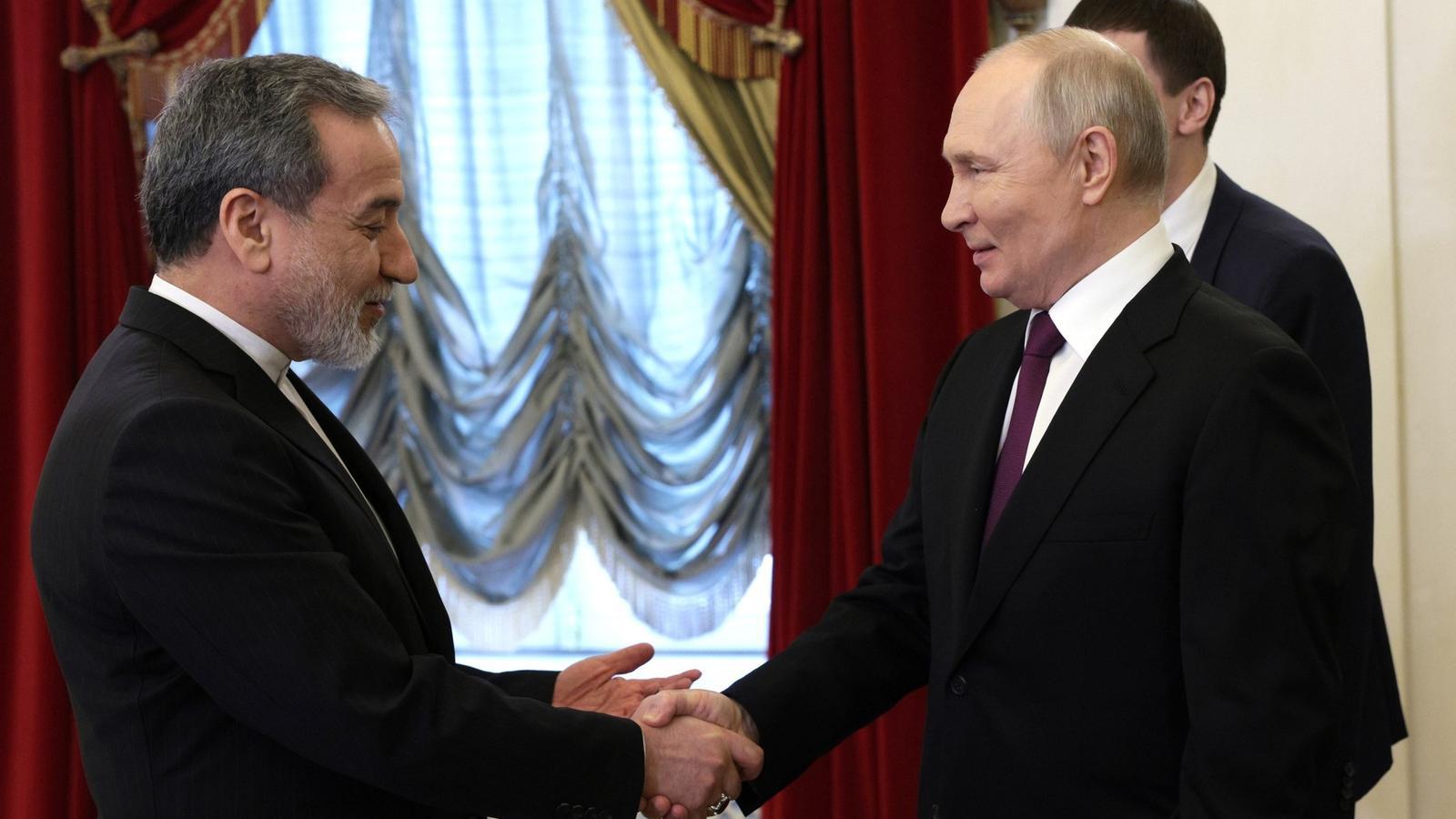
After meeting with Vladimir Putin in St. Petersburg, the head of Iranian diplomacy said that Tehran is studying a request for negotiations from the United States. He stated that Washington has not achieved "a single one of its objectives" in the war and that, precisely because of this lack of success, the American administration would have requested to open a channel of dialogue with Tehran.
Araghchi took advantage of his press conference to highlight his country's resilience, and said that Iran is standing up to "the biggest superpower in the world." Likewise, he pointed out that the conflict against the United States and Israel has served to demonstrate that the Islamic Republic has "great friends and allies," and explicitly thanked the Kremlin for its continued support during this crisis.
The White House has responded that it will not conduct negotiations with Iran through the media. "These are sensitive diplomatic discussions and the U.S. will not negotiate through the press," said White House Deputy Press Secretary Olivia Wales in a statement released by CBS News. "As the president has said, the United States has the cards in hand and will only make a deal that puts the American people first, without ever allowing Iran to have a nuclear weapon," the text continues.
The U.S. is "humiliated"
Amidst all these diplomatic comings and goings, the German Chancellor, Friedrich Merz, has made a very harsh analysis of the situation in Iran and has stated that the ayatollah regime is "humiliating" the United States in the current Middle East conflict. In an address to the students of the Carolus-Magnus-Gymnasium School in Marsberg, in western Germany, Merz criticized Washington's lack of a convincing negotiation strategy.
The Chancellor expressed his concern about the absence of a clear exit plan from the war, and compared the situation to previous failures in Afghanistan and Iraq. According to the Chancellor, Iran is proving stronger than expected by using its ability to delay talks and force diplomatic trips without results, which weakens the position of the United States.
"I don't see a clear strategy. In a conflict, you don't just have to enter, you have to enter and you have to know how to get out," he said. And he added: "In addition to this, the Iranians negotiate skillfully, or they don't negotiate skillfully. They make the Americans go to Islamabad and let them leave without results. With this, the Iranian regime, and especially the Revolutionary Guard, is humiliating the entire American nation".
Merz assured that the conflict and instability cost large sums of money and are directly affecting German production. The situation is aggravated by the virtual closure of the Strait of Hormuz, which has caused an unprecedented interruption in energy supply and all sorts of turbulence in the markets. Donald Trump has repeatedly reproached NATO allies for not sending naval forces to help reopen this strategic maritime route.
