The attempted attack on Trump again points to the US secret service
The act was not designated by the republican government as a special national security event, as revealed by the 'Washington Post'

-
CAT -
CAST
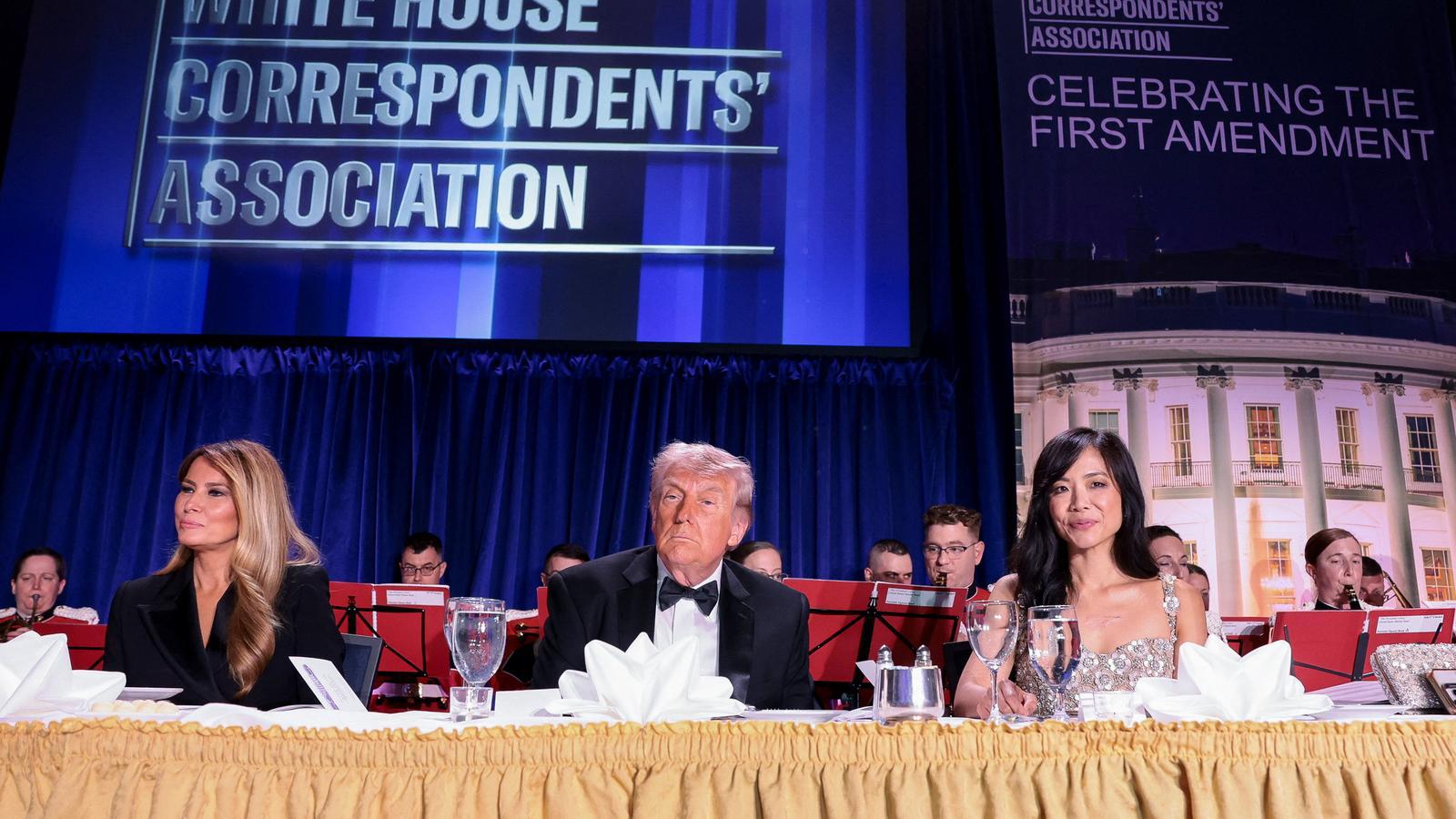
WashingtonIn the basement of the Washington Hilton Hotel, where the White House Correspondents' Dinner was held on Saturday, there were numerous members of the executive cabinet. When the armed attacker crossed the prior security checkpoint and attempted to storm the room, the Secret Service quickly evacuated the US president, Donald Trump, and Vice President J.D. Vance.. But they also found themselves having to escort another good handful of senior officials.
Among other government officials were Defense Secretary Pete Hegseth; FBI Director Kash Patel; Treasury Secretary Scott Bessent; Secretary of State Marco Rubio,and House Speaker Mike Johnson. The concentration of senior officials in one room left the country in a vulnerable situation, especially considering that the attacker, Cole Allen, was able to cross the checkpoint before being apprehended. Reconstructions by US media show that the individual was detained just before descending the stairs that led directly to the room's entrance.
Beyond the vulnerability of the situation, the concentration of figures of high institutional level in the same room was unusual. The only event where the entire presidential cabinet is present is the State of the Union address in Congress, and, for security reasons, one of the secretaries does not attend. This is so that, in the event of an attack, someone remains to lead the country.
When so many political authorities gather in one place to carry out official functions, as happens with the State of the Union address, the event is usually classified as a special national security event. But, according to federal sources revealed to the Washington Post, this designation was not applied to the Correspondents' Dinner on Saturday.
The alleged manifesto attributed to Collen, who is appearing in federal court in Washington for the first time this Monday, not only targeted Trump, but also all members of the executive present. The security levels established by the Trump administration were low in relation to the high concentration of authorities, a fact that once again raises questions about how the US Secret Service operates.
Criticism and arguments
In 2024, when the two assassination attempts on Trump occurred, the secret service –which was then still under the Democratic administration of Joe Biden– was scrutinized. The then director of the body, Kimberly Cheatle, resigned in July, a few days after the Butler attack. Currently, the director of the secret service is Sean Curran, who was appointed to the position in January 2025 after Trump was inaugurated.
Furthermore, the secret service is under the direction of the Department of Homeland Security (DHS), which after Kristi Noem's dismissal is now led by Markwayne Mullin. The DHS has not yet commented on the questions surrounding security management. Acting Attorney General Todd Blanche said on Sunday in an interview with CNN that, even if Collen had managed to cross the checkpoint, the secret service's response had been "a complete success in terms of security." "I mean, if you think about what happened based on what we know right now, this suspect barely breached the perimeter," Blanche said.
In an interview with Fox, FBI Director Kash Patel asserted that the security perimeter set up by the secret service was "military-grade." Nevertheless, he acknowledged that "we will have to discuss how we can improve security not only for this event, but also for all future ones."
