From 40 to 500 periods on average throughout life: how social changes have increased the risk of endometriosis in women
Precision medicine seeks to streamline diagnosis with non-invasive methods, decipher the biology of each woman and offer personalized treatments
-
CAT -
CAST
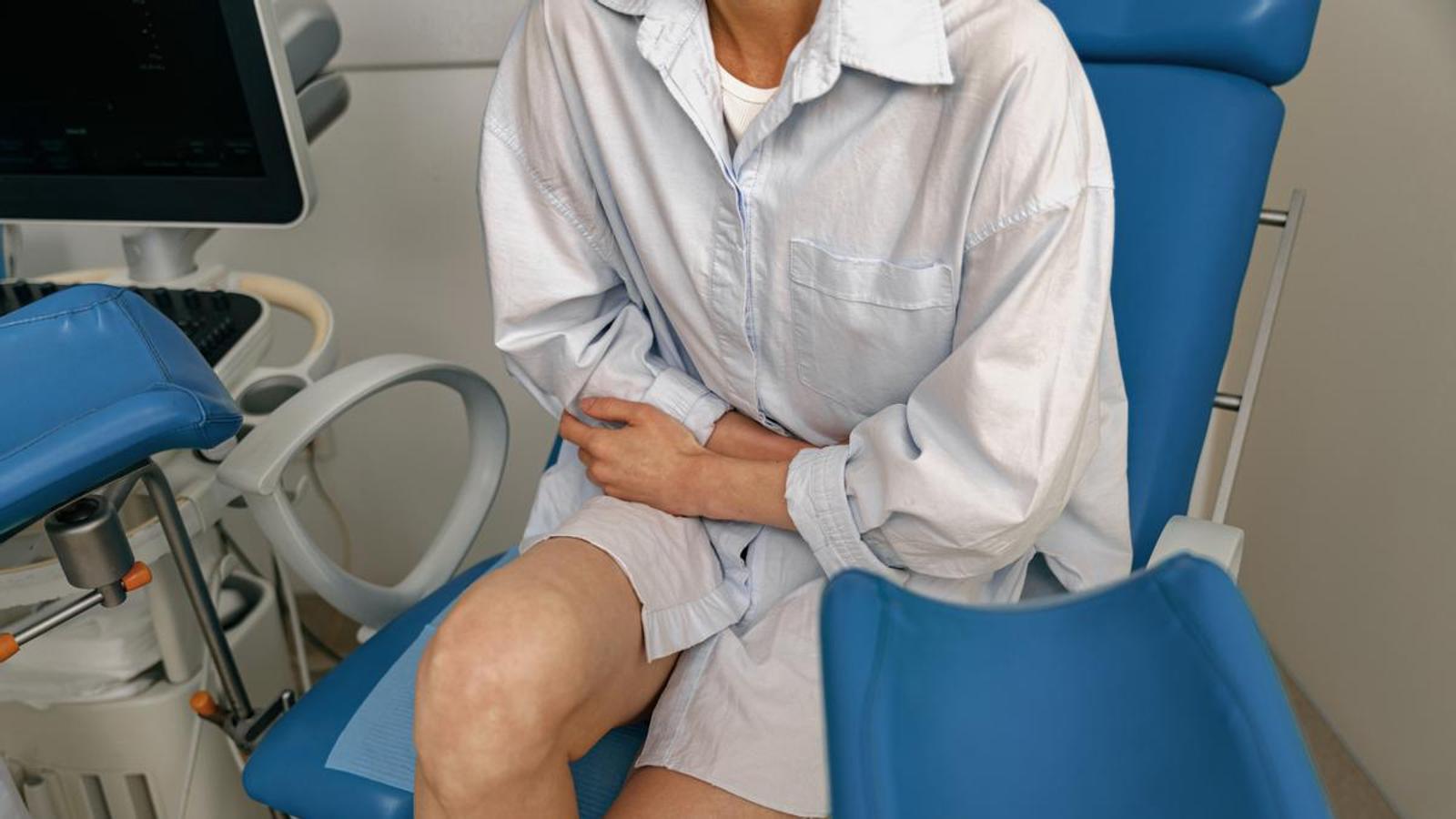
Almost a decade. That is the temporal abyss that, on average, a woman in Catalonia must cross before discovering that the pain she suffers is not "just how it is," but a disease that has a name: endometriosis. Currently, one in ten Catalan women lives with this chronic and inflammatory pathology that hijacks their physical and emotional health in the face of the historical normalization of female pain. For Dr. Francisco Carmona, head of gynecology at the Hospital Clínic and an international reference in the field, the label of silent disease is a trap. In reality, it has been a pathology silenced by a gender bias in scientific research. His statement could not be more graphic: "If men had testicular pain five days a month, the world would have stopped years ago."
Today, however, the paradigm is shifting: artificial intelligence and new diagnostic engineering have taken over to finally offer answers and personalized treatments to a generation of patients that has said enough. "I have lost count of the times I have heard that the pain I felt was normal or that some women were more sensitive than others," recalls Lorena Martínez Pérez, 44, president of the Association of Women Affected by Endometriosis of Catalonia (Endo&Cat). For her, the root problem is invisibility: "We have lived for years without anyone truly believing us."
An unexpected colonization
Endometriosis behaves like a kind of relentless expansion. Cells that should live confined to the uterus—forming the endometrium, the membrane that hosts the embryo—decide to travel and settle in unusual places: in the ovaries, in the intestines, in the bladder, or even in the lungs or the sciatic nerve. The molecular drama begins with every menstrual cycle. These rebellious tissues respond to hormones just like the uterus: they grow, become inflamed, and bleed. But, unlike what happens during a period, this blood has no way to exit to the outside. This unleashes a chemical storm in which the organism, in a desperate attempt to defend itself from this invasion, releases an inflammatory combination loaded with three key elements: interleukins, messenger molecules that sound the chemical alarm to call the defenses; macrophages, cells that should act as a cleanup crew to eliminate excess tissue, but which here often end up fueling the chaos; and prostaglandins, the molecules that trigger contractions and are the true culprits of acute pain. This uncontrolled army does not stay still in the pelvis, but instead travels through the bloodstream and intoxicates the rest of the organism, causing it to stop being a local problem and become a systemic disease that changes the entire chemistry of the body.
This “trigger” is epigenetics, the field of science that studies how the environment can turn our genes on or off. Factors such as nutrition, exercise, or exposure to endocrine disruptors –chemical substances present in plastics or cosmetics that trick our hormones– can be what triggers the disease. Furthermore, a cleaning error in the immune system comes into play. In most women, when part of the menstrual tissue flows back into the body instead of exiting (retrograde menstruation), the defenses eliminate it naturally. However, in patients with endometriosis, the cleaning system fails: the body is not able to digest these foreign cells and allows them to take root and proliferate until they become a chronic threat.

DUFIC, a device for the collection of uterine fluids 'in vivo'From anatomy to biochemistry
Until now, to give a name to endometriosis, it was almost inevitably necessary to go through the operating room. This dependence on invasive methods, such as laparoscopy or suction endometrial biopsies, has fueled diagnostic delays for decades and has stranded patients in an often exhausting surgical wait just to obtain an official confirmation. The new scientific paradigm, however, wants to retire the scalpel in favor of molecular precision: moving from anatomy—looking at the shape of the tissue—to biochemistry—deciphering its proteins.
One of the most innovative projects in this line is DUFIC, a device for 'in vivo' uterine fluid collection, led by researcher Analuce Canha Gouveia and Dr. Sánchez-Ferrer. This device, selected by the CaixaImpulse Innovation program of the La Caixa Foundation, uses capillarity—a physical phenomenon similar to that of a sugar cube absorbing coffee—to collect fluid from the uterus passively. Unlike traditional biopsy, the method is practically painless and allows for the identification of inflammatory markers long before lesions are visible on an ultrasound.
Beyond uterine fluid, science is exploring other non-invasive horizons to speed up screening. In countries like France, Germany, or Switzerland, saliva tests based on the micro-RNA profile are already being used, a liquid biopsy that detects the genetic trace of the pathology with a minimal sample. In parallel, the analysis of menstrual blood and the search for markers in the blood are advances that have already reached reference scientific journals such as Nature Communications.
Personalized treatment
The final frontier of research does not only seek to detect the disease, but also to decipher it. Until now, endometriosis has been treated as a uniform block, but science has begun to understand that, in reality, it is a puzzle of different biological entities. Research wants to repeat the success of oncology: if breast cancer ceased to be a single disease to be divided into molecular subtypes, endometriosis now seeks its own barcode. This classification, which three decades ago changed the course of the fight against cancer, is what today allows saving thousands of lives thanks to precision medicine.
Through thehuman endometrium cell atlas –an exhaustive genetic map–, researchers are identifying subtypes of the disease based on their molecular profile. "It should not only serve to tell us 'you have endometriosis,' but also to know what type it is: whether it will progress rapidly or if it could cause infertility," states Dr. Carmona. Identifying these subtypes would also allow for predicting the aggressiveness of the pathology from the moment of diagnosis. Having this molecular prognosis would give women the key to plan their lives and their motherhood with real data and would free them from the chronic uncertainty that has marked their medical life until now.
This advancement in precision medicine aims to end the tedious method of trial and error that patients suffer today, as they jump from one hormonal treatment to another without knowing if it will be the right one. "Being able to receive precision medicine, having a doctor tell you 'you have this subtype and this is the treatment that corresponds to you,' is a reality that has existed for years in other diseases," claims Martínez. For the president of Endo&Cat, the progress of research is, above all, a pending debt: "Stopping being guinea pigs is not a luxury, it is the minimum we should have always had as a matter of equity.".
The Hospital Cl\u00ednic de Barcelona, under the direction of Dr. Francisco Carmona, has launched a tool to prevent the collapse of the healthcare system from fueling diagnostic delays. This is ENDO-HEALTH, a project supported by the La Caixa Foundation and the Barcelona City Council, which uses artificial intelligence (AI) to transform patient management. ENDO-HEALTH's data technology analyzes thousands of profiles to identify patient clusters: groups of women with similar symptoms and biological progressions. This allows for the establishment of a digital triage based on an AI traffic light system, which ensures that the most specialized medical resources are dedicated exclusively to those who truly need them at any given time.
- Red High-complexity cases requiring immediate attention from the Clínic's elite units.
- Amber Women who require closer monitoring by gynecological specialists.
- Green Stable patients who can be safely followed up by primary care or midwives.
