Iran launches missiles against Israel in response to Beirut attacks
It is the first time that Tehran fires against Tel Aviv since the ceasefire of April

-
CAT -
CAST
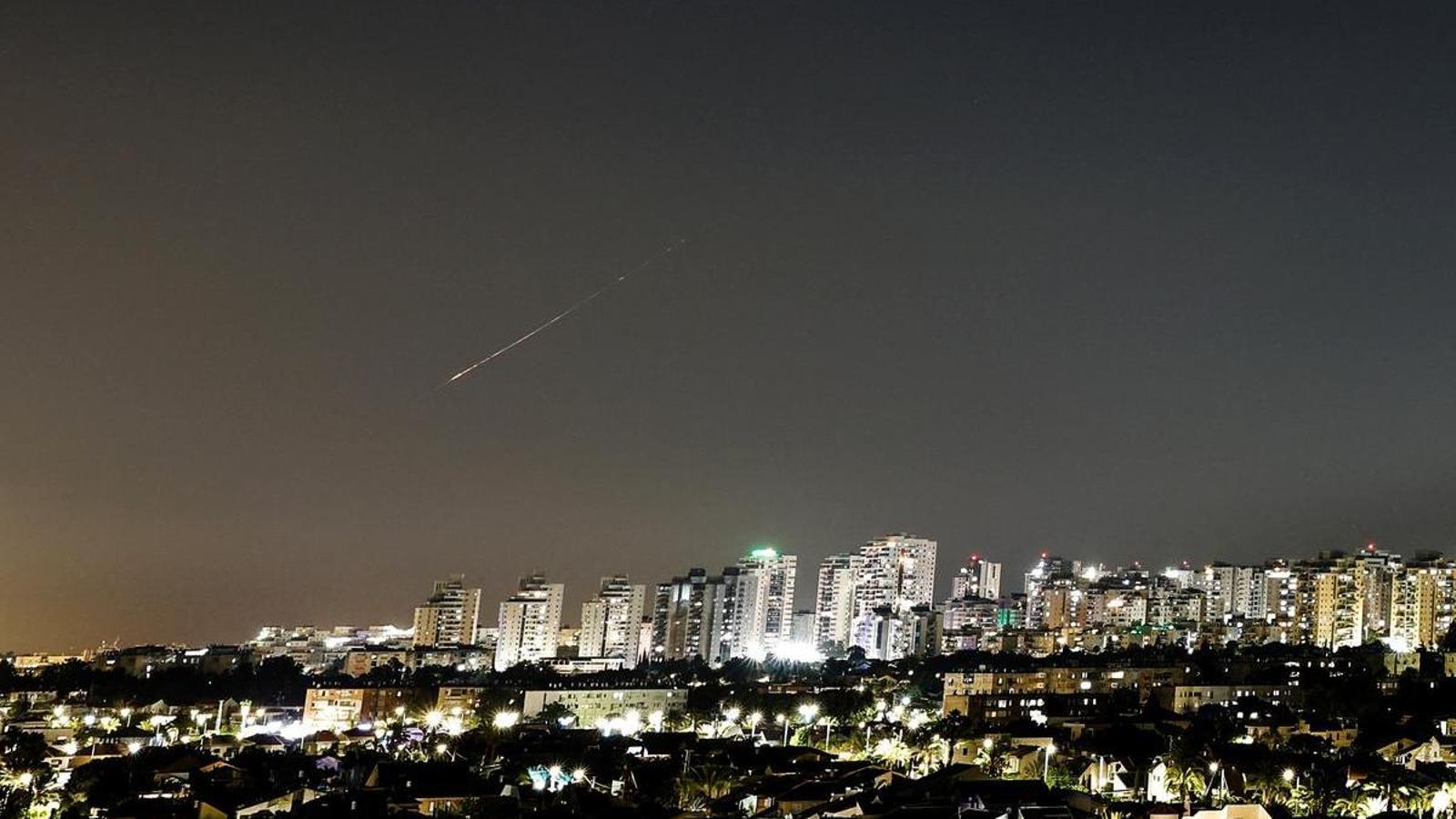
Beirut100 days after the joint attack by the United States and Israel against Iran, the war is accelerating again. This Sunday, Iran has fired several waves of missiles against Israel for the first time since the ceasefire signed on April 8. This was Tehran's response to the Israeli attack on the southern neighborhoods of Beirut, just four days after the announcement of a new agreement reached between Israel and Lebanon in Washington. The bombing of Dahieh, Hezbollah's political and social stronghold, has left at least two dead and around twenty injured and has marked a new turn in a conflict that, far from showing signs of de-escalation, continues to expand on the ground.
In an interview with Fox News, U.S. President Donald Trump urged Iran to stop the attacks and return to the negotiating table. He stated that he was about to announce the peace agreement with Tehran "Monday, Tuesday, or Wednesday, and now this happens." The American president also clarified that Israel had not consulted him about the attacks on the Lebanese capital and assured Israeli journalist Barak Ravid that he would immediately call Netanyahu to tell him not to attack Iran. The Israeli press says Tel Aviv is preparing a strong response against Iran. National Security Minister, the far-right Itamar Ben-Gvir, has pressured Netanyahu, urging him to "burn Tehran tonight."
The attack also comes at an inconvenient time for Washington. After the negotiations held this week, the administration of Donald Trump had presented the agreement as a way to contain the conflict and prevent an expansion of the fightingThe return of bombings in Beirut is what has concentrated diplomatic attention. Dahieh had been one of the main Israeli targets during the most intense months of the war and its relative calm in recent weeks had fueled the hope that the capital would remain on the sidelines of the war.

The attack also comes at an inconvenient time for Washington. After negotiations held this week, Donald Trump's administration had presented the agreement as a way to contain the conflict and prevent an expansion of the fighting. However, Beirut's return to the list of Israeli targets calls into question the real limits of this strategy.
In recent days, the idea had gained traction that the United States was willing to accept the continuation of Israeli operations against Hezbollah in southern Lebanon, as long as the capital remained out of the equation. The bombing of Dahieh weakens this premise and once again places Beirut at the center of a war that many thought was geographically contained.
Trump's statements this Sunday also reinforce the impression that Washington continues to prioritize military pressure on Hezbollah. In an interview with NBC News, the American president stated that he would like to see "more surgical" attacks against the Shiite movement, without questioning the continuation of the Israeli campaign. Trump also made it clear that Lebanon is not among the immediate priorities of any eventual negotiation with Iran.

The Iranian response was not long in coming. Ebrahim Rezaei, spokesperson for the National Security Commission, assured that Tehran will respond “with determination and firmness” to the Israeli attack on Dahieh. “Look up at the sky of Israel tonight,” he declared. In an even higher tone, Iranian military sources have warned of a possible expansion of the regional response in the event that attacks against Hezbollah continue, including scenarios that could reach northern Israel and the cities of Haifa and Tel Aviv.
On the military front, Hezbollah has claimed to have repelled an Israeli ground advance attempt in the south of the country and has claimed several operations against Israeli troops. Since the announcement of the pact, the Shiite group has insisted that it will not accept a scenario in which it is required to cease its attacks, while Israel retains the freedom to continue its military operations.
The situation leaves the agreement in an increasingly fragile position. On paper, Washington continues to defend that there is a roadmap to reduce violence. On the ground, the bombings continue, Hezbollah responds, and Beirut is bombed again. Four days after the announcement of the agreement, the promise of restraint that accompanied the negotiations seems increasingly difficult to sustain.
