Mariam Barghouti: "In Palestine, journalists protect the result of our work with our bodies"
Palestinian journalist
-
CAT -
CAST
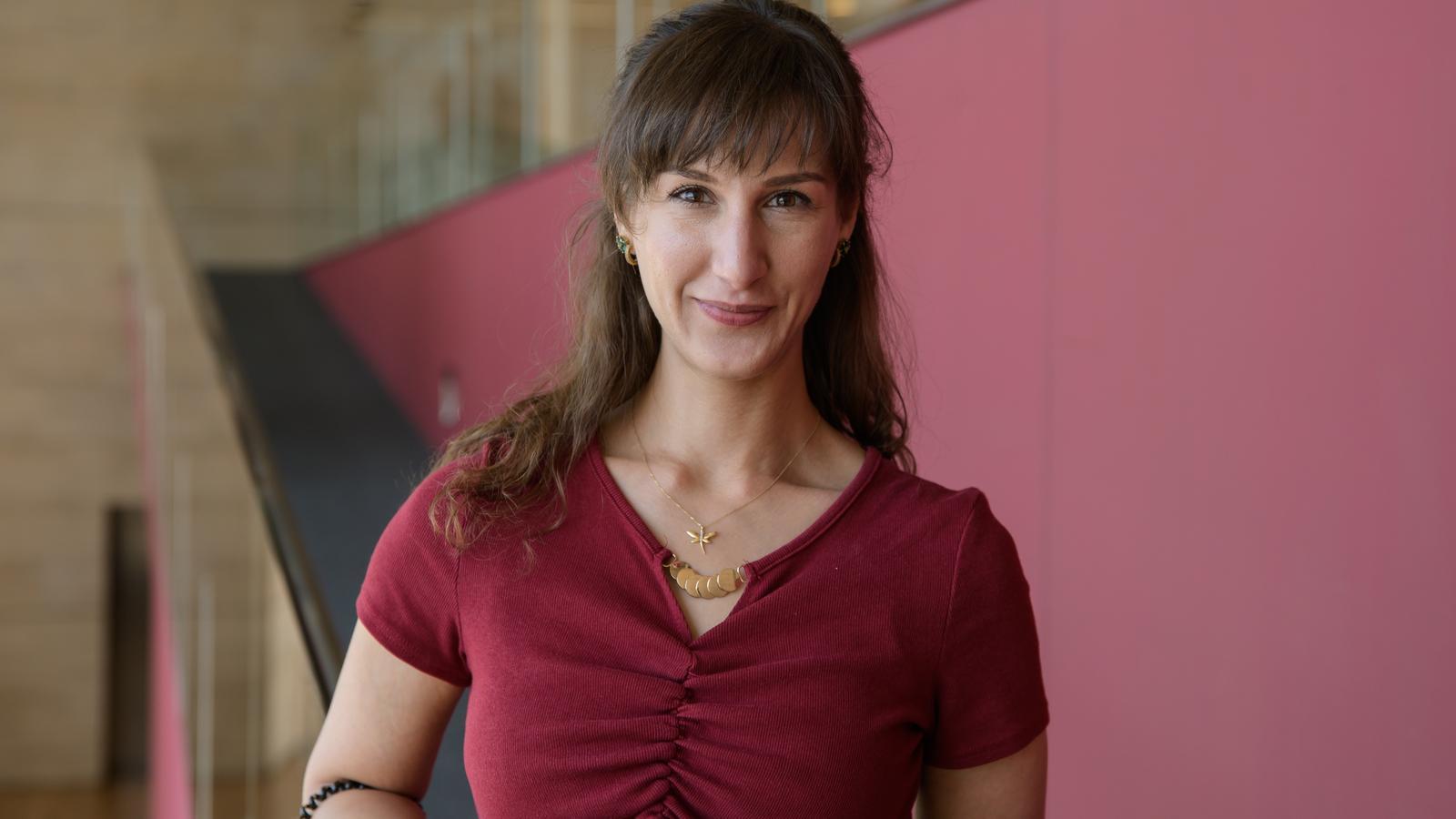
BarcelonaMariam Barghouti (Atlanta, 1993) is a Palestinian journalist and researcher born in the United States who has become a reference for her articles from occupied West Bank in media such as The Guardian, the BBC, Al-Jazeeraand Mondoweiss. This year she is the international resident of the Centre de Cultura Contemporània de Barcelona (CCCB).
It is difficult to hear Palestinian voices in the media in Europe or the United States.
— Palestinians were erased from the paper before being erased on the ground. Erasing us from paper translates to Israel not being seen as a regime that practices ethnic cleansing. In major English-language media, Palestinians are asked: "Do you condemn Hamas?" The goal is to place them in a category: if they don't condemn it, they support Hamas; if they condemn it, then they are asked if Israel has the right to exist. The focus is on legitimizing Israel, not on listening to their story. They are not interviewed: they are interrogated. Palestinians either don't exist or are treated as criminals. The world struggles to see Palestinians as victims of systemic oppression unless they are perfect victims: passive and apolitical. But we are not perfect, just like everyone else. And that does not make it acceptable for us to be colonized.
Historically, Europe is responsible for this colonization. But the beginning of what is happening today is usually placed on October 7, 2023.
— Europe does not want, or cannot, settle accounts with itself. It has not fully confronted the crimes committed against Jewish communities before and during Nazism, and this allows Israel to instrumentalize this history. Nor has it confronted its own colonization of the Global South or the legacy it left behind. Europe refuses to examine how this past still shapes its policies. After the world wars, it tried to rebuild its image through institutions like the UN, as if history could be restarted. But history does not disappear. Why is Europe so afraid of confronting its past?
It is often said that it is complicated.
— No, it's very simple. There is an oppressive power that is massacring people. But the refusal to say “massacring” is what complicates it, what confuses. It is presented as a "conflict". And when words like colonialism are uttered, they reply: “That's activist language”. As if activism were not legitimate, and as if this language were not either. There is an instrumentalization of language: words have become weapons.
What biases do you see in the language of Western media?
— There are words like "war" to describe a genocide or "explosion" when it comes to a bombing. And there is also a “grammar of agency”: who is described as someone who acts and who does not. Palestinians simply "die", while the news says an Israeli has been "murdered in a brutal attack by a Palestinian", thus naming both the crime and the perpetrator. Palestinians, on the other hand, seem to die without any perpetrator, without an active verb, as if no one were responsible. There is also an “arithmetic of grief”: whose lives are considered worthy of being mourned. Palestinians become statistics, while Israelis – even when it comes to soldiers killed in combat – are portrayed with detailed personal stories about their families, their studies, and their hobbies. Why is grief measured so differently?
We do not want to bother.
— My editors tell me: "Mariam, why don't you end on a happy note? We don't want to depress our audience." Well, we live in a depressing world. Do they want me to fabricate a different reality? Journalism must provide clarity and make things not only accessible, but intelligible for people: help them understand how they fit into a context, explain with information and testimonies what is happening and also what it means. As a good friend of mine says, "perhaps we cannot protect people in the real world, but at least we can protect them on our pages".
And what happens when the audience gets tired?
— The exhaustion caused by prolonged exposure to violence is human. We are not designed to absorb so much violence and feel that we can do nothing about it. The despair and helplessness that result are also part of a strategy, of what Israel calls a war of attrition, intended to project the image of an invincible oppressor. Facing it requires recognizing it as a weapon: accepting that it overwhelms us and, at the same time, understanding how it works. Grief is a sign of health, because no one should be able to live as if nothing is happening with this level of violence. It is also possible to distance oneself from the constant flow of images. Once the systemic nature of violence is understood, you can focus your attention on responses in exchange for resistance and confrontation.
But we have to document, we have to collect the evidence. And in Palestine this means risking your life.
— Being a journalist in a war zone, especially when you are a target, means protecting the results of your work with your own body. I remember once, while we were doing a report in Jenin, a military drone started following us, and our first reaction was not to protect ourselves, but the material. Many colleagues have passed me material before they were detained to ensure it would be published. Often readers don't realize that the sentences or images they see have gone through a war before reaching the page. In the West Bank and Gaza, journalists leave home every day without knowing if they will return. Many have been detained or tortured, while local reporters often feel abandoned by their international colleagues and are delegitimized. That's why they take additional measures to document everything in various formats, because their credibility is constantly questioned. Despite the risks and isolation, they continue to work because they see no alternative. If they don't do it, who will? That's why we constantly ask international journalists to come to Palestine, but not just to cover the story, but to work alongside us, as equals.
We had never seen so many journalists killed as in Gaza.
— Israel boasts of waging a war of precision. They kill Palestinian journalists with selective drone attacks, while they are inside their vehicles marked with press insignia. They knew they were killing journalists, and they continued to do so. Even if they had worked for media affiliated with Hamas, killing them is illegal under international law. But no one has explained this to their audiences. Everything is complicated only when Palestinians try to tell their story. On the other hand, when Israel wants to commit a crime, everything is very simple: they just have to say "Hamas." But I believe that the escalation in the murder of journalists, which has been normalized by the oppressors, has given more strength to journalism. Journalism is feared because it has power. Our work has become more dangerous and the way to overcome this is for us to be united. Let them know that even if they kill us, the story will keep coming.
