Hong Kong condemns two activists remembering Tiananmen
The court accuses them of inciting the expulsion of the Communist Party from the government and fostering "public hatred" towards Beijing

-
CAT -
CAST
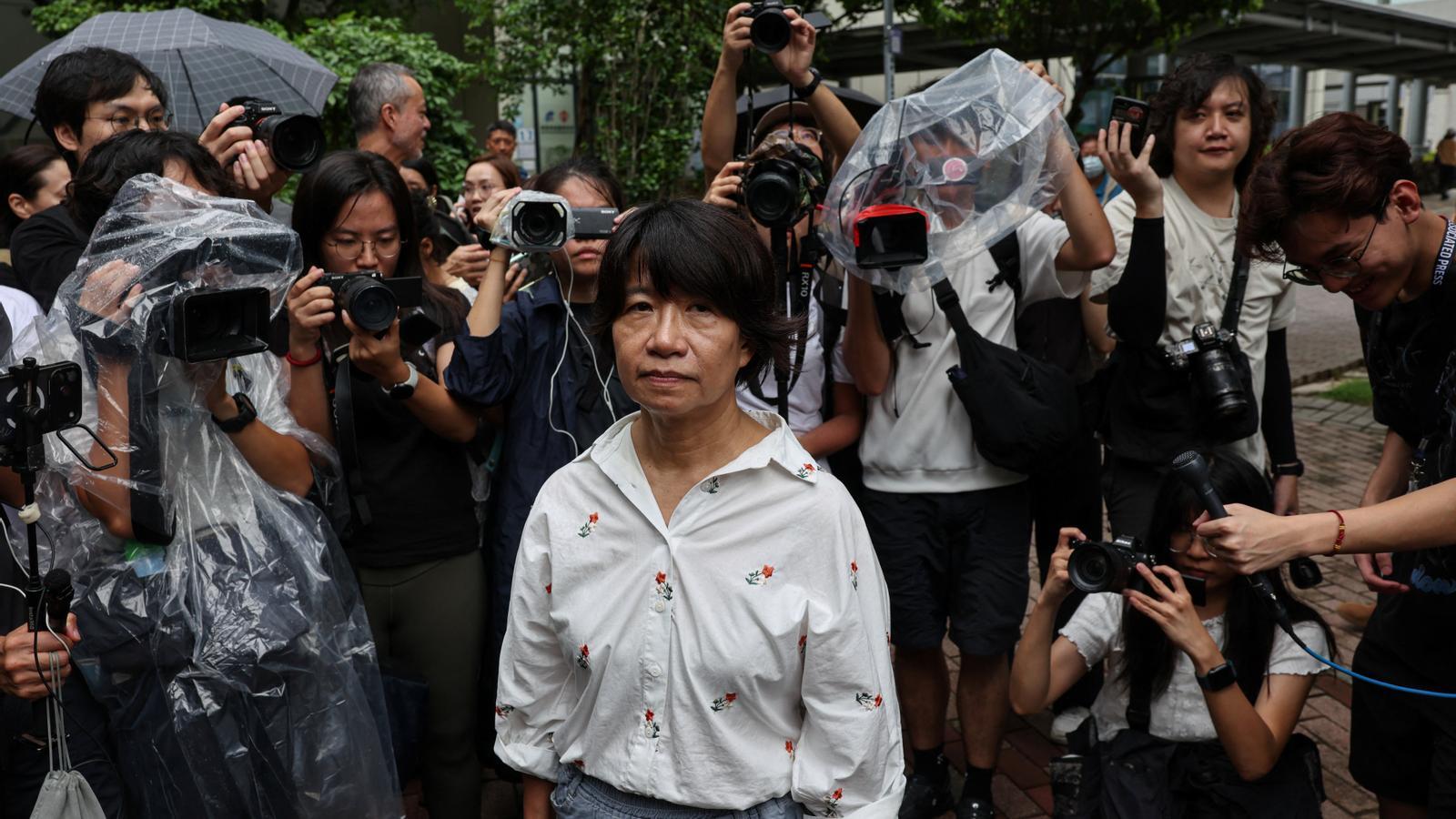
LondonA Hong Kong court on Friday convicted activists Lee Cheuk-yan and Chow Hang-tung of inciting subversion. Both were part of the Hong Kong Alliance in Support of Patriotic Movements of China, and had organized commemoration events for the Tiananmen Square massacre, during the repression of the pro-democracy protests in Beijing in 1989.
Every June 4th, the activists held a ceremony in Hong Kong in remembrance of the events. Hong Kong had been one of the few places in Chinese territory where remembrance events for the victims of the massacre could be held, but any public commemoration of Tiananmen has been strictly prohibited since 2020.
The trial against Lee and Chow, which began in January and lasted 22 days, has been conducted under the national security law imposed by China following the massive protests in Hong Kong in 2019. This law is the same one that provides legal coverage for the imprisonment of Jimmy Lai, a pro-democracy media tycoon and British citizen. The sentence, which is still being drafted, could condemn the two activists to a maximum of ten years in prison, according to the local media outlet Hong Kong Free Press.
Before the verdict was read, Chow Hang-tung wrote to British Prime Minister Andy Burnham, requesting his intervention: "Undoubtedly, they want to erase some memories, or the memories of some chapters of our history. The United Kingdom has an undeniable duty to take a firmer stance against the growing threat of a totalitarian and aggressive China," she stated.
Amnesty International has stated that the sentence marks "another grim milestone" and that both Chow and Lee had been convicted "solely for their role in organizing peaceful commemorations." Hong Kong authorities have defended the verdict. Steve Li, Chief Superintendent of the Hong Kong Police, declared: "It also allows the public to know that it is not that you cannot criticize or do absolutely anything. Simply, there can be no incitement or subversion of state power."
During the trial, the Prosecutor's Office has accused the Alliance ofinciting the expulsion of the Communist Party from the government through its calls to "end the one-party regime", one of the organization's main foundations since its founding in 1989. Prosecutors have argued that these calls violate the Chinese Constitution, after an amendment approved in 2018 established that the leadership of the Communist Party is the "defining characteristic" of the country's "fundamental" system. The public prosecutor's office also accuses the defendants of fostering "public hatred" towards Beijing.
The defense, on the other hand, maintains that all the Alliance's objectives constitute a "legitimate exercise of fundamental human rights", as pointed out by the Hong Kong newspaper South China Morning Post. Chow has argued during the trial that advocating for the end of the one-party system is not the same as trying to oust the Communist Party from its leading position, and that pursuing democratic change "should not be considered illegal".
The guilty verdict also comes after rare statements about Tiananmen made earlier this week by Xi Jinping, the Chinese president. In a speech commemorating Jiang Zemin, leader of China between 1993 and 2022, Xi stated: "Between the spring and summer of 1989, China experienced serious political turmoil. Comrade Jiang Zemin decisively supported and implemented the correct decisions of the Central Committee, effectively maintaining stability in Shanghai". Jiang was head of the Party in the city, as well as mayor, and relatively avoided a bloodshed as brutal as that of Tiananmen.
The national security law, approved by Beijing in June 2020, punishes crimes such as secession, subversion, terrorism, and collusion with foreign forces with sentences that can reach life imprisonment. The authorities defend that this legal framework has allowed stability to be restored and national security to be protected after the massive protests of 2019, but human rights organizations and foreign governments denounce that the regulations have reduced the space for political dissent and civil liberties.
