Hezbollah rejects the "humiliating" negotiations between Israel and Lebanon and the partial ceasefire
Hours after the announcement of a truce extension, a mortar attack in southern Lebanon kills a Serbian blue helmet and injures two more Spaniards

-
CAT -
CAST
BeirutFor just a few hours, Washington managed to create the impression that a new era could be opening in Lebanon. After two days of trilateral negotiations, the United States announced a ceasefire agreement late Wednesday between Israel and Lebanon, presented a roadmap for the deployment of the Lebanese army in the south, and set new talks for the end of June. But while the statement circulated among government palaces, another reality was asserting itself on the ground.
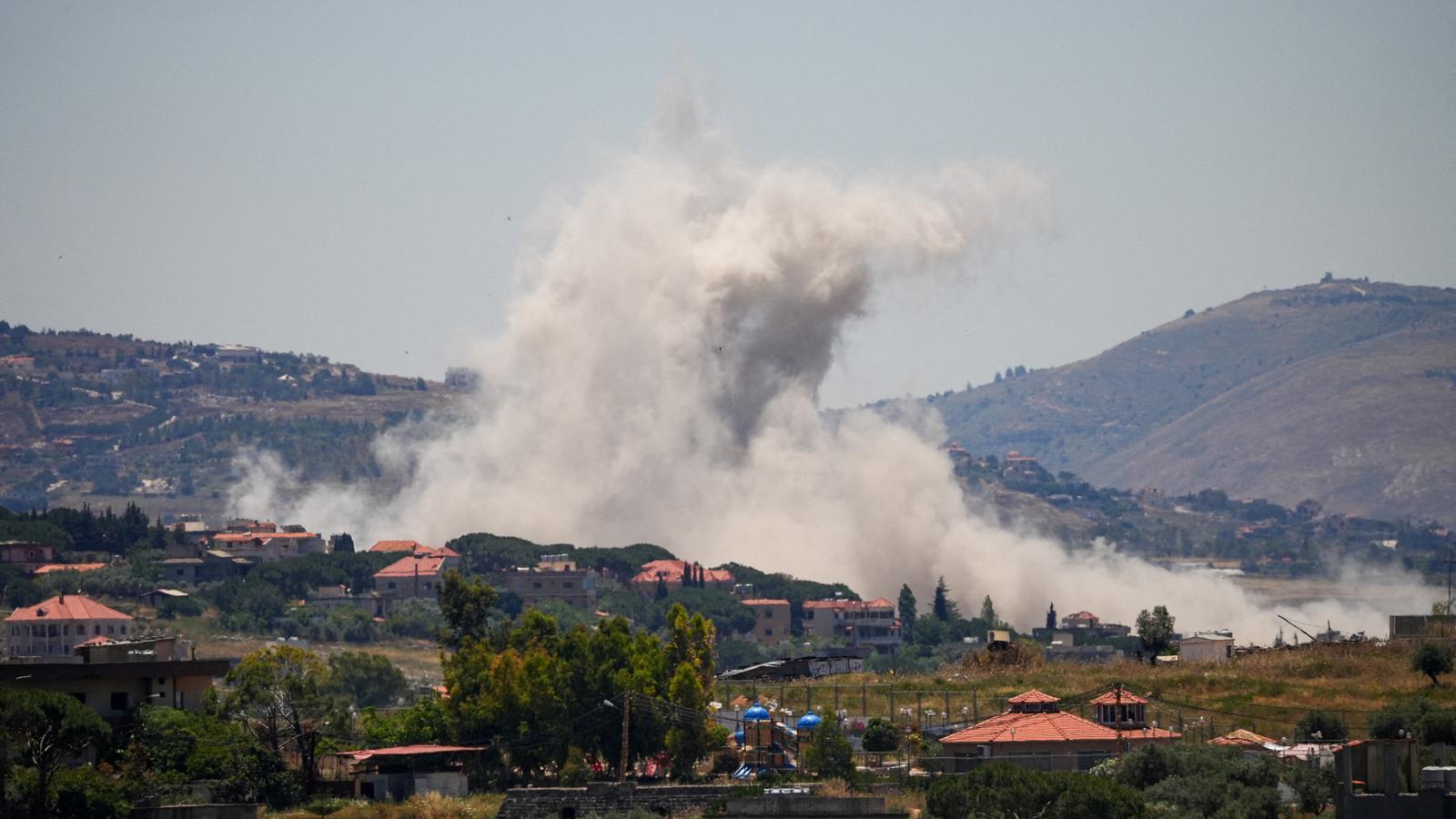
Israeli bombings have continued in the south of the country, with attacks on the Bekaa Valley, Nabatieh, and the region of Tyre. Violence also reached the United Nations Interim Force in Lebanon (UNIFIL), where a Serbian peacekeeper died after a missile strike on a mission base near Marjayoun, and two more personnel were injured. Israeli troops remain deployed in the strip of territory they have occupied for weeks, including the strategic Beaufort Fortress.
In Beirut, Hezbollah categorically rejected the document even before it could become an effective agreement. "Hezbollah has informed the Lebanese authorities that it rejects the agreement," a movement official told AFP. The position was conveyed to the Speaker of Parliament, Nabih Berri, the group's main interlocutor in the negotiations, who shares the same stance.
"This declaration describes the fundamental principles that the United States and Israel conceive for the subjugation of Lebanon to the Greater Israel project," said Hezbollah leader Naim Qassem, who criticized the "absurd, humiliating, and shameful" negotiations between Lebanon and Israel and insisted that any ceasefire must be "comprehensive." He also warned that the pro-Iranian group "has not committed to anyone not to resist aggression or to not respond to it." "As long as the aggression persists, we will confront it with all our strength and attack wherever we decide and can," he said in a statement.
The reaction is part of a dynamic already known since the start of the negotiations, in which every attempt to formalize a ceasefire clashes with incompatible interpretations about the end of the war. The contradiction extends to the Israeli side. A few hours after the announcement by the United States, the Minister of Defense, Israel Katz, reiterated that the army will continue to operate in southern Lebanon and will maintain the positions conquered during the offensive. He also warned that, if attacks against Israel continue, operations could be extended to any point in Lebanese territory, including Beirut.
Increase the control of the Lebanese state
The document reorganizes the ceasefire conditions. It conditions the ceasefire on the complete cessation of Hezbollah's attacks and the withdrawal of its combatants from southern Litani. It also includes the creation of "pilot zones" under the control of the Lebanese army, a formula with which Washington is trying to strengthen state authority without forcing a direct clash with Hezbollah.
For former general Yousef Haidar, this is the newest aspect of the proposal. "The idea would allow for the gradual expansion of areas under state control and facilitate Israeli withdrawals that would make possible the return of the displaced. It could facilitate the return to some border towns and avoid a head-on clash between the army and Hezbollah," he assures. But it remains to be seen whether "Israel is willing to accompany this process with concrete withdrawals on the ground," he points out.
For now, the signs are limited. The withdrawal of Israeli forces from Debbine, in the Marjayoun region, and the entry of Lebanese army units into the area have been confirmed. A minimal back-and-forth movement, almost a snapshot of good intentions in a territory that remains marked by uncertainty. Israel continues to occupy an extensive strip of territory in the south, including the Beaufort ridge, where Israeli troops continue to destroy tunnels and Hezbollah infrastructure.
According to military analyst Antoine Jabagui, this situation explains the scarce enthusiasm that the agreement has generated in Israel. The forces deployed in Beaufort are in full operation and consider any withdrawal premature. Within Benjamin Netanyahu's cabinet, disagreements have also arisen, and several Israeli officials believe that the mechanism will hardly be sustainable for a long time.
The doubts are not limited to Israel. For Hezbollah, the fundamental problem is that the text inverts the order of priorities. For months, the Shiite movement has argued that any agreement must begin with an Israeli withdrawal and a comprehensive ceasefire. The document presented by Washington "first demands concessions from Hezbollah and leaves the discussion about the Israeli occupation and pending territorial issues for later," adds Jabagui.
Behind this initiative, a broader battle is also being waged. Iran has tried to link Lebanon's future to its negotiations with Washington, while the United States seeks to strengthen the role of the Lebanese state and make it the central interlocutor for any future agreement. The problem is that, for now, none of the actors seem to be acting as if the war is about to end.
Perhaps that is why Washington's announcement has been met with skepticism in Lebanon. After months of unfulfilled truces, solemn declarations, and endless negotiations, peace is no longer measured by diplomatic communiqués. It is measured by what happens on the ground. And this Thursday, the war continues.
