Denmark has a new government: Frederiksen's third and with a turn to the left
The new four-party coalition focuses on the fight against inflation, the strengthening of public services and the defense of Greenland's sovereignty

-
CAT -
CAST
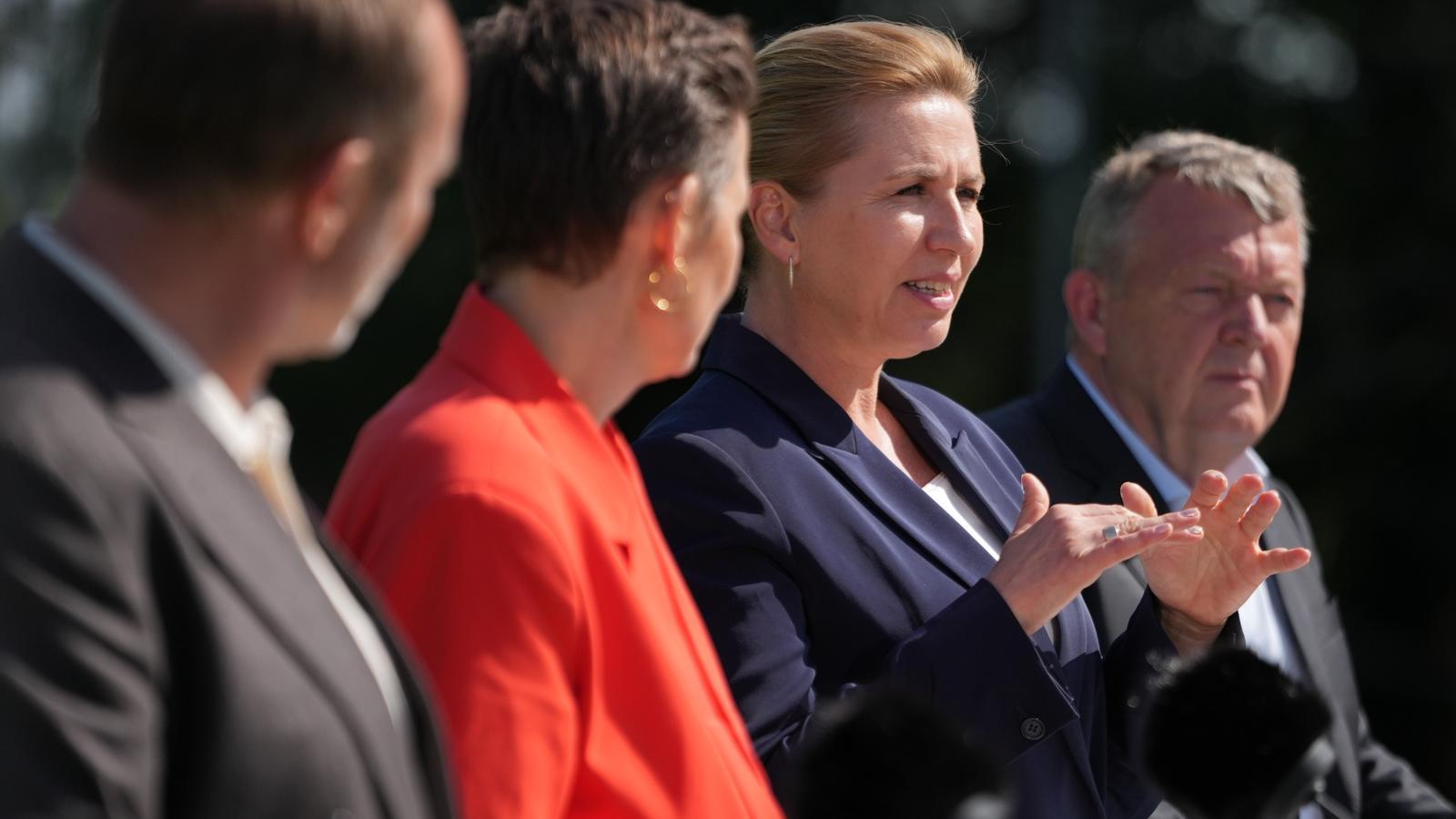
BarcelonaThe social democrat Mette Frederiksen has managed to gather enough support to form her third consecutive government in Denmark, which once again has a progressive profile after four years of coalition with two centre-right parties. Frederiksen will lead a minority executive also formed by the Socialist People's Party (SF), the Danish Social Liberal Party (Radikale), and the centrist Moderates, which has set as its main objectives to combat inflation and strengthen public services, especially education. It also continues to have a major geopolitical challenge on the table, with Donald Trump's threat over Greenland.
the most voted in the March 24 electionsThe agreement has been reached after 70 days of negotiations, the longest in Denmark's history, and two previous failed attempts to agree on a government, one by Frederiksen and the other by the leader of the Liberal Party (Venstre), Troels Lund Poulsen. The Social Democratic Party was the most voted in the elections of March 24, although it obtained its worst result in the last century, with 21.9% of the support. The SF came second, after a growth of more than 40%. The results represented a blow not only for the social democrats but also for the country's other major traditional party, the Liberals, who achieved the worst figures in their history with only 10.2% of the votes.
The key to forming the government has been held by the Moderates, as happened in the previous legislature. This centrist party is led by Lars Lokke Rasmussen, former Prime Minister of Denmark (2015-2019) and until now Minister of Foreign Affairs and the main negotiator with the United States regarding the Greenland issue.
The formations on the right wing of Parliament have reproached him for having tipped the scales to the left, contrary to what happened in the previous legislature, when Frederiksen led an unprecedented government with the liberals, the great historical rival of the social democrats. Rasmussen himself lamented, at the press conference, that a center-right government could not be concluded, admitting that it is what he would have initially liked.
More money for schools and free dentist
The agreements presented effectively demonstrate a shift to the left. The leader of the socialists, Pia Olsen Dyhr, has said it is "the greenest government in history" and "the government of children." The agreement includes a new funding model for primary schools and more teachers, among other measures to improve public education. It has also been agreed that the dentist will be free for all Danes, an increase in the retirement pension, and free public transport for all those under 23 years of age.
The new government commits to restoring the public holiday that was eliminated during the previous term. However, it will not be until 2030 and on the condition that an increase in employment has been registered in the country beforehand. In response to continued inflation, the four parties have agreed to halve the VAT for all food products and eliminate it completely for fruit and vegetables.
The coalition also seeks to introduce changes in the country's powerful pig industry, with the long-term goal that Denmark does not produce more pigs than those consumed by Danes.
Tough stance on migration and lower taxes for the rich
Frederiksen has underlined that the government will maintain a tough stance against migration: "We will deport more criminal foreigners and continue to work to establish deportation centers outside of Europe." Frederiksen's first executive was one of the first in the European Union to approve a law to externalize the management of asylum applications to countries outside the European Union and signed an agreement with Rwanda to do so. Later, this measure was implemented by the Italian Giorgia Meloni in Albania, and the EU has just given the green light to a law to endorse these types of practices across the Union.
Furthermore, the Moderates have also achieved some concessions from the left-wing parties, particularly regarding the fiscal issue. For example, taxes on higher incomes will be eliminated and corporate tax will be reduced.
Message for Donald Trump
Without directly mentioning Donald Trump, the government pact includes a clear message for the US president. "The government will remain firm in the sovereignty, territorial integrity and right to self-determination of the Kingdom", says the document, which criticizes that Greenland "has recently been subjected to unacceptable pressure".
During the press conference, Rasmussen emphasized the need to strengthen the country's defense and "insist that international norms be respected". He pointed out that this issue was one of the factors that weighed in the decision to lean towards a center-left government. "We do not depend on the far-right, which questions conventions, plays with the MAGA movement and questions support for Ukraine", he said, referring to the Danish People's Party. The liberals had also suggested cutting development aid and several parties in the "blue" bloc had flirted with the idea of abandoning some international conventions to further tighten immigration policy.
