Boko Haram seizes Lake Chad
The climate crisis, widespread corruption, and uncontrolled demographic growth are the perfect cocktail for the expansion of Islamists in the area
-
CAT -
CAST
BarcelonaThe jihadist group Boko Haram will not find more suitable conditions to thrive than those offered by Lake Chad. On the shores of this 2,000 km² body of water between Cameroon, Niger, Nigeria, and Chad, climate, food, and economic insecurity are mixed with a null presence of governments and administrations.In 2015, about fifteen years after its birth in Nigeria, the group reaches the lake. It claims to want to fight social inequalities and corruption through a strict reading of Islam. With the promise of stable income and the possibility of marrying and starting a family, Boko Haram convinces a large number of young people to join the organization. The origin of the conflict in the area is precisely "in poverty and lack of opportunities," according to Josep Maria Royo, a researcher specializing in conflicts, peace, and security in Africa at the School for Peace Culture.
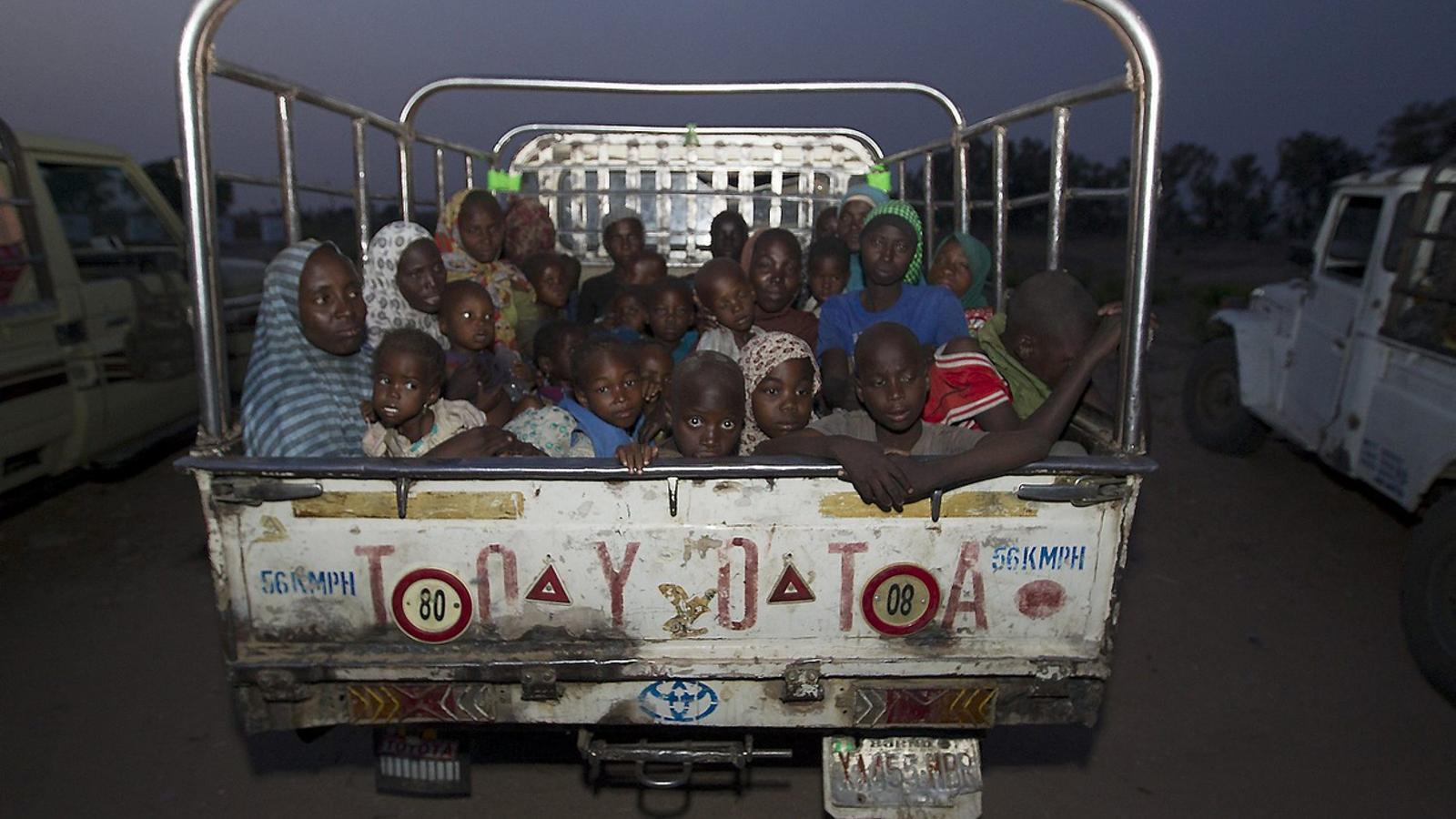
According to the United Nations Office for the Coordination of Humanitarian Affairs, there are more than 3.25 million displaced people in the region, more than 8.2 million people need humanitarian aid, and approximately half of the population lives below the poverty line. A situation that has been aggravated by the demographic explosion of the last fifty years: in 1976, around Lake Chad, 700,000 people lived there; in 2013, there were 2.2 million. Furthermore, young people, the main target of terrorists, make up 75% of the population in the Lake Province, in Chad. In this regard, according to a report by the UN agency for refugees, "the Boko Haram phenomenon is due to uncontrolled demographic growth".But there was a time when the shores of Lake Chad were a prosperous area. In the sixties, it covered about 25,000 km² and the local population lived from fishing and agriculture between the mainland and the hundreds of scattered islands. But in just thirty years the lake lost 90% of its surface area. Where there was once water, a crop economy developed.However, in the last decade, the lake has begun to expand: in 2025 it grew 11 centimeters and it is estimated that by 2040 the water level may increase by another 30%. Little by little, the population has been abandoning the islands and moving away from the lake shores. However, the area has not emptied. Silas Jonathan, lead researcher at the Centre for Journalism, Innovation and Development in Nigeria, explains that Boko Haram "has adapted by taking advantage of these new environments as hiding places, logistical routes and bases", especially in the north of the lake. And this, in turn, has accelerated the displacement of the population and the humanitarian and security crisis.A complicated security management
According to the UN, during the first half of 2025, 487 violent incidents and 415 deaths were recorded. Boko Haram has killed between 30,000 and 75,000 people in Nigeria alone, and more than 6 million are directly affected by terrorist actions.The high insecurity makes it difficult for NGOs, the target of many attacks, to be present, and the economic situation does not improve things. UN agencies estimate that in 2025 they lost two-thirds of their funding compared to 2024, especially since the United States decided to turn off the tap on humanitarian aid programs in January of last year. According to Jonathan, "the reduction in humanitarian aid has increased economic vulnerability" and this leads extremist groups to take advantage of the discontent to "recruit vulnerable young people".

In fact, bad governance and corruption have led to popular discontent, which Boko Haram has taken advantage of. And the years of inaction are taking their toll: armies, accustomed to operating in desert areas, find themselves defenseless against Boko Haram's control of water.Therefore, in 2015 the affected countries created the Multinational Joint Task Force to fight Islamists, even though Niger withdrew from it in 2025, a fact that highlights the disagreements between states, which mutually accuse each other of not doing enough to curb the proliferation of terrorist groups. According to Royo, "the lack of coordination between the different armies has contributed to Boko Haram finding loopholes to continue its activity" and has highlighted the military group's resilience. For Jonathan, on the other hand, alliances between states "have improved cross-border cooperation in security matters," although he notes that "the exchange of reliable information throughout the region remains a fundamental shortcoming."Faced with the helplessness of the armies, self-defense groups have been created against Boko Haram in Nigeria, Cameroon, Niger, and Chad, which have taken on an increasingly relevant role in the fight against terrorists: they make military operations less violent and more effective, and create ties between states and the different local communities they work with. At the same time, however, they participate in the war economy and commit abuses. These groups have made the military response more effective and selective – they know the terrain and the people – but they have also exposed their communities to brutal reprisals from Boko Haram, and have contributed to transforming an insurrection against the state into a bloodier community civil war. Serious abuses are documented, including summary executions, sexual violence, and extortion, as well as links to organized crime.However, Royo clarifies that "these armed groups need other strategies that go beyond the fight against terrorism", more focused on the causes that provoke the emergence of these armed groups, for which he proposes "strong arms embargoes, sanctions, coercion mechanisms towards combatants, their sources of financing and governments that facilitate militarization and arms transfer and human rights violations".
