The great deception of industrial grated cheese packages
In some cases it might be that there was nothing at all and it was replaced by vegetable fats, starch and flavorings
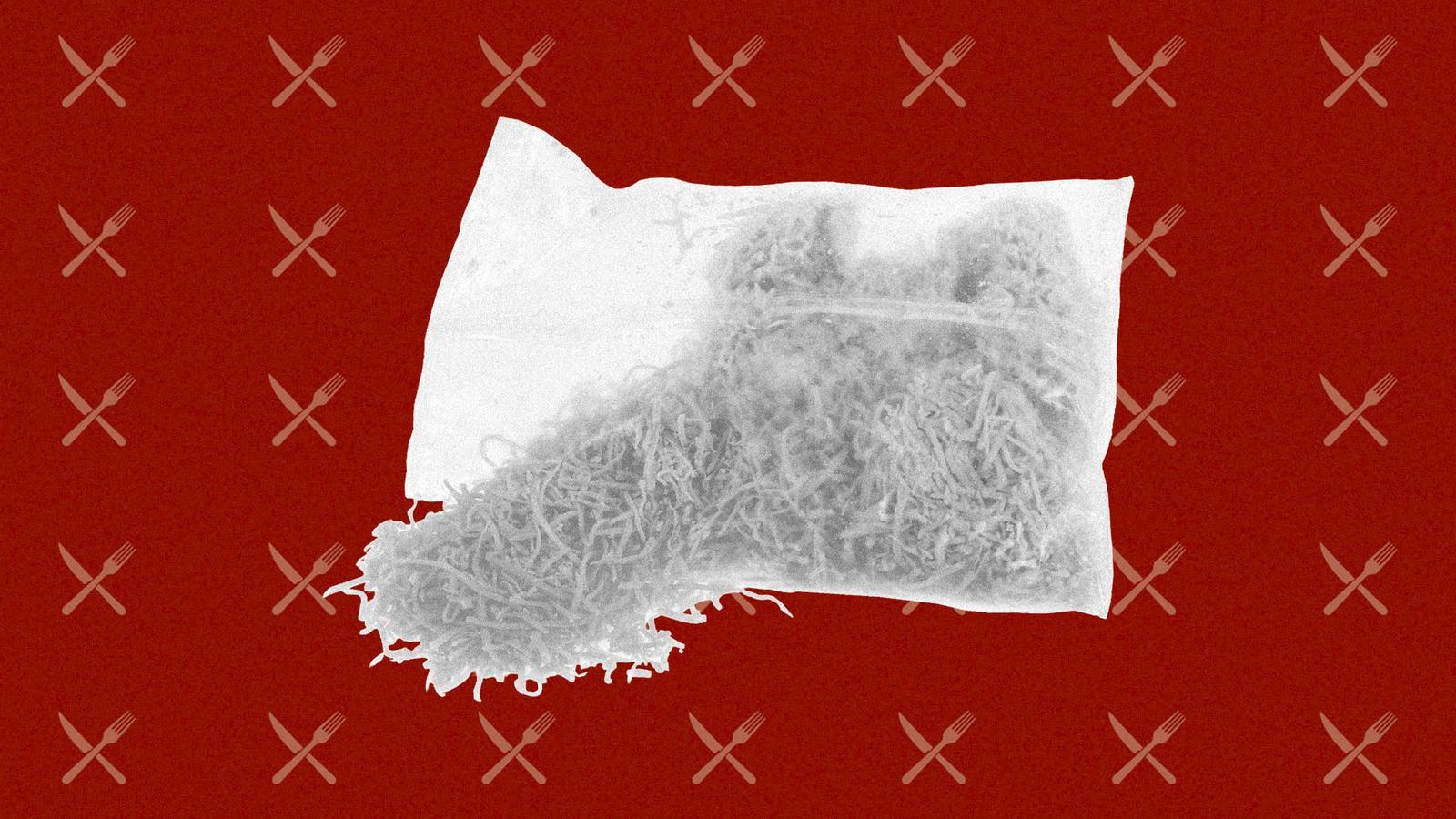

We want to eat cheese when we buy a package of grated cheese, but if we don't look closely at the label, we might end up eating starches, milk proteins, melting salts, vegetable fats, flavorings, and water. All these are the ingredients that appear on the label of some industrial packages of grated cheese, some of which might not have a drop of cheese in them, because “they substitute it with vegetable fats, starch, and flavorings”, states dietitian-nutritionist Anna Grífols.
If we want to eat cheese when we buy a package of grated cheese, the label should be short and centered on the word cheese, which should appear literally and in the first position. Then we can believe that the percentage of real cheese will be high. If not, know that they can sell us substitutes, in which there is directly no trace of cheese. Or there are others where the cheese content ranges from 40% to 70%, which often happens in products labeled as “especial for gratinating”. “In this case, they are pre-melted cheeses, which is why the cheese percentage decreases”, and this is because they add a whole other series of ingredients, such as water and starches, which “improve texture and melting”, points out Grífols.
Cheeses rejected given a second life
These two types of grated cheese packages coexist with the best of all, the one in which the mixtures of real cheeses, which are usually international, such as Emmental, Cheddar, or Gouda, are 90% or 100%. “These packages contain a small percentage of anti-caking agents, which are there to prevent the cheese from sticking”, but the rest is cheese. Hence, the advice is to check that the list of ingredients on the package can be counted on the fingers of one hand and that it is centered on the word cheese.
To contrast all this information, I turn to the Panel of Sensory Analysis of Artisan Cheeses of Catalonia Association. I speak with the president, Antoni Chueca, and he tells me that the industry starts with discarded cheeses, which have become old or have not been used for sale, to grind them and immediately add all kinds of preservatives because the packages will be vacuum-sealed. “That cheese, vacuum-sealed, will not dry out”, he says, nor will it mold, and it will reach our homes with a color that may make us think it has been recently grated. The curious thing about all this is that the producers explain that to make a cheese, very few ingredients are needed (milk, lactic ferment, rennet, and salt), while the grated cheese package ends up having double or more, and most of them are added preservatives and flavorings that the cheesemaker had not put in at the beginning at any time.
There is still another curiosity or, let's say it well, another absurdity: if we want to eat grated cheese to put it on top of the macaroni, pizza, or cannelloni that we have cooked, we take a piece of Catalan cheese, a grater (surely we all have one) and we grate it to taste. It will take us the same seconds as it would take to open a package that the industry wants us to believe is grated cheese.
To finish, if you want it to be a cheese that melts well at high temperature in case you are gratinating the macaroni, pizza, or cannelloni in the oven, take note of these, which are just some of the many that are made in our land: Ferrer de Cal Músic, Saüll de la Xiquella, Castellot de Mas d’Eroles, Set de Mas Marcè, or Baldat de la Balda. There are many more. Buy them, grate them, store them wrapped in kitchen paper in a cheese keeper, at a controlled temperature, and use them whenever you need them. You will be eating real cheese.
