Júlia Colom: "Bad Bunny is the most 'mainstream' artist on the planet and claims his roots"
Music
-
CAT -
CAST
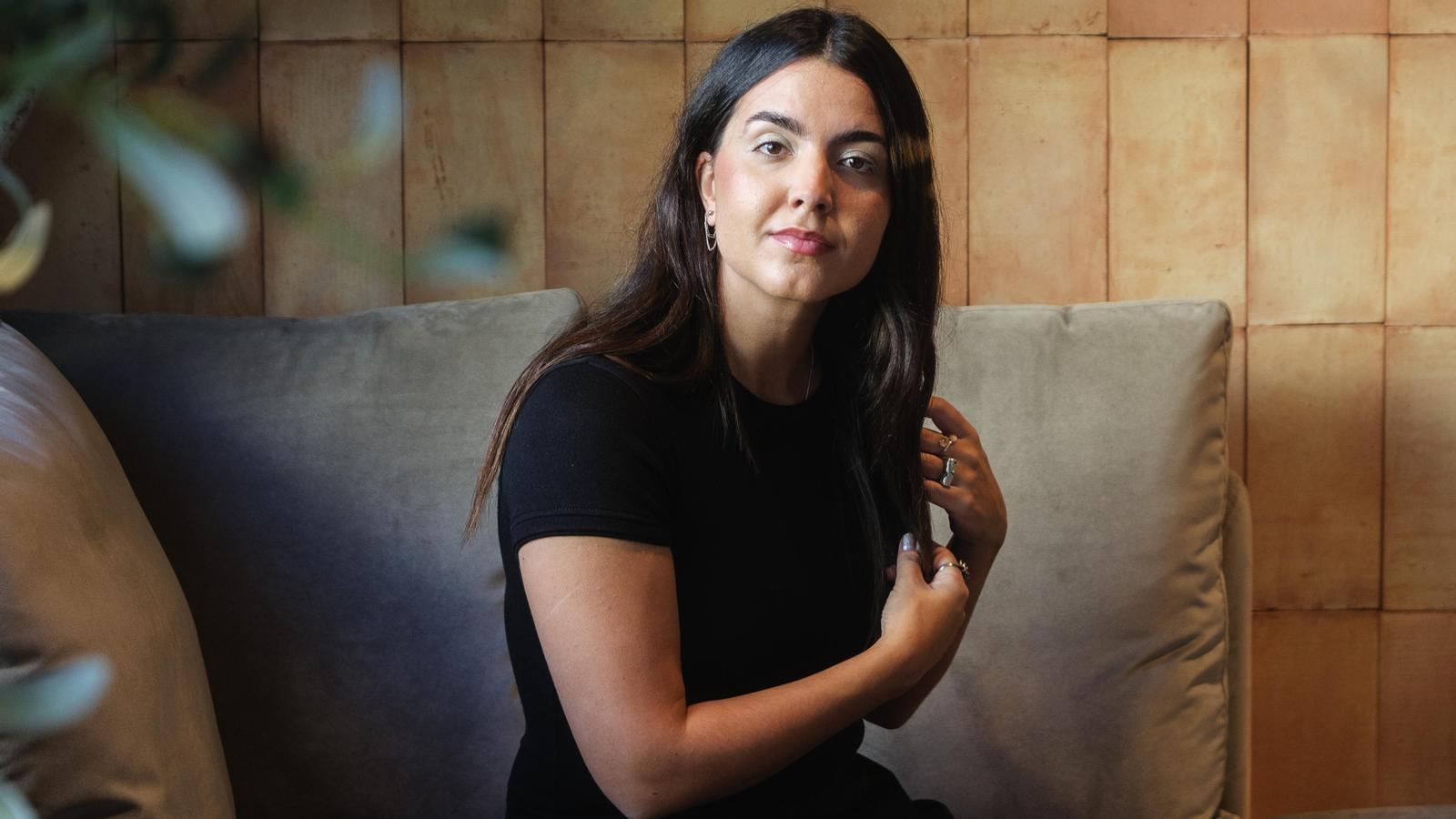
Júlia Colom (Valldemossa, 1997) went in search of the melodies that were sung in the villages of Mallorca. From that search emerged Sempre dijous (Joan Porcel, 2020), award for best national documentary at the In-Edit Festival, and the foundation for the albums Miramar (2023) and Paradís (2025), best album of the year according to the critics of Enderrock.
In her musical career, there is a constant search and dialogue with roots. Has she also felt this connection with gastronomy?
— Mostly, in our house, typical Majorcan dishes are eaten. Laborious cooking is practiced a lot, a very typical cuisine. Also, my grandmother cooks a lot at home. And I realize that one thing that has changed is this great investment of time spent in the kitchen to end up eating in five minutes... Inside my brain, I tell myself: "I don't know if it's worth it." But of course, it is worth it, because it is a very important part of identity and DNA. Otherwise, one more way to globalize yourself, one more thing you lose.
And have you approached these recipes?
— Inside the kitchen, I still feel like I'm wasting a bit of time. Maybe when I no longer have this kitchen, when my grandmother is gone, I will surely miss it and get motivated in some way.
There seems to be a resurgence of traditional recipes, also on social media.
— Yes, I notice it too. The movement that I feel culturally strong is to return to the roots with everything. I see that a km 0 tomato is super cool again. In music, the same thing happens: Bad Bunny is the mainstream artist on the planet and he claims, in his own way, his roots. It's no longer an underground thing. It's a narrative that has become very popular.
Why do you think it happened?
— I think everything has been accompanied by the time lived through social networks: this search for the authentic has exploded, for a path that gives meaning to such a superficial existence.
Popular festivals are also being claimed. Did you go to your town's main festival often?
— Our patron saint is Saint Catherine of Palma. It is a small and quite conservative town; they are not festivals of great revelry, they are restful festivals. As a child, I lived them very intensely. I like them because they are frozen in time: every year it is the same ritual. It is a comfort zone.
What is your favorite point?
— The most important festival is that of the Beata's carts: people mount an old cart with donkeys or horses and decorate it with flowers and branches. Young children dress up and take a ride, and then there is a girl who, on the large cart, represents the Beata, surrounded by little angels.
In Les dones i els dies he explained that, in his search for traditional songs in Mallorca, there were people who refused to share them, perhaps because they felt them too intimate.
— It's strange when you teach a song that you have sung all your life and suddenly more people sing it; it's like that song takes on another dimension. It's a super strange feeling, as if that song already existed in other lives. Traditional music teaches you to be very humble: you have the personal experience, but it's not yours, because it's popular, it has been transmitted orally. There is no private property with these things.
How about the recipes?
— Yes, it's the same. When I sing a song, like when I cook, I do it my way, and surely no one will be able to replicate it exactly as it comes out of me.
The same return to roots, the voice also in the world of wine?
— I know that in Mallorca the wine industry had been delayed a bit, and now it's real again, wine is being made again at km 0. I really like that certain old flavors and techniques are being recovered.
Is wine part of your daily life?
— I drink very little, in super special situations. I know you prefer white wine and that I like it to be very fresh. But I don't feel like maintaining that relationship with wine as an everyday thing, but as something to celebrate. I don't want to end up being a drinker who has to drink in any situation. I prefer not to get into that dynamic.
Within the world of music, is this distant relationship with alcohol common?
— Of all the issues with drinking and drugs in the music world, I don't think I've realized anything. I've always lived in a very healthy environment, with responsible people who work a lot. My team, and everyone I've worked with, are very hardworking people who don't do drugs or drink, especially not before a gig.
The stereotype of the drinking musician, especially in the jazz world, persists.
— But it is not true that musicians still follow that. In fact, it is quite common to find a musician profile who takes good care of themselves, who eats healthy or is vegetarian. In fact, there is so much competitiveness that if you get caught up with drugs, no one counts on you; there are 400 more people studying many hours every day.
How has so much competition been experienced?
— I prefer criticism towards the industry, towards those who decide where the money goes and who is given exaggerated hype, than towards my colleagues. Each person is forging their own path. And that is something I want to be very clear about.
Was it very clear from the beginning what their path was?
— With music, yes. Every day I have this concern about what I should really do, where I want to focus. But I am clear that I want to do this, because it is what gives the most meaning and coherence to my being here. To my living on planet Earth.
