Pep Canadell: China is electrifying cars and Pakistan is experiencing a solar revolution. In Catalonia we must go all out
Executive Director of the Global Carbon Project and Ramon Margalef Prize in Ecology
-
CAT -
CAST
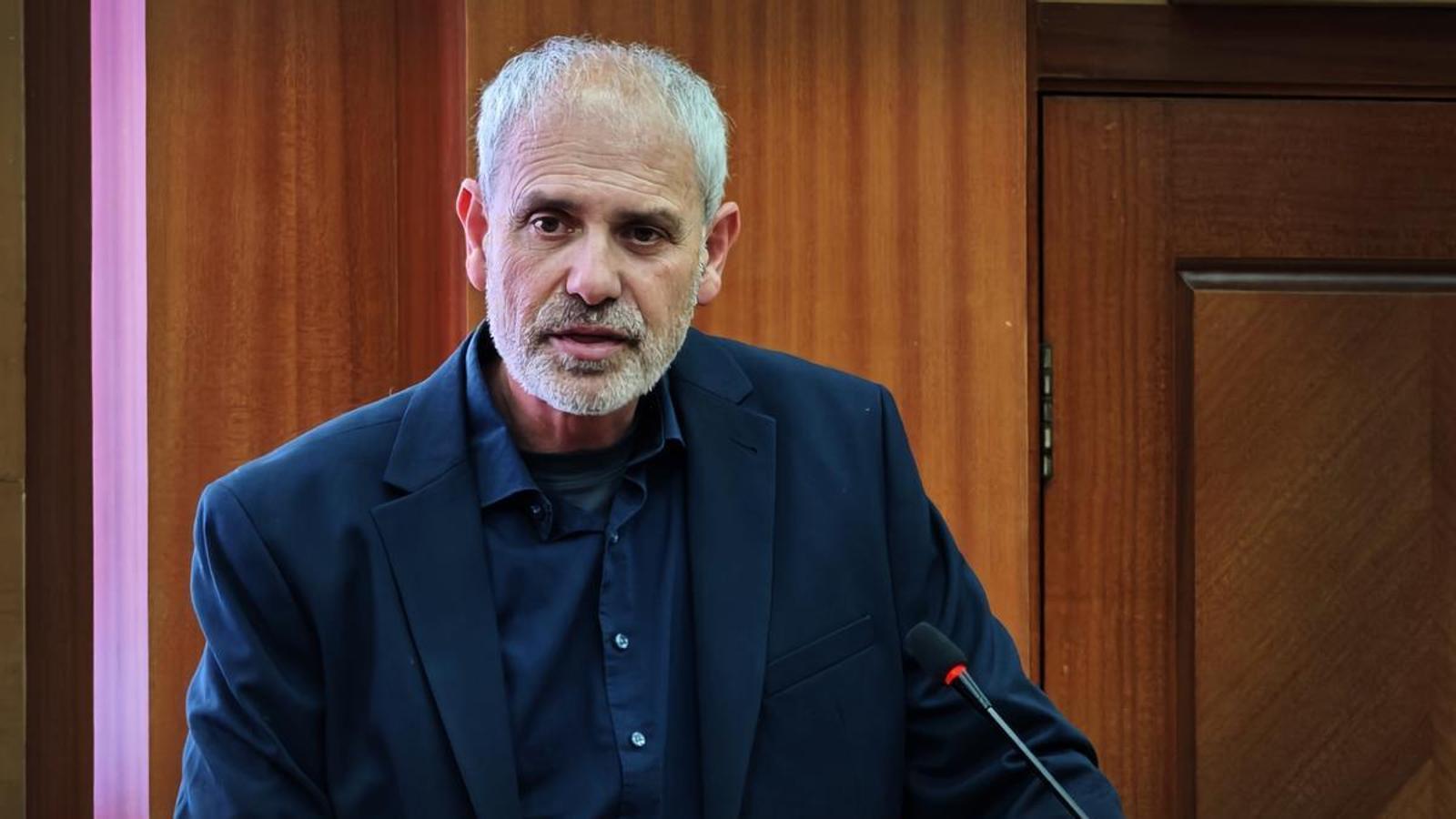
There is an invisible line connecting the holm oak forests of the Castanya valley, in Montseny, with the offices in Canberra and the UN climate summits. This line is the trajectory of Pep Canadell (Sabadell, 1961). Trained at the Autonomous University of Barcelona (UAB) under the mentorship of Jaume Terradas –a direct disciple of Ramon Margalef himself–, he has dedicated his life to building an international scientific alliance capable of putting indisputable figures on the CO₂ we dump onto the Earth. After an extreme summer that has once again melted thermometers in Europe, the scientist speaks to ARA from Australia, via video call. Despite being a world authority on climate, he keeps the spirit of that field student intact: he speaks plainly, avoids arrogance, and never tires of reminding us that the Earth is not an inert machine, but a living organism that is beginning to show signs of exhaustion. He has just been recognized with the 22nd Ramon Margalef Award in Ecology 2026, which is awarded annually by the Government of Catalonia.
What does it mean for you, after half a life in Australia, to receive the Ramon Margalef Award at home?
— Given the list of giants who have received it before, it is, without a doubt, the most important ecology award in the world. But what truly moves me is not that, but rather that it comes from Catalonia. It connects me to my personal and professional origins. I grew up at the UAB with Jaume Terradas, who was a colleague and disciple of Margalef. I was lucky enough to experience the beginnings of that ecology department, which did not even exist before, because it was botany. Receiving an award that bears the name of Margalef in my homeland touches me very deeply.
Did you get to know Margalef in person?
— Absolutely! I was from the Autonomous University and he was from the University of Barcelona, but I went to the UB just to listen to him. When Margalef opened his mouth, everyone would go silent waiting for a great discovery: any sentence of his could be a doctoral thesis. He was a brilliant theorist who, as early as the eighties, coined the term "man and the biosphere". If he were to lift his head today, he would be surprised to see how climate change has become the great umbrella that defines the future of modern society. And he would be very proud to see that ecology is absolutely central to understanding the planet.
How is it explained that a Catalan biologist ends up being the planet's carbon "accountant"?
— The essence is exactly the same. It seems incredible, because you say: "How can it be that you start by studying roots and sticking your head inside a hole in Montseny, and end up looking at how the world works?" Well, because my background in ecological sciences taught me to understand interactions: the flows of water, carbon, and nutrients. It is exactly the same if you study these processes at the Castanya biological station or on a planetary scale; the only thing that changes is that on the planet they are trillions of times larger. At the Global Carbon Project there are exceptional physicists, mathematicians, or atmospheric chemists, but the ecological vision is what allows you to understand living nature and know in which direction research must advance.
We have just gone through a chilling summer in Europe. When you were studying in Bellaterra in the eighties, did you imagine that we would reach this extreme so quickly?
— No. The graphs we showed 25 years ago are not so different from the ones now, but back then we talked about increases of two or four tenths of a degree on average and nobody understood what the hell that meant in their day-to-day life. Thirty years ago we said: "Vine varieties will have to change in Catalonia," and people were surprised. Today, however, we are talking about people who have to run to save their lives in many places in Europe. I remember that five years ago I was in La Bisbal d'Empordà at 45 degrees, with the elderly locked at home with the shutters down, not knowing what to do because they had never seen anything like it. In Belgium or England this summer people were dying because they don't have air conditioning. Now climate change is no longer an abstract graph: it is a physical experience that half the planet has lived through.
What is the real diagnosis of the Earth today? Are we approaching the limit?
— Right now we are at 1.4 °C of consolidated global warming. We will physically hit the 1.5 °C threshold within five years. The big problem is not the climate's inertia, but the inertia of the human system: we have built an energy system based on fossil fuels for a hundred years and now we have to undo it against the clock. If it took us decades to move from wood to coal, and from coal to oil and gas, we cannot expect to dismantle it all in a decade. But we must head towards a world at least one degree warmer than the current one, and this will completely transform our lifestyles.
It has always been said that nature absorbs half of what we pollute for free. Does this shield still hold up?
— Until now, forests and oceans have given us a 50% discount on warming: a quarter is absorbed by vegetation and another quarter by the seas. But we are beginning to see very worrying cracks. In the Amazon, we have had serious doubts for years about whether the plant sink is growing or has stagnated. And in the northern boreal forests, where we thought warming would lengthen the growing season, since 2021 we have been seeing fires of a magnitude never recorded by satellite. Carbon sinks that we took for granted are beginning to burn. If our emissions continue to rise and natural sinks stop or fail, the fraction of CO₂ that will remain trapped in the air will be much larger.
You insist a lot on differentiating the CO₂ battle from that of methane. Why is this second gas so decisive?
— Because they work on totally opposite timescales. When we emit a ton of CO₂, 400 kilos will still be in the atmosphere 100 years from now; 200 kilos 1,000 years from now, and 10 kilos 10,000 years from now. It is irreversible on a human scale. That is why with carbon dioxide the only possible goal is to reach net zero emissions. On the other hand, methane has a brutal warming peak in the first 11 years, but in 30 or 40 years it practically disappears. This means something hopeful: if we cut CO₂ we only prevent warming from continuing to increase, but if we cut methane we remove warming almost immediately.
And how is methane stopped?
— Half comes from the coal, oil, and liquefied gas industry: these are leaks that are lost due to negligence or old infrastructure. These escapes are money evaporating into the air; plugging them is very cheap and almost self-financing. The other half is agricultural: the enteric fermentation of livestock. Here there are no 90% magic solutions. Either we reduce red meat consumption or we will not succeed. If the population of the wealthy world simply ate the amount of meat recommended by nutritional health guidelines, we would solve half of the agricultural methane problem at once. It is a win-win.
Faced with the slowness of changes, many trust that carbon capture technology will save us. What do you think?
— Which is a huge lie. For twenty years we have been hearing about carbon capture and storage (CCS) as the perfect excuse for large multinationals to continue burning fossil fuels as if nothing happened. Capturing carbon from the air is extremely expensive, inefficient, and energetically unviable on a large scale. The cheap, mature, and real route is another one: the total electrification of the planet. We must go all out to electrify transport, homes, and industry that operates at less than 800 degrees.
Are there real reasons for hope in this transition?
— A great many. Decarbonization no longer has a turning back point. The curve of renewables, especially solar, is beastly: it took us 70 years to install the first solar terawatt in the world; we put in the second one in three years, and the third, in a year and a half. In China, 50% of the cars that are sold are already electric. Pakistan is experiencing a photovoltaic self-consumption revolution on the margins of the large electric companies. India is the second solar power in the world because it has realized that the sun is cheaper than coal. And in Australia, which has coal for three centuries, we have the highest rate of solar panels per capita on the planet: people are pragmatic and know that in four years the investment is amortized. I myself have had a zero electricity bill for ten years.
How do you see the situation in Catalonia from a distance?
— I miss a real push. That in 2026 in Catalonia we are still discussing where to put solar panels or wind turbines, and that decisions are postponed for another year, is something out of this world. Good work has been done in emergency adaptation and alerts, but in mitigation we are very late. Catalonia has two nuclear power plants that produce half of its electricity and will close at the beginning of the next decade. How can it be that the renewable network is not being deployed at full speed to cover this gap? We cannot wait any longer: we must go all out.
What can we, as citizens, do in the face of this monster?
— Three very clear things. The first and most important: vote and demand that the climate emergency be a non-negotiable priority on the political agenda. The second, rationalize flights: the great black hole of a middle-class family's ecological footprint is air travel; we must normalize that many meetings can be held via screen. And the third, electrify our life: switch to heat pumps, induction cooking, and electric vehicles as we renew our appliances.
How does one intimately live with the frustration of having the diagnosis in hand and seeing that the social and political response is so slow?
— I do not live this with frustration, but with determination. We have lived through decades of misunderstanding, but science has won the debate: the Kyoto Protocol or the Paris Agreement exist because the scientific community has never tired of breaking rocks against the interests of the fossil giants. The transformation has started and is unstoppable. We will have a warmer world and we will suffer severe impacts, yes, but the race to avoid collapse has already begun and it will not stop.
