Bad news from Germany

-
CAT -
CAST
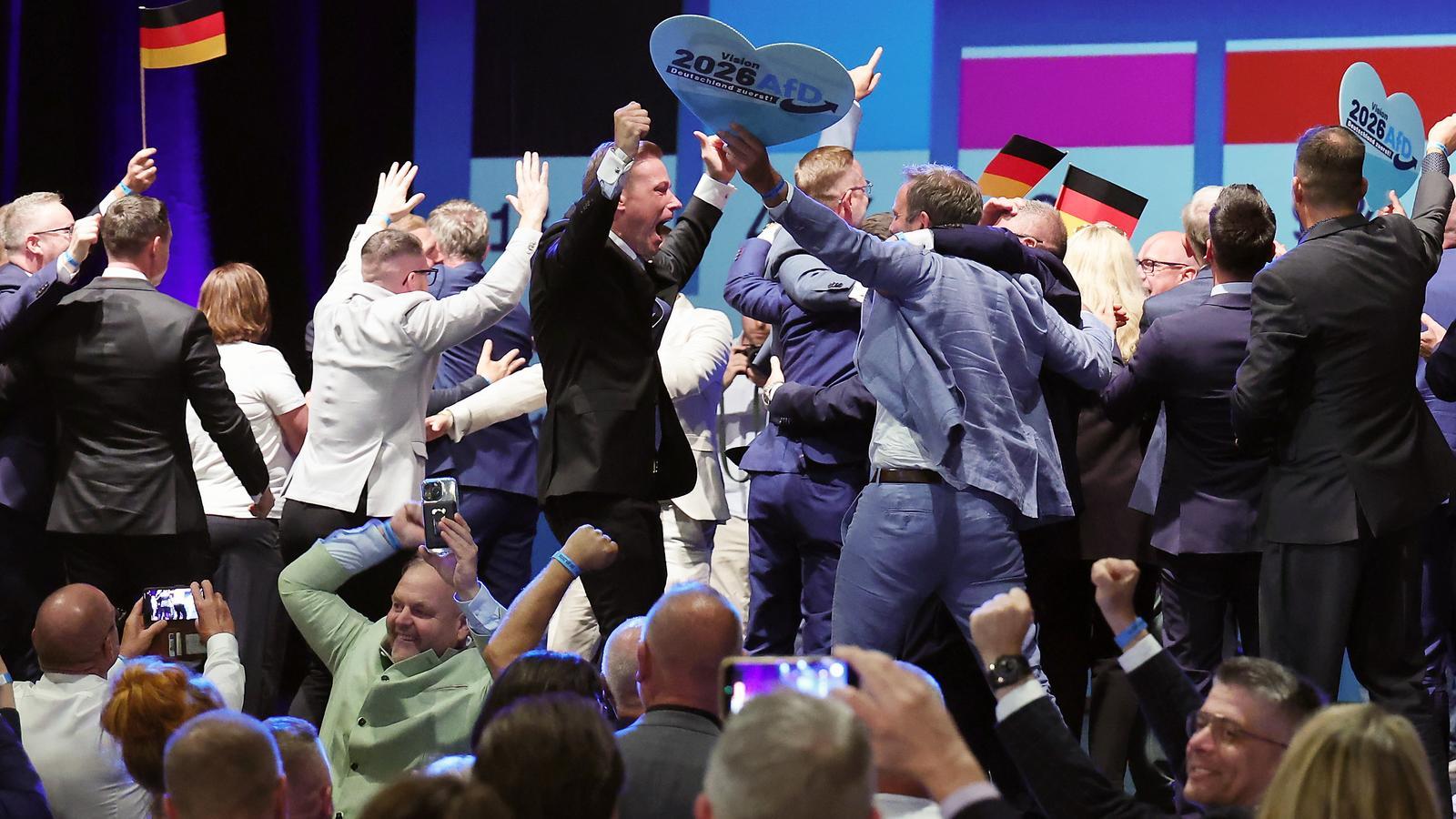
The polls were already warning about it, and yesterday the results confirmed it resoundingly. The far-right party Alternative for Germany (AfD) has swept the elections in Saxony-Anhalt and could end up governing if it finally achieves an absolute majority in seats – at the last minute it was at 44.6% with 95% of the vote counted – or if its potential partner, the Sahra Wagenknecht Alliance (BSW) party, which for the moment exceeds the 5% threshold of votes that allows for representation in the regional Parliament, supports it or abstains in the vote. Be that as it may, what is clear is that it was voted for by an overwhelming majority of citizens of this federal state, one of the 16 into which Germany is divided and which has a population that just barely exceeds two million people. In fact, the first thing that has been surprising today is the spectacular increase in turnout, which exceeds 70%, more than ten points higher than that which occurred in the previous elections of 2021.
The success of the AfD is very bad news because it is a party that openly has links to neo-Nazis, some of whom are part of the country's structure; it carries slogans such as "remigration" with the objective of expelling or, if that is not possible, isolating and singling out immigrants, and it defends a social and cultural model centered on the traditional and conservative family that it plans to promote with campaigns in the educational and cultural spheres. For example, by banning the rainbow flag in schools. It is also considered to be a "friendly" party to Russia, which at the current moment of hybrid war is a real problem for the federal government; it opposes the war in Ukraine and economic support for Kyiv, and economically it defends the fiscal discipline that entails keeping the country's debt in check even if that entails cuts to necessary public services and investments.
All of this constitutes policies that attack many of the values of the European Union itself, and which make it difficult to face current threats to Europe with unity, both in the east, with a Vladimir Putin who must be rubbing his hands together today, and in the west, with Donald Trump also happy about the advancement of an ideology that is very much in line with his own. For this very reason, and despite the fact that we are talking about a small state, the spectacular result achieved by Ulrich Siegmund, the young AfD candidate, is worrying because of the capacity it may have to replicate itself in the elections scheduled in other states.
The truth is that the far right is steadily gaining ground all over Europe. In Italy, it governs; in France, only the cordon sanitaire prevents it from having more institutional presence, but it is clearly also leading the polls; in Germany, in fact, it was already the second force in the federal elections with 20% of the votes; in Sweden, next week, the Sweden Democrats could have enough votes to enter the right-wing coalition government, and in Spain, it has also achieved power in almost all the autonomous communities where the PP governs, and everyone takes for granted that it will also be in the government if Feijóo thus has the option to govern. The cordons sanitaires, as may happen in Germany, are breaking down. And the flood could wash away many of the best advances that humanity has made in the last century.
