Assumptions, at last

-
CAT -
CAST
The Catalan government will have budgets. It was about time. The last ones were approved in 2023. We cannot get used to considering it normal to govern without updated accounts. It is not acceptable that budgets are increasingly dragged from legislature to legislature due to the inability to reach agreements. Politics is precisely that: pact. A sense of responsibility beyond expressing legitimate differences.
This time, the Andalusian elections were the cause of the delay. The Spanish government did not want to harm its candidate, María Jesús Montero, in a very difficult contest, as has already been seen (despite the socialist decline, the consolation prize has been that the PP could not regain an absolute majority and will depend on Vox). After the then minister Montero agreed to the new regional financing system, with an increase of 21 billion for the whole (4.7 billion for Catalonia), the brake came due to the disagreement over the transfer of personal income tax, which was initially a red line for ERC. With the addition of the context of the Rodalies crisis, the Republicans did not want to endorse Illa's accounts. But the breakdown was only strategic. PSC and ERC urged each other to continue negotiating.
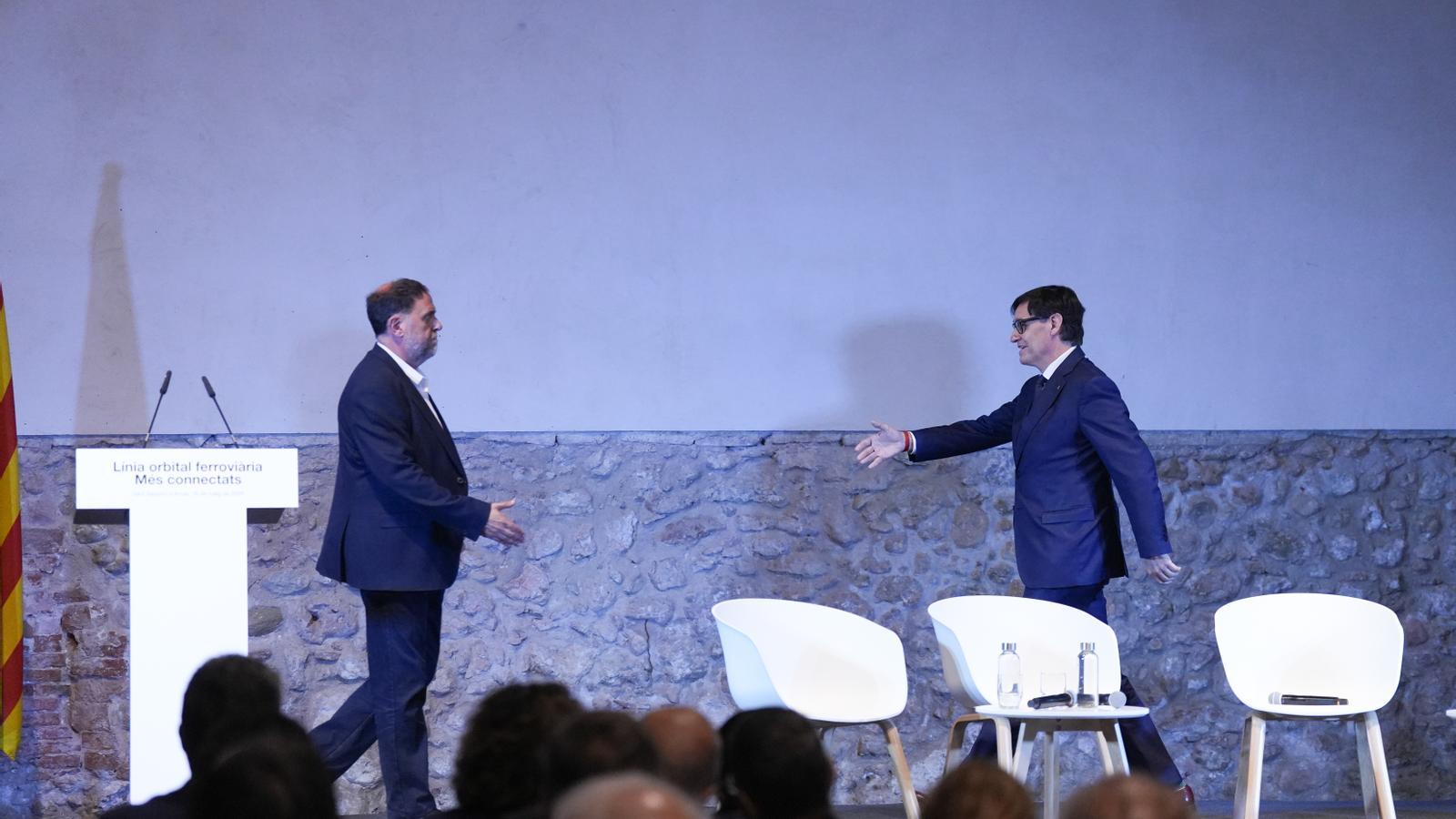
Now, finally, there has been fumata blanca. How has the situation been resolved? An old railway infrastructure project has been recovered, the orbital railway line: a long-term bet (2041) to connect Mataró with Vilanova i la Geltrú by train, of which 68 out of 120 kilometers will have to be built from scratch, with 40 stops and an estimated global cost of 5.2 billion. The project was proposed more than two decades ago, during the tri-party government of Pasqual Maragall. The potential annual user demand is 30 million travelers. If it goes ahead – it will depend, in large part, on the commitment of the State governments in the coming years – it will help to remove up to 29,000 vehicles daily from the road and reduce 45,000 tons of CO₂ emissions annually.
It is a relevant commitment that, nevertheless, should not lead to the disappearance of the Personal Income Tax (IRPF) from the negotiating agenda. Catalonia continues to suffer from an suffocating financial grievance. The historical demand of Catalanism to control and manage taxes cannot diminish. This does not mean that the shared gesture of approving the budgets is not welcome. It was necessary.
It is true that without budgets the country does not come to a standstill, but governance is affected: the public machinery is slowed down and, consequently, the economy and society as a whole suffer. Catalan legality is much more demanding than Spanish legality when seeking ways to increase spending without new approved accounts. For the State's executive, there are easier ways to increase spending. For the Generalitat, it is more arduous and complicated.
Therefore, the approval of the budgets, thanks to the agreement between socialists and republicans – also with the participation of Comuns – is objectively good news. The economic world and the entire social fabric have insisted to the point of exhaustion in recent years, when urging political groups to move forward with the accounts. From this newspaper, we have also insisted on this. It was time to take the step.
