The Fed raises interest rates and its president heads towards a clash with Trump
It is the first time that the Federal Reserve increases the price of money since 2023, when Joe Biden was still governing

-
CAT -
CAST
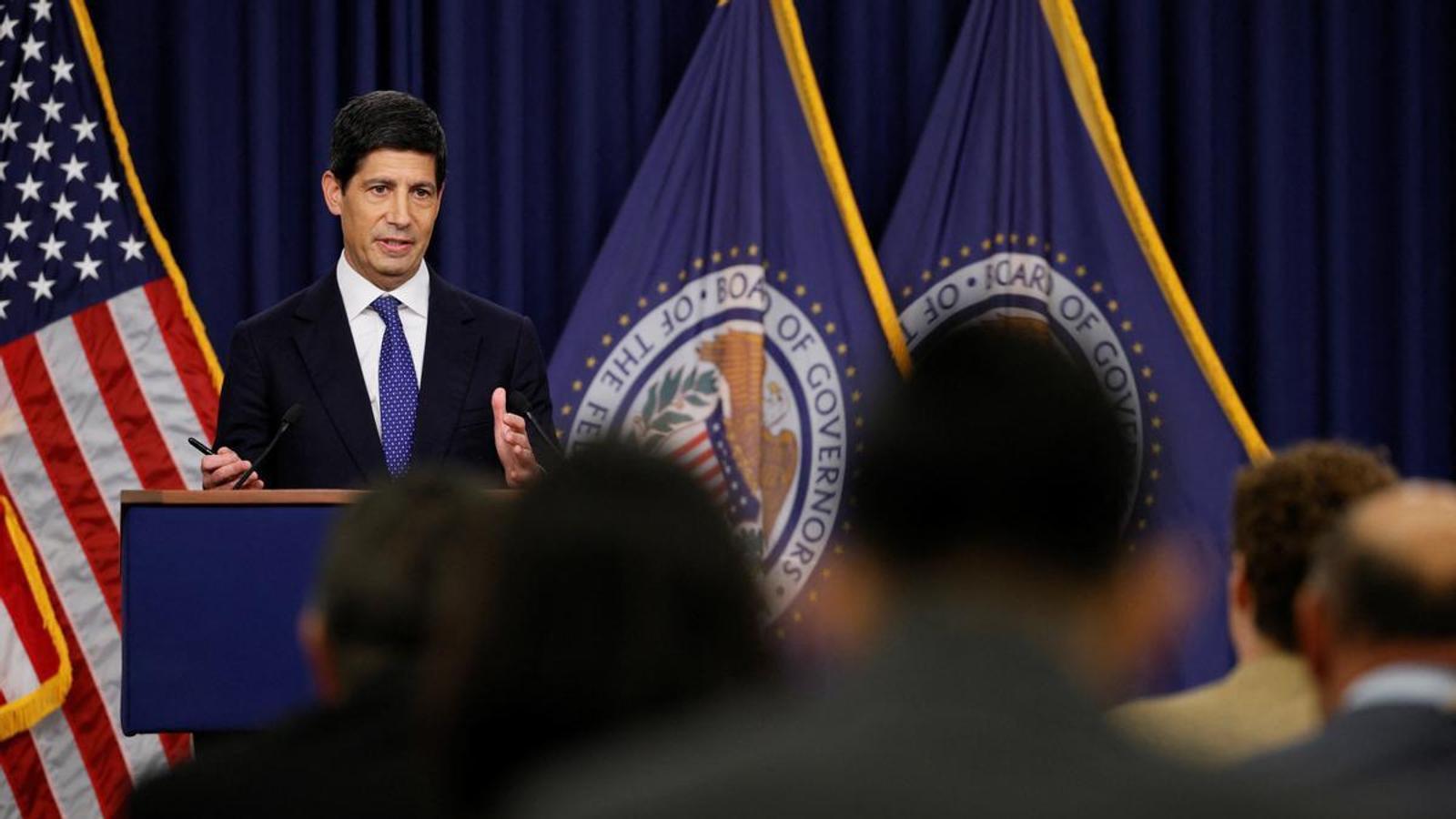
WashingtonThe honeymoon between the new Federal Reserve (the Fed, the United States central bank) chair, Kevin Warsh, and U.S. President Donald Trump is over. The organization announced this Wednesday that it is raising interest rates to the range between 3.75% and 4%, which represents an increase of 0.25 percentage points compared to the previous 3.5%, despite Trump's demands that it cut them.
The decision was unanimous: 12 votes in favor and none against from the members of the Federal Open Market Committee, the Fed's internal body that decides monetary policy. This is the first time the central bank has raised rates since 2023, when Joe Biden was still president. A parallel that, likely, does not please the current U.S. leader either.
After nine months of relative calm, Warsh has felt the thorns of his new chair for the first time: Trump, who appointed him to the position expecting obedience, had once again pressured the Fed to cut interest rates. But the current economic scenario, with inflation hovering around 3.4% (far from the 2% target) and a stable labor market –though not particularly vigorous, with the unemployment rate around 4%– pointed in another direction.
Trump's reaction was slow in coming, but the tycoon avoided personally pointing out his appointee. In a post on Truth Social, with abundant capital letters and exclamation marks, he demanded of the Fed: "Lower interest rates for the United States, and do it fast!". The president reiterated that the price of money should be around "1% or less" because "our country is seeing great growth in investment". As a solution, the Republican proposed that "if we stopped trading with every country with which we have a deficit, we would earn, at least, 1.5 trillion dollars a year".
In the press conference following the decision, Warsh pointed out that, although employment levels are "consistent" and in "good shape," inflation has remained "above target." "Our primary goal is to keep prices stable. Simply put, inflation is too high and has been for too long," he stated. The Fed chair pointed to the quorum in the vote to raise rates as a "sign of our determination to achieve price stability."
However, a good part of this increase in inflation in recent months has also been spurred by the war in Iran and the blockade of the Strait of Hormuz. Warsh has acknowledged that raising rates does not automatically solve the problem in the Middle East: "We cannot influence the price of any specific product", but "we can ensure that any change in relative prices does not spread or cause second and third-order effects on the economy", he said. Ironically, the scenario that the Federal Reserve faces today under Trump's mandate is not very different from what it had with Biden: now it is the conflict with Iran that forces it to raise rates, back then it was the one in Ukraine.
Trump pushes in vain for a cut
Although he has not reached the same level of verbal aggression he used with Jerome Powell when he was still leading the organization, over the last few weeks Trump has made his impatience known. "I would love to see lower interest rates," the US president said at an event at the White House on July 29. He then praised Warsh –"he is fantastic," he said–, and blamed the Fed board, saying it was "politicized" and that "they want to keep rates high."
On September 4, with the Fed meeting already on the horizon, Trump stepped on the gas: "We should be paying the lowest interest rate in the world," the leader said, after the consumer price index report showed that inflation was not slowing down. The Republican complained that higher interest rates cost the country more money regarding its debt.
At the last Fed meeting held in July, Warsh opted for caution and froze rates after the ceasefire between Iran and the US was broken. Since then, the US has not only continued exchanging fire with the ayatollahs, but the Houthis have threatened to block the also strategic Bab el-Mandeb Strait, and Trump has decided to start a trade war with Canada, the second country from which the United States imports the most products.
On Tuesday, the price of US crude oil reached 106 dollars per barrel, while gasoline prices remain 45% above February levels, when the war began. Diesel prices have reached the highest level in history, which puts pressure on farmers and truckers who depend on it.
The interest rate hike also comes after the Treasury Department announced last August that the United States' public debt has risen to 40 trillion dollars.
