The Fed opts for caution and keeps interest rates around 3.5%
Warsh maintains the policy of little transparency in the decision-making of the body

-
CAT -
CAST
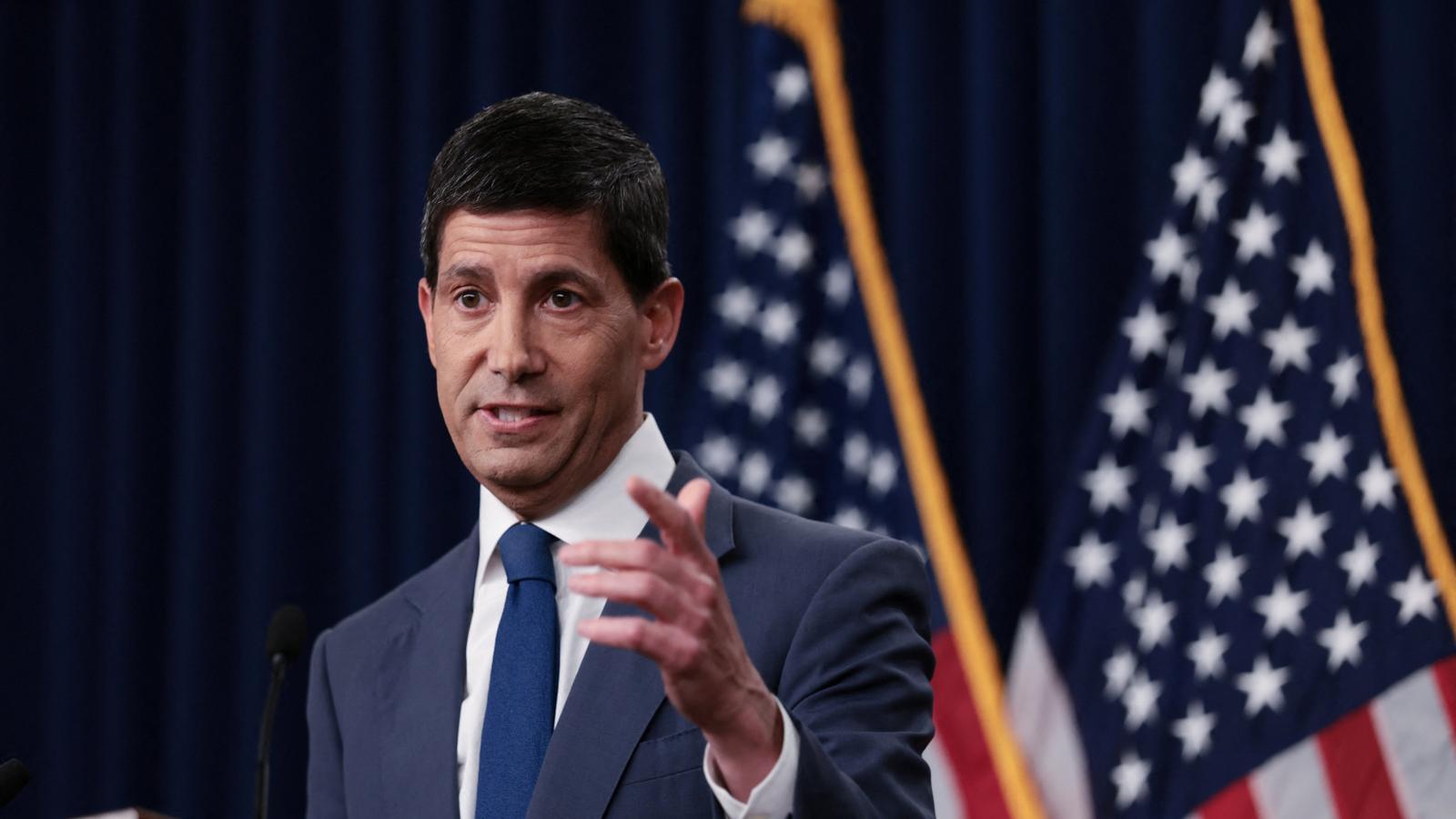
WashingtonAmidst the uncertainty, Kevin Warsh's Federal Reserve (Fed) has opted for prudence and has kept interest rates unchanged around 3.5%. According to the statement from the U.S. central bank, there were three dissenting votes on the institution's governing council that favored raising rates by 0.25 points.
This is the fifth consecutive time the Fed has kept the price of money fixed in the same range. All this, while pressure grows for the body to be capable of containing inflation, now around 3.5% and far from the 2% target it sets as ideal. In the press conference following the announcement, Warsh made it clear that he is aware of this: "We have begun a new chapter and we understand that more than five years of inflation above the target cannot be corrected in nine weeks, nor with a single month of moderate price decreases".
The 2% target increasingly seems utopian as the conflict in Iran – which is driving up the cost of energy – drags on, and U.S. President Donald Trump remains determined to sustain his trade war. In the background, the inflationary effect caused by the high demand for chips and semiconductors needed for the AI race persists.
In his debut at the helm of the U.S. central bank, Warsh already made it clear that he would opt for opacity. Unlike his predecessor, who published broad guidelines that allowed analysts to predict future decisions, the new chairman prefers much shorter and more obscure statements. The result has been that both citizens and Wall Street arrived at this new meeting today without any certainty as to what the institution's next step would be.
The decision to release information drop by drop only adds uncertainty to an already uncertain economic landscape. A move difficult to understand when the stock market is barely recovering from the constant plot twists of the Iran war and Trump's erratic tariff policy. By making the central bank's decisions less predictable, and therefore less reliable, confidence in an institution that is crucial for the rest of the world's central banks is eroded.
A complicated decision
Furthermore, this new line of action is like adding insult to injury: the Fed arrived at this July's meeting at a poisoned crossroads: any of the three options Warsh had on the table was marked by suspicion. Although freezing interest rates was the most anticipated, being the most conservative, it also carried the risk of falling short and allowing inflation to rise again. After soaring to 4.2% in May, it fell to around 3.5% in June and had stabilized in this range in July.
On the contrary, if Warsh lowered rates, it would awaken more distrust towards the institution by complying with Trump's dictates. Since returning to power, the president has led a campaign of pressure against the Fed to influence its decisions and get it to lower the cost of money. All this, without forgetting that Warsh now presides over the central bank proposed by the White House.
Raising rates could also paradoxically call into question the Fed's credibility. Despite being a direct challenge to Trump, Warsh would have had to provide a very convincing justification for it to be consistent with the economic situation. The inflationary rebound is dominated by the energy shock derived from the blockade of Hormuz, rather than by an overheating of economic activity. Therefore, what would really appease inflation would be for the war to end, or at least for the maritime passage to be unblocked. The result of an interest rate hike would have a more limited effect: a reduction in demand caused by an increase in the cost of money could curb inflation, yes, but at the risk of slowing down the US economic growth.
At the beginning of the year, US GDP already showed signs of cooling with a fall. Currently, household spending has lost momentum due to the high cost of living, and a large part of economic growth right now is based on the artificial intelligence boom.

