Reused clothing and parking lots for electric cars: Barcelona Global collects practices against the climate crisis
A total of 109 companies have contributed for more than a year actions and initiatives to improve sustainability in the metropolitan area of the Catalan capital

-
CAT -
CAST
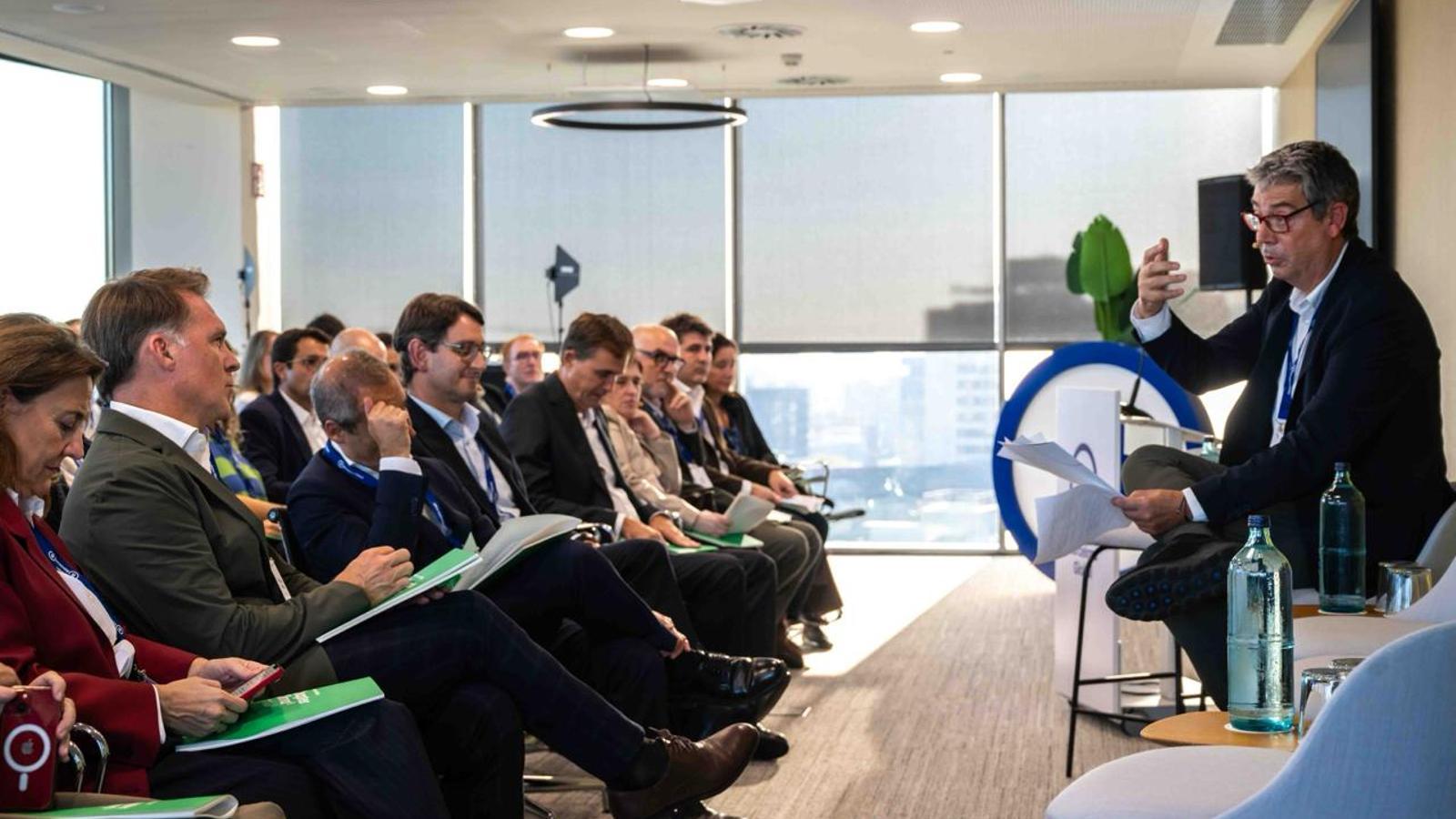
BarcelonaA total of 109 companies and entities have contributed measures for more than a year to combat the climate crisis in the Barcelona metropolitan area. The proposals, within the framework of the so-called Climate Chapter of the business association Barcelona Global, were presented this Wednesday at the headquarters of the consulting firm EY in Barcelona. The report includes cases such as the manufacturing of a new Barcelona paving stone with 47% fewer emissions and 40% recycled aggregates by Sorigué, BSM (Barcelona de Serveis Municipals) parking lots converted into hubs with about 600 electric car charging points, or surplus fruit from Mercabarna that reaches social entities.
There is also the Optipath project, by Vueling, which has analyzed 230,000 flight trajectories and estimates a potential reduction of 132,000 tons of carbon dioxide (CO2); or the pharmaceutical company Almirall, which has reduced its direct carbon footprint by 22%; and also Mango, which has marketed more than 53,000 garments made with post-consumer recycled fabric through The Post Fiber, specialized in circular fashion. For its part, Nedgia Catalunya, from the Naturgy group, reduces emissions through the use of biomethane; and Exea Impact, together with Aretian, have created a digital twin that combines more than 100 indicators to detect the neighborhoods and groups most vulnerable to extreme heat.
The report collects good practices from companies and identifies the common barriers that hinder decarbonization and adaptation to climate change throughout the Barcelona metropolitan area. The event was attended by Antonio Capella, from EY and president of the Climate Chapter; the president of Barcelona Global, Josep Lluís Sanfeliu; and the executive president of Fluidra, Eloi Planes, who explained his company's commitment to sustainability and so that swimming pools and their surroundings, his specialty, go beyond places for enjoyment.
Table with the Generalitat
The report includes a total of 102 best practices provided by 57 companies and defines six initiatives to be developed. As a result of this work, Barcelona Global will create a dialogue table with the Generalitat in order to simplify procedures "and move towards a single window where companies can accelerate environmental projects".
Also planned within the framework of the Climate Chapter is the creation of a sustainable mobility group, a guide for financing renovation, applying artificial intelligence (AI) to the climate, and the transfer of best practices to SMEs.
Barcelona Global takes advantage of having nearly 1,300 members among companies, research centers, entrepreneurs, business schools, universities, cultural institutions, and professionals to carry out such tasks, and the Climate Chapter initiative "is a clear demonstration of the mobilization capacity of the business fabric". Companies with the capacity to transform the city have been part of the initiative, such as the pharmaceutical industry, retail, food, building and construction, and services. Of the 102 practices already in operation, 38 correspond to services, 22 to building and construction, 13 to mobility, 11 to the pharmaceutical industry, 10 to food, and 8 to retail.
