Lagarde, open to leaving the ECB early to "make a European voice heard" in the French elections
The term of the highest leader of the European Central Bank expires in October 2027

-
CAT -
CAST
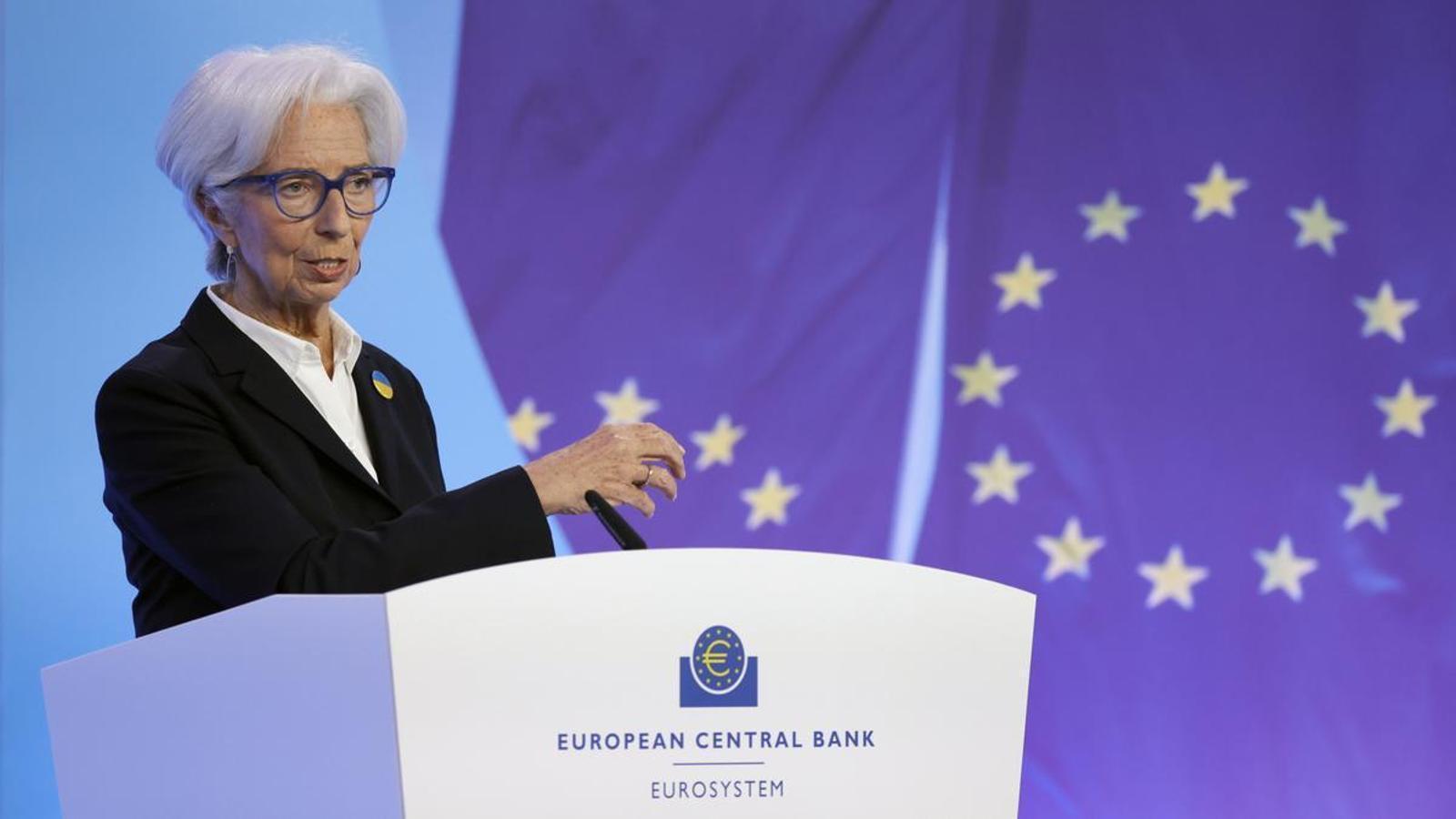
BarcelonaThe President of the European Central Bank (ECB), Christine Lagarde, leaves the door open to leaving her post at the institution early to contribute to the debate around the next presidential elections in France, scheduled for April 2027. "It is possible," declared the also former French Finance Minister in an interview with the French newspaper Les Échos, to whom she was asked if she was considering leaving the presidency of the eurozone's highest monetary body to participate in political discussions in the country.
"I believe it is necessary for a European voice to be heard. If the debate reveals a more limited view of France's position in Europe, I believe it would be necessary to explain that this is a painful path for our country and for our fellow citizens," she defended. Despite everything, Lagarde has not dared to specify how she will participate in the electoral campaign, whether through direct involvement, supporting a candidate, or even running herself. "I will think about it," she limited herself to saying.
In any case, the top ECB leader also wanted to make it clear that she would only leave the institution if price stability is guaranteed. "Given that we are going through a turbulent period again, I believe the captain of the ECB should stay on board," she maintained. The mandate for the ECB presidency expires in October 2027.
Rising inflation
Lagarde's statements come shortly after the European Central Bank decided to raise interest rates to combat the rise in product prices caused, in large part, by the war in Iran initiated by the United States and Israel. After a year without changes in the price of money – with stable inflation close to the 2% target – the monetary body of the euro area opted to raise the reference rate by 0.25 percentage points, to 2.25%.
In the French leader's view, the rate hike was "obvious" because the "appropriate" circumstances existed to do so. Since the outbreak of the conflict in the Middle East, inflation in the eurozone has gone from figures close to 2% to rising to 2.8% in June, according to the latest provisional data provided by Eurostat, the statistical office of the European Union. In Spain, the rate has risen even further, to 3.2%.
In this regard, it will be necessary to monitor the evolution of the conflict in Iran to see the fluctuation of prices and, consequently, to infer whether Lagarde will make her departure at the head of the ECB effective. According to the entity's latest forecasts, the average inflation rate in the euro area this 2026 will be 3%, and it is not expected to fall below 2.3% in 2027. Along the same lines, financial analysts predict at least one more rate hike during this fiscal year. Current data dampen the prospect of a short-term departure for Lagarde, as price stability is not expected to be achieved until well into 2027.
Spanish candidacy
The possible early departure of Lagarde would revive the appearances of the current General Manager of the Bank for International Settlements (BIS) and former Governor of the Bank of Spain, Pablo Hernández de Cos, the candidate chosen by the Spanish government to occupy one of the six seats on the executive committee of the organization based in Frankfurt (Germany).
Following the departure of former minister Luis de Guindos from the vice-presidency of the ECB – his term expired this May – Moncloa expressed its intention to continue having "a preponderant role" in the institution. With De Guindos' departure, Spain was left without a representative in one of the six most relevant positions within the ECB's top management.
In this regard, the international press points out that the candidacy of the Madrid-born is the best positioned, due to his academic background, for being a consensus person in the State, and for maintaining territorial balance in the central bank's executive board. Besides Lagarde (France) as president, the vice-presidency of the ECB is held by Boris Vujcic (Croatia), and the rest of the executive committee members are Piero Cipollone (Italy), Frank Elderson (Netherlands), Philip Lane (Ireland), and Isabel Schnabel (Germany). As the fourth economy in the eurozone, Spain would once again claim a prominent position. Despite all this, it should also be taken into account that the majority of the leaders on the European Council – the body that brings together EU leaders and is responsible for appointing the ECB president – belong to the European People's Party family, contrary to the Spanish government's positioning.
