Josep, I am not exaggerating
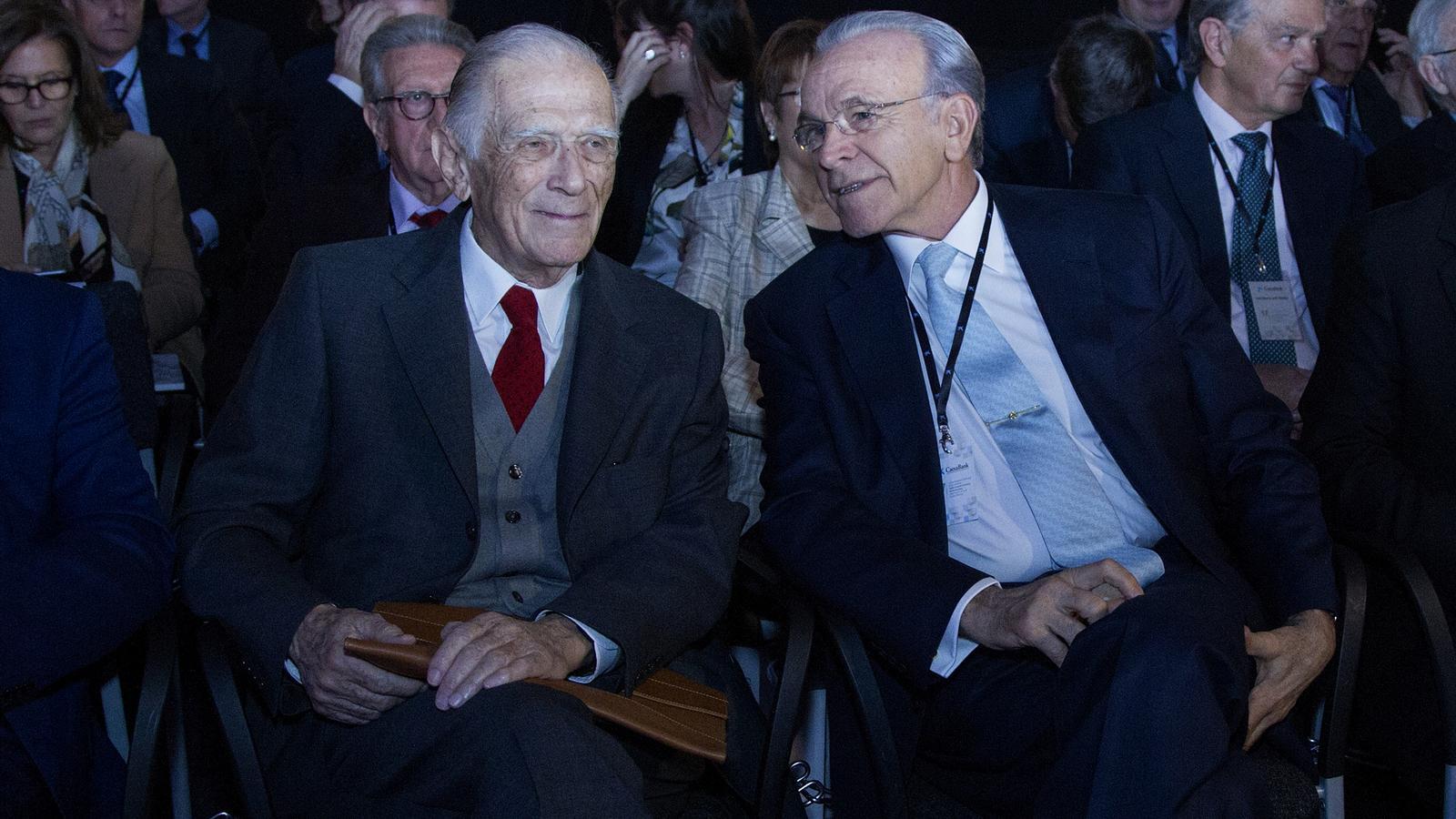
Not so many years ago, during my speech at the Christmas gathering of the La Caixa Foundation, I dedicated a few words to Josep Vilarasau. I never miss an opportunity to praise him, and that day, in front of all the staff, I expressed how fortunate I felt to have been able to work alongside him, as well as highlighting his immense contribution to the success of La Caixa. I asked for applause in his honor, and all the employees responded with a long and heartfelt ovation. Vilarasau, who was in the front row, took the microphone and said: “You exaggerate, but I like it”.
I met Josep Vilarasau more than 40 years ago. What I have just described is just an anecdotal episode from four decades of shared moments. But it allows a glimpse into some of the defining traits of his character: intelligence, sagacity, eloquence, an exquisite sense of humor. And, above all, it is a good demonstration of his close bond and deep commitment to the La Caixa Banking Foundation, of which he was honorary president until the very last moment.
That ovation from the employees was a more than deserved spontaneous tribute. Because no, you weren't exaggerating, Josep. I'm not exaggerating at all if I say that one of the best bankers of the 20th century has left us. A banker who, far exceeding the financial sphere, strengthened the foundation of the great group that La Caixa is today.
It is difficult to concentrate all the milestones of his career in these lines. An engineer by training, he joined La Caixa in 1976, already with a solid background as a senior state official, in the General Directorates of the Treasury and Financial Policy, and also in management positions at Telefónica and Campsa.
From his passion for mathematics (he praised the beauty and harmony of arithmetic progressions) and with the precision of an orchestra conductor—as the music lover he was—, Josep approached innovation and change processes with the most sublime forms of excellence, precision, and effectiveness. I am referring to highly complex processes that allowed La Caixa to be built and expanded.
As a leader, he was a lover of nuances and always wanted to go a step further. To push the limits. That's why he constantly set constructive challenges for his team. Faced with complex situations and challenges, he had a recurring approach: why do you say that this is not possible? From this nonconformist spirit and from his iron independence, he achieved incalculable value. He hired me during a flight on the Air Bridge, in 1981, and in that conversation our common ground on the nature and development opportunities of the financial business was already reflected.
Globally, during his almost three decades at the helm of La Caixa, he laid the foundations for transforming it into a financial giant. He bet on computer technology to modernize processes and was the creator of its holdings company. Instead of internationalizing the banking business, as other entities did, Vilarasau opted to build an industrial group in collaboration with top-tier executives.
It was a group of majority stakes in service companies, strategic for the economy, with an international presence and covering different sectors (telecommunications, energy, infrastructure, banking, water).
Among all these successes, I would like to highlight two turning points. Firstly, what was one of Vilarasau's great operations: the merger, in 1990, of Caixa de Pensions per a la Vellesa i d'Estalvis with Caixa d'Estalvis i Mont de Pietat de Barcelona. Secondly, and more in the symbolic realm, it was Josep who convinced Joan Miró to draw the star of La Caixa's logo, which was turned into a tapestry that continues to preside over the entrance of the entity's central services in Barcelona.
To Josep we owe, among other things, three major projects that remain fully in force. This is the case of the prestigious scholarships for excellence, thanks to which more than 6,700 students and researchers have had the opportunity to train at the best universities and research centers in the world. Vilarasau also supported, in 1995, the creation of IrsiCaixa at the Germans Trias i Pujol Hospital in Badalona. Today, this center is an international reference not only in the fight against AIDS, but also against other infectious diseases. And in the cultural field, Vilarasau was the driving force behind the Contemporary Art Collection of the La Caixa Foundation, which currently has more than 1,000 works.
Everything I have described summarizes, very succinctly, years of shared experiences with someone who for me has been an undeniable professional benchmark. I will remember him and will champion him with the admiration, respect, and affection that I have shown him for more than 40 years. And it is this same affection that I want to convey to Lola, his wife, as well as to Daniela, Diego, and Bruno, his three children, in these moments of deep sadness.
Josep, I am not exaggerating when I say that your legacy is unique and unrepeatable. And that we will keep it alive with us and with those who succeed us. Thank you always, thank you for so much. Rest in peace.

