Hereu presumes that Spanish industry "holds its own" despite the uncertainty
The minister claims a "Europe with more ambition" to achieve strategic autonomy
-
CAT -
CAST
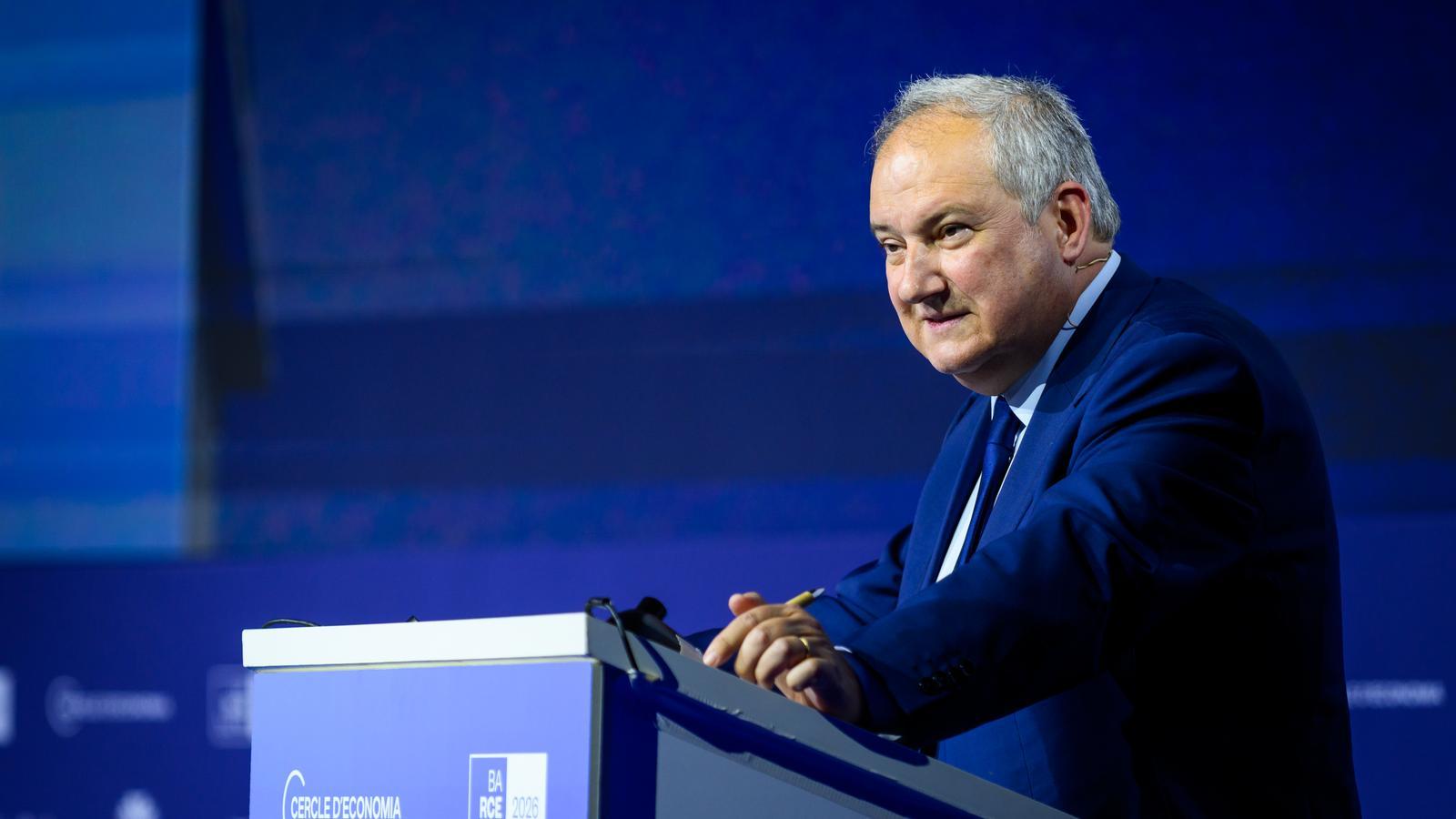
The Minister of Industry and Tourism of the Spanish government, Jordi Hereu, boasted about the capacity of Spanish industry. In his speech at the 41st Meeting of the Cercle d'Economia, Hereu celebrated that the state's productive sector "holds its ground", and survives the multiple geopolitical threats that surround it.
According to the minister, Spanish manufacturing has "the capacity to lead the way in transformation" across all twenty-seven member states. He gave the example of the automotive sector, just a few hours before the executive's institutional visit to the Seat plant in Martorell; but also the pharmaceutical or defense sectors, which he sees as a "great opportunity". "The sectors with the highest added value are the ones that grow the most", he highlighted.
In this regard, he championed the growth forecast for the Spanish economy in 2026, which the European Commission places at 2.6%. However, he admits that the less encouraging prospects of the main community allies do not help short-term development: "I would prefer to be in the midst of a Europe that grows at the same pace as us".
To relaunch the industrial capacities of its neighbors, he called for "joint" efforts, with more expansive investment from Brussels to guarantee productive autonomy. "We want a more ambitious Europe, one that dedicates 2% of GDP to a community budget", he stated; with the aim of making a "leap in scale" in the continental productive economy.
Hereu also insisted on the need to approve an industry law at the state level. Pedro Sánchez's executive approved a draft bill at the end of 2024, but it has not yet been approved in Congress.
According to the minister, the current law is "magnificent", but has the problem that it was approved in 1992 and, therefore, does not address currently essential issues, such as digitalization or renewable energies. For the regulation to receive parliamentary approval, Hereu has called for a "culture of agreement": "It should not be a law of the government, but the law of an entire country".
European funding
Besides Hereu's intervention, the Cercle's event also featured a round table on Europe's difficulties in channeling savings and investment to nurture a capital market that allows for company financing, similar to the United States.
In this conversation, the president of CaixaBank, Tomàs Muniesa, stated: "We will not find companies in Europe that say they cannot finance themselves in Europe", although both he and David López Salido, Director General of Economics at the Bank of Spain, agreed that the continent needs more long-term investment, a securitization system to create more capital, and public impetus to create a more dynamic European venture capital market, among other measures.
