The buoys at the Ceuta border, a way to endorse pushbacks?
Experts point out that a new positioning of the Supreme Court would be necessary

-
CAT -
CAST
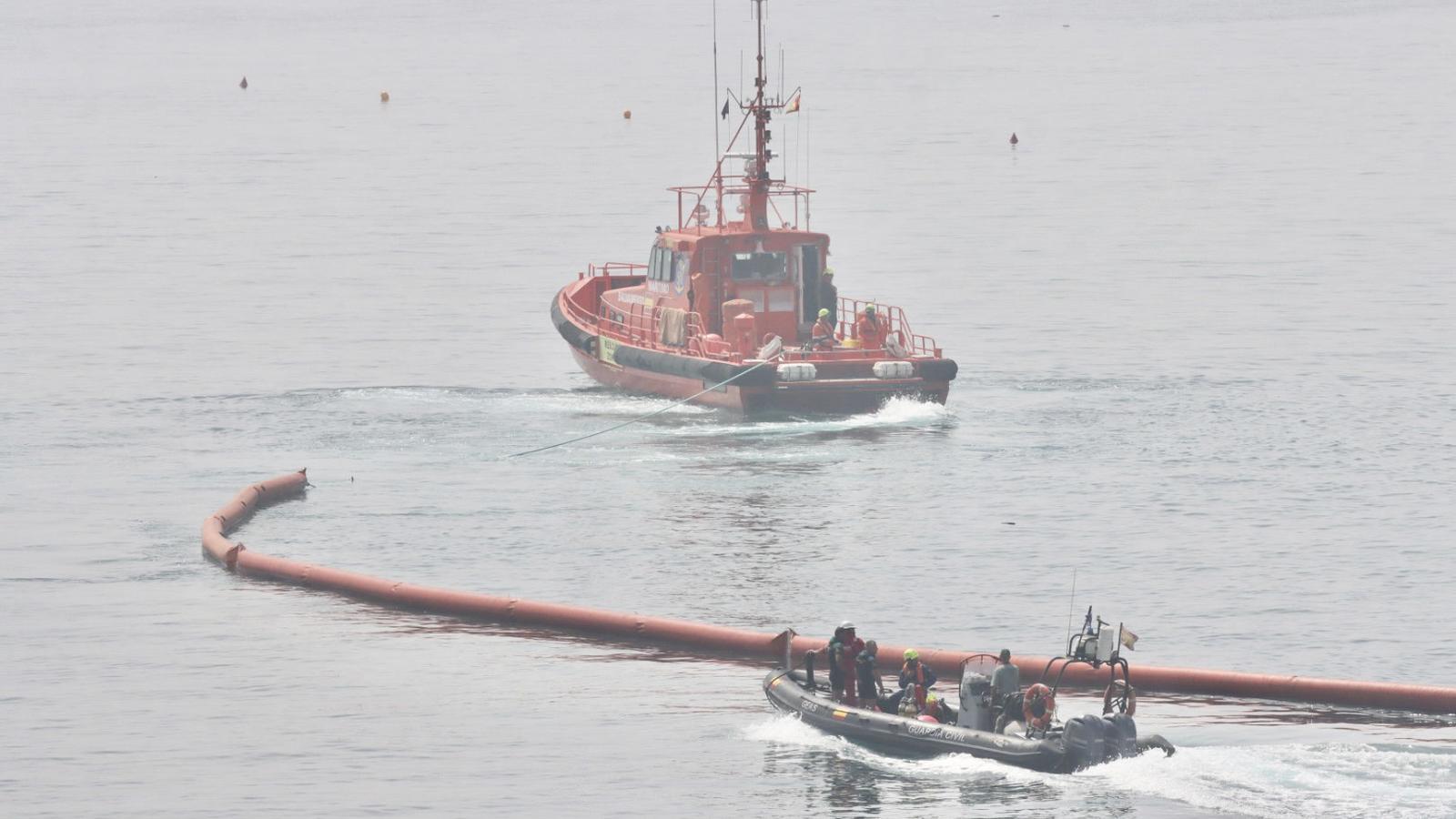
BarcelonaOn July 8, the Supreme Court issued a ruling confirming that pushbacks of migrants attempting to reach Spain by swimming are illegal. The high court set its doctrine based on the case of an Algerian boy who tried to reach Ceuta by swimming and was handed over to Moroccan authorities. Eighteen days after this judicial decision, on July 30, hundreds of people made the same journey and accessed the autonomous city by swimming from Morocco. After negotiating the return of the vast majority of them to their country of origin, the Spanish government has installed a 500-meter buoy barrier, lent by the army, on the maritime border. Now Melilla has announced that it will do the same.
Officially, the Ministry of the Interior has stated that these buoys serve "to comply with the ruling issued by the Supreme Court," as it stipulates that pushbacks "cannot be applied in the case of those who access by swimming, given that there are no physical containment elements to prevent it," states the ministry. Now these elements do exist. Precisely, the Minister of the Interior, Fernando Grande-Marlaska, stated this Tuesday that they have been working for eight years to secure the border, both land and maritime.
Karlos Castilla, a doctor of law from UPF and research coordinator at the Institute of Human Rights of Catalonia, interprets that the Spanish government is seeking a formula to carry out pushbacks in cases of people arriving by swimming, seeking a kind of "legal game." However, the doctor assures that the installation of this barrier requires "a new interpretation by the court." He believes that the Supreme Court should rule again on whether the buoys enable this immediate return, as he believes it is difficult to compare them with fences like the one in Melilla, where it is permitted.
Castilla also believes that the legal interpretation of this element "is very broad," even more so in an environment like the maritime one, where it is harder to define borders. For now, he has no record of any pushbacks having been carried out since the installation of the buoys. However, he explains that this is not a new strategy: buoys are already used on other borders, such as the one separating the United States and Mexico – specifically in San Diego – and also on the border between Mexico and Guatemala.
"Violation of rights"
In this regard, Albert Parés, a social lawyer and president of the Noves Vies association, states that the main problem with hot returns is the lack of a defined administrative procedure. He considers that any return should include the presence of a lawyer and the real possibility for the migrant to request international protection. However, he specifies that this is not well-defined in practice and results in a "violation of rights".
Those who cannot be returned in hot fashion under any circumstances, Parés specifies, are unaccompanied minors. "If a person states they are a minor, the regulations prevent it," he affirms. While awaiting whether the buoys will endorse hot returns or not, Castillo wants to make it clear that their installation is also an "agile response" to send a message to migrants and create a real physical obstacle that hinders crossing, beyond the legal debate that may arise.
