The possible distribution of migrant minors from Ceuta puts the right wing on high alert
The PP leaves its position in the air, while Junts warns that it will again reject Catalonia hosting it

-
CAT -
CAST
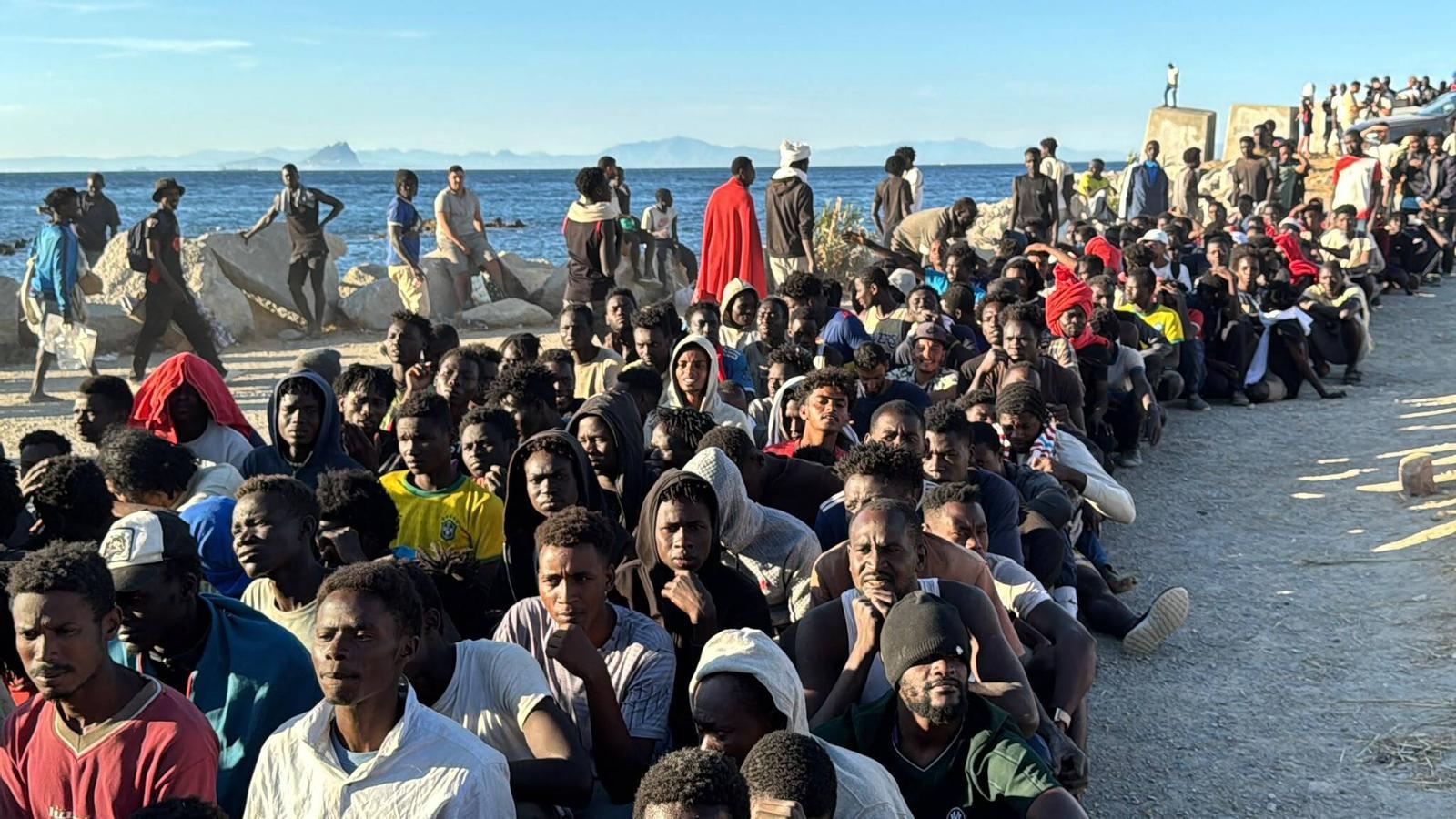
MadridThe Spanish government plans to activate all available mechanisms to respond to unaccompanied migrant minors who entered Ceuta from Morocco by swimming and are currently in the autonomous city. The Ceuta executive estimates there are "a thousand": "We cannot give an exact figure because the process of locating [the minors] and integrating them into the protection system is still ongoing," indicated the spokesperson for the local government of Ceuta, Alejandro Ramírez, this Tuesday at a press conference. Among these mechanisms is the distribution of unaccompanied children and adolescents among the autonomous communities, as pointed out by the spokesperson for the Spanish government, Elma Saiz, and confirmed by sources from the Ministry of Childhood led by Sira Rego. However, this approach has already put the right-wing on alert.
"Among these mechanisms is the full implementation of Article 35 of the immigration law, reformed in 2025, which provides, among other things, for the binding and solidarity-based reception [of migrant minors] by the other autonomous communities," indicate sources from Sira Rego's ministry, who plans to travel to Ceuta in the coming days. From this department, they recall that even before the crisis of these days, Ceuta was in a situation "of extraordinary migratory contingency." "I appeal to the responsibility of all autonomous communities to provide care for migrant minors," Saiz said in a statement to the media, just after announcing an extraordinary allocation of 25 million euros for Ceuta to expand resources for these minors.
The PP's balances
For now, the PP, which governs in practically all autonomous communities, has already left open the possibility that its communities will support this reception, although it has not closed its doors either. It should be remembered that the government of Ceuta, under the baton of Juan Jesús Vivas, is from the PP and it was Vivas himself who warned that the situation is dramatic. "The situation is complicated and the resources are overwhelmed," insisted his government's spokesperson.
When asked by the press about whether the territories governed by the PP will accommodate minors, the party's secretary general, Miguel Tellado, limited himself to replying that "it is not a migratory crisis, it is a national security crisis." "These are different issues," he stated, and left it up to the Spanish government to find a solution: "It is the one that must be responsible for ensuring that [the migrants] return through where they entered," Tellado said this Tuesday. The Madrid president, Isabel Díaz Ayuso, also referred to it. "It is strange that the left does not ask us for an extraordinary plenary session to know how many illegal immigrants [Pedro] Sánchez will send us without consulting us," Ayuso asserted via X."That is indeed worrying. It costs us money, public services, coexistence, and security. It is inhumane," Ayuso sentenced.
Junts rejects any distribution
But the PP has not been the only party to question this option. The spokesperson for Junts in Congress, Miriam Nogueras, recalled that her party had already voted once against Catalonia being part of the last distribution of migrant minors from the Canary Islands, Ceuta, and Melilla. "As we already achieved in the distribution that was made a year ago [...] Junts does not give a single vote if Catalonia is not left out," Nogueras stated via X. Nogueras stated that it was an "abuse" by the Spanish government, which "did not provide resources" and "further strained" the Catalan protection system.
In April 2025, Congress validated the reform that made the distribution and relocation of unaccompanied migrant minors mandatory among autonomous communities in cases of "extraordinary migratory contingency". That is, when certain territories are highly strained, which often happens in Ceuta, Melilla, or the Canary Islands. This 2026, the regulation that collects the obligation was extended for another year, so the measure is in force until March 2027.
One year before its approval, the PP, Vox, and Junts voted against it. The support of Carles Puigdemont's party did not arrive until after an agreement with the PSOE to delegate some state powers in immigration to the Generalitat, but also after the socialists accepted Junts' condition: that Catalonia be excluded from the distribution and, in any case, be compensated with the necessary resources – Junts members denounced that the Principality was already at its limit. Afterwards, the government of Salvador Illa offered to voluntarily host some. However, the agreement between the Spanish government and the separatists generated unease in other autonomous communities, including the socialist ones. Neither was the Basque Country part of that distribution because, as the central executive explained, its resources were at their limit.
A few months ago, the Popular Party members positioned Minister Sira Rego at the sectoral conference where a distribution was to be discussed again.
Healthcare collapse
While Ceuta continues searching for missing persons and is rushing to identify the mortal victims found so far, making it evident that this is the most tragic crisis on the southern border since records began, one of the most urgent challenges is the reception of 862 migrant minors, according to the latest official figures from the Interior Ministry. All of them are awaiting relocation due to the collapse of the care centers in Ceuta. In fact, the Ministry of Childhood has ordered the autonomous city's executive to open two schools to accommodate these children and young people.
