"European preference": the EU's commitment to favoring 'made in Europe'
Brussels defends prioritizing European companies in public procurement

-
CAT -
CAST
BrusselsThe now-famous report published by Mario Draghi on the competitiveness of the European Union revolved around one idea: if the EU wanted to remain an economic power, it had to modernize its economy and reduce its strategic dependencies on China and the United States. Two years to the day since the report's publication, most of the homework remains to be done. Of the measures proposed by the former president of the European Central Bank, Brussels has implemented a meager 15%.
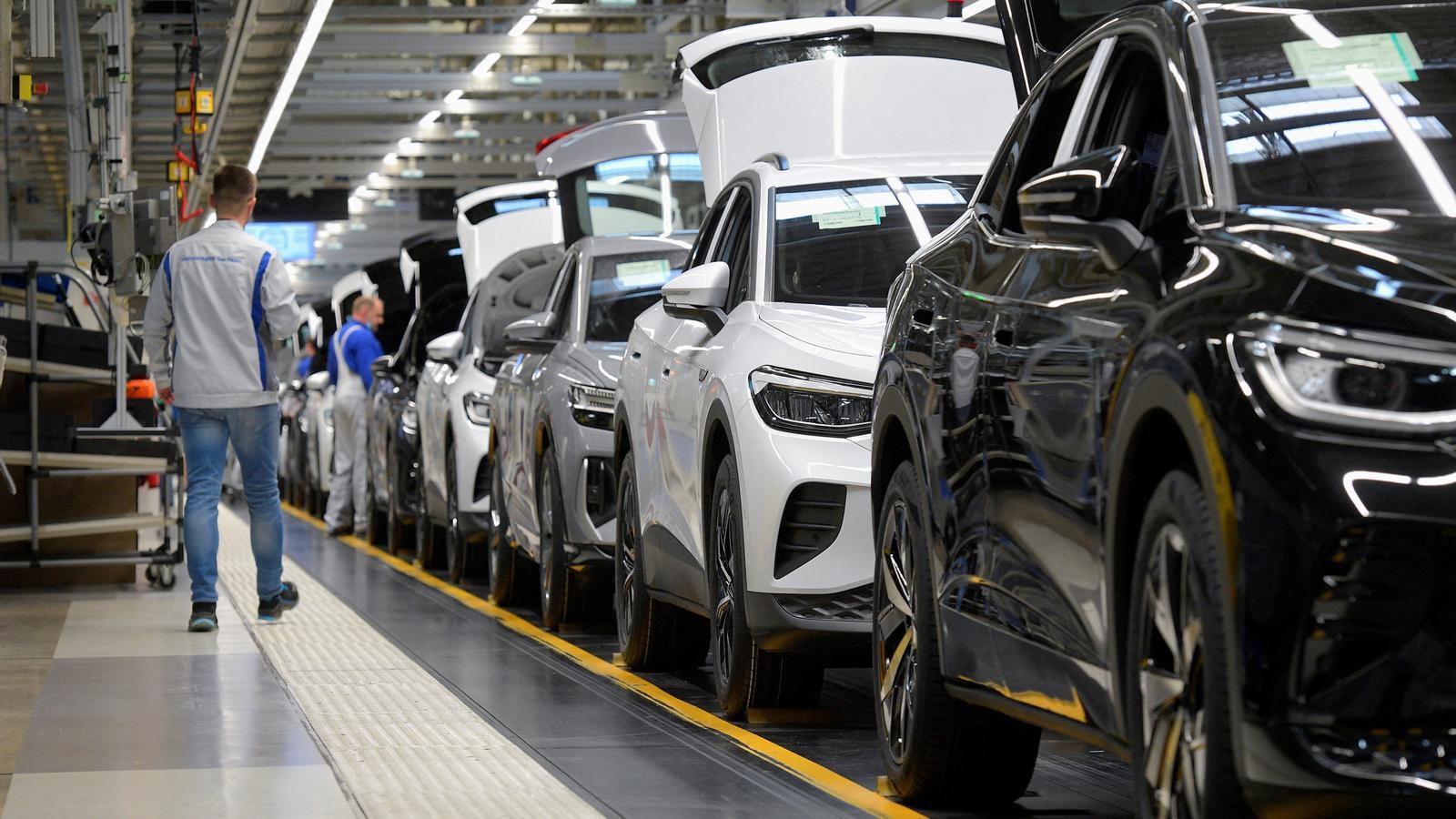
Coinciding with this anniversary, the European Commission presented two proposals this Thursday to accelerate this agenda: a reform of public procurement rules and a new innovation law. "We want a Europe that is not afraid to favor its companies over those of the competition," asserted Stéphane Séjourné, Executive Vice-President of the European Commission in charge of industrial strategy, during the presentation of the regulations. "It is about promoting European industry, about saving it. How do we ensure that automobile manufacturing does not disappear in Germany? This text makes it possible," he added.
The new public procurement law incorporates a novelty: a "European preference" clause. According to the proposal, public administrations that want to contract a service from a company (from the construction of a road to the electricity service of a municipality) will have to favor the offers of European companies. The measure should give a boost to companies, as public procurement represents 15% of the EU's GDP. Thus, taking up the example given by Séjourné himself, a local government will be able to "exclude a Chinese company or an EU company with Chinese products".
The rule also establishes mandatory quality criteria. When awarding a public contract, the administration will have to choose the offer that has the best balance between quality and price, reserving 30% of the scoring to assess the quality of the product. Furthermore, companies that want to be eligible for public contracts will have to meet requirements for environmental sustainability, social and labor rights, and security. In Brussels' view, this element will favor European companies, which already apply these criteria to comply with current community legislation.
At the same time, the public procurement law aims to simplify rules that Brussels considers too complex. Thus, it unifies previous European directives on public procurement and concessions and introduces more flexible procedures with the goal of reducing bureaucracy. The European Commission estimates that the resulting administrative savings will be around 650 million euros annually, between public buyers and the business sector.
More facilities for 'start-ups'
The other front that Brussels intends to address is that of innovation. The new regulation starts from the diagnosis that "we do not have enough innovation and the EU does not help enough to innovate". Brussels is a leader in scientific research, but "innovative ideas developed in Europe too often fail to reach the market", acknowledges the wording of the proposal.
As explained by Séjourné, the new regulation must help innovative companies to access financing, starting by receiving more support from the public administration. In this way, a series of criteria are established to encourage that when the administration buys research or development services, quality and innovation are prioritized. The "European preference" label also appears in this case. EU or partner country companies will have preference, provided that at least 50% of the research is carried out in Europe.
