Competition opens a new stage with Cani Fernández's mandate expired
The Ministry of Economy also has to look for substitutes for three councilors

-
CAT -
CAST
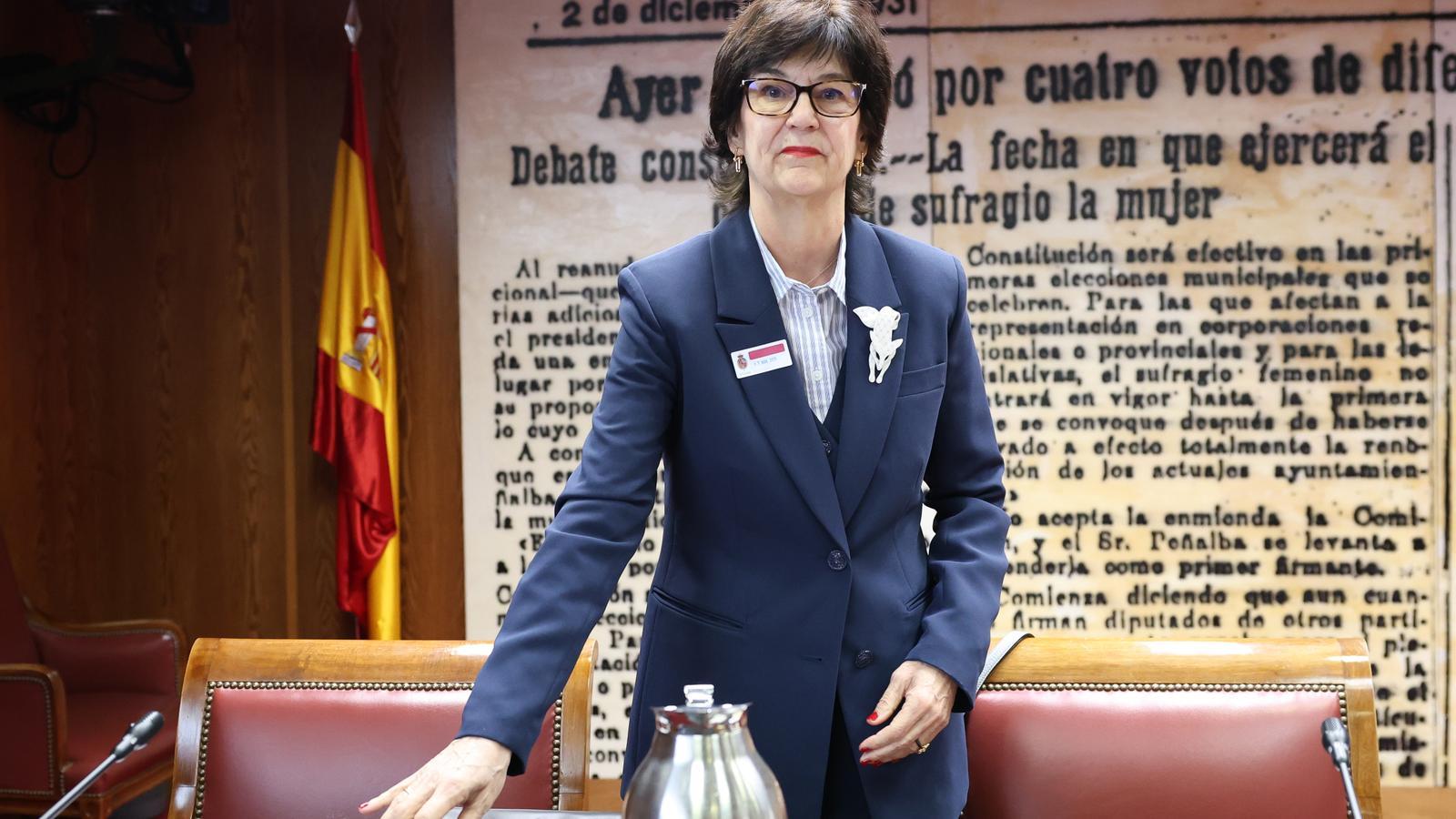
Madrid"Running a household is always complicated," reflects a voice that has been working hand in hand with Cani Fernández, the until now president of the National Markets and Competition Commission (CNMC), whose term expires this Wednesday. She has experienced this firsthand, especially because these six years at the helm of Competition have been marked by historic milestones in the field of competition: from the investigation into the massive power outage or the rise in fuel prices due to the wars in Ukraine and the Middle East to BBVA's hostile takeover bid for Banco Sabadell, as well as the approval of historic fines such as the €413 million to Booking, although it was later suspended by the National High Court.
for the multitude of open proceedings due to the blackout.due to the multitude of opened proceedings for the blackout.Now Cani Fernández begins an expired term, but also three more councilors: Josep Maria Salas, Pilar Sánchez, and Carlos Aguilar, and all of them may be in this situation of uncertainty and interim appointment sine die until the first vice-president and Minister of Economy, Carlos Cuerpo, finds replacements.
Cuerpo is in charge of appointing the new hires once the council of ministers has proposed the names. Before, however, they will need the approval of the Economy commission in Congress, at least by a simple majority of that commission. This gives a little oxygen to the Spanish government, which does not need the PP's support to appoint either the president or the rest of the councilors. Although historically in these types of decisions Socialists and Populars used to agree, the current political confrontation makes it practically impossible. In fact, the PP complained this Tuesday that the Spanish government "has not even" called them. This has already happened with the entry of José Luis Escrivá into the Bank of Spain or Inés Olóndriz as president of the Fiscal Authority (Airef).
Open negotiations
Pere Soler as a counselor in February 2025 Pere Soler in as councilor in February 2025. The Junts membersdo not expect to snatch a seat now, explain sources familiar with the process speaking to ARA, although other sources do point out that they could battle for the seat left by Pilar Sánchez. Carles Puigdemont's party was disappointed with Soler after the favorable vote to authorize the BBVA takeover of Banco Sabadell with conditions. At the same time, Soler was the councilor who most pressed to tighten the commitments to protect SMEs and self-employed workers, the sectors most affected in Catalonia by the takeover. The Ministry of Economy has declined to comment.
In fact, all of this has led Junts to present an amendment this Tuesday for Congress to urge the Spanish government to advance elections.
Solvency and character Up to three consulted sources explain that the new appointments could be imminent, although another voice expresses skepticism given the political and judicial context surrounding the Spanish government and particularly the PSOE, and that this Wednesday will be marked by the testimony of former socialist president José Luis Rodríguez Zapatero in the Plus Ultra case. In fact, all of this is what has led Junts to present an amendment this Tuesday for Congress to urge the Spanish government to advance elections.
Solvency and character
Cani Fernández arrived at Competition hand in hand with the former Minister of Economy Nadia Calviño. When Calviño left, Fernández felt she lost "support," indicates a source. The until now president of the CNMC is one of the top European experts in competition law. Her technical profile and solvency are highlighted. She has character and "takes great care" of her own, says a voice who knows her closely, referring to the teams she works with.
"Competition law exists to remind Mr. Money that he is also subject to the rules," Fernández reflected last week, in an intervention at a press breakfast organized byNueva Economía Fórum. To her successor, the now acting president asked for "technical capacity, common sense, and to retain talent in the face of fierce competition." In fact, this is one of the CNMC's challenges at a time when the workload has increased, especially due to the responsibilities that the Spanish government has been accumulating on the entity. Not only to strengthen the staff, but also for them to stay and even to seek external synergies. "People work non-stop and stressful situations occur," explains an internal voice.
During these six years, Competition has also had to face the merger between CaixaBank and Bankia; the liberalization of the railway and telecommunications sectors; new remuneration for energy companies for investment in the electricity and gas network. Despite this, Fernández has introduced the use of artificial intelligence to detect possible anti-competitive practices, especially within the energy sector regarding prices. Among the future challenges are the adaptation of the European Digital Services Act (DSA), the control of the media, or the verification of minors in the audiovisual field.
