Banc Sabadell begins a new course with Marc Armengol's gala eleven
The new management structure, in force since September 1st, aims to boost the use of AI and at the same time reinforce the relationship banking model

-
CAT -
CAST
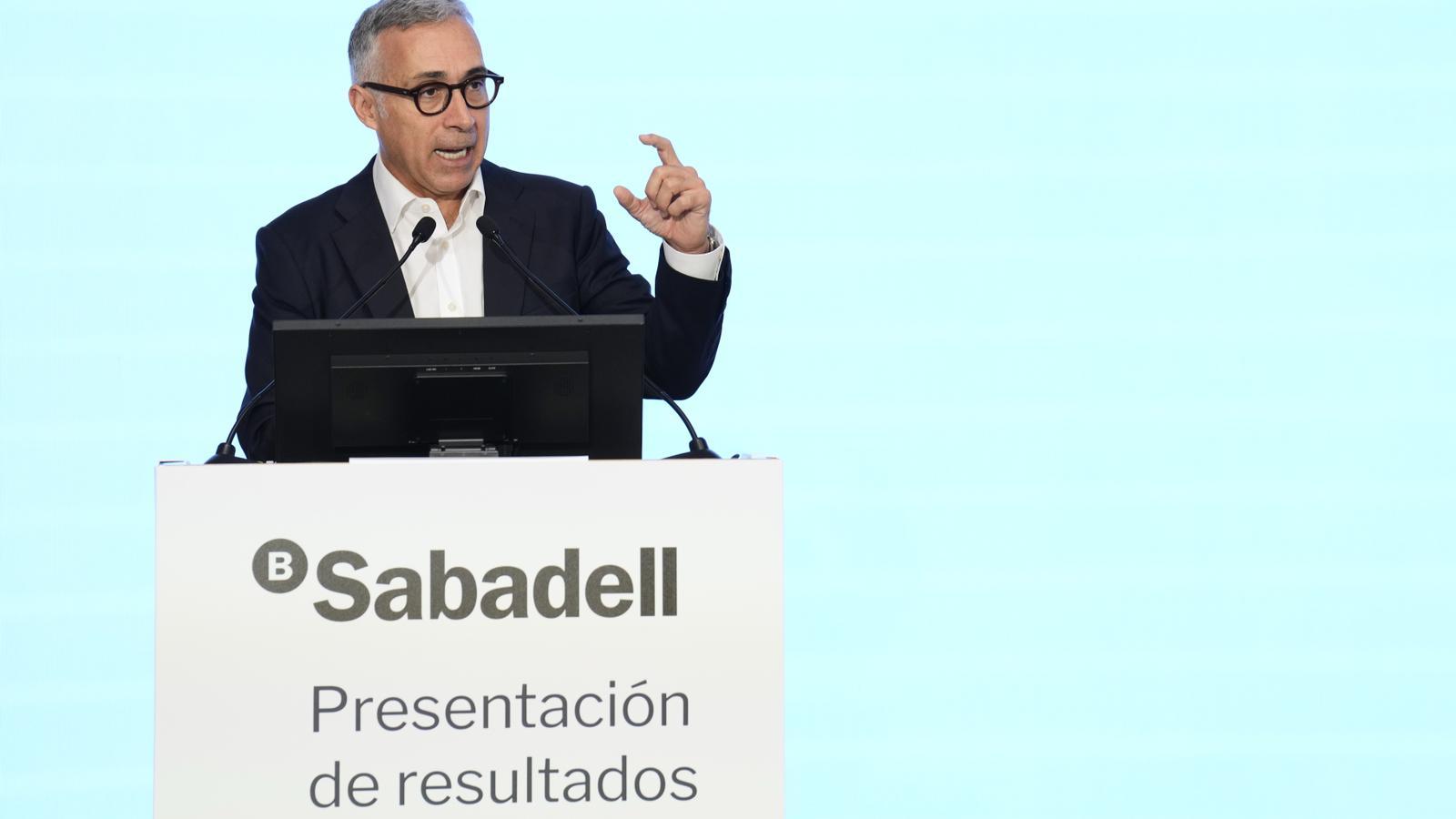
BarcelonaSince the arrival of Marc Armengol as CEO of Banc Sabadell last May, practically everything has been positive for the Vallesan entity. During the last four months, the executive has presented almost record-breaking half-year results, with skyrocketing revenues and a net profit of 971 million euros, has exceeded the stock market value prior to the distribution of the extraordinary dividend from the sale of the British subsidiary TSB and continues to boast of its capacity to grow independently after the failed takeover bid by BBVA. Backed by his predecessor, César González-Bueno, and by the group's chairman, Josep Oliu, it is now that Armengol faces his real acid test. This September 1st, the new organizational structure of the bank designed by Armengol himself came into operation. It is the gala lineup with which the former CEO of TSB must now command the fourth largest entity in the State by volume of assets. The composition of the management committee—formed precisely by eleven members, like soccer teams—remains unchanged, but notable changes have been applied in some business areas. Known for his techie profile, Armengol has wanted to make his preferences clear.

Among the main developments, the creation of the corporate transformation and artificial intelligence area, integrated into the strategy department, stands out. The head of this new division is Robert Duran, a veteran executive who has spent nine years at the entity. The operations and technology department is also being strengthened with AI capabilities, and a new business transformation area is being created, aimed at accelerating digitalization with a direct impact on clients. At the head of this portfolio will be Jorge Rodríguez Maroto, who is also responsible for retail banking and has more than five years of career at the bank.
Despite the changes, sources close to the group consulted by ARA maintain that the appointments respond more to resource optimization and will not have major effects on consumers. The entity's "differential factor", they point out, will continue to be the close relationship with clients and relationship banking.
Reorganization without revolution
Former Banco Sabadell board member and member of the board of the entity's minority shareholders' association Joan Llonch defines the organizational changes in the following terms: "At first it is a reorganization, but not a revolution". In this sense, the former executive positively values that the modifications arrive at a time of prosperity and that everything responds to "adapting to new times", rather than resolving errors. At the same time, the fact that the new faces are experienced executives from within the company "provides peace of mind".
On this matter, Llonch believes that the commitment to internal talent —such as Armengol himself— generates an "emotional" bond with the company that could end up being a differentiating factor. However, union sources consulted by ARA fear that this will end up translating into a higher workload for a staff with already ambitious objectives in their strategic plan. "The pressure is already very high, at times it is unbearable", they denounce, and recall that the attempt to make the entity more attractive after the failed takeover bid still represents a burden for the staff.
Strategic plan until 2027
Armengol already has his organizational structure, but he has inherited the strategic plan that González-Bueno designed after breaking off talks with BBVA. The objectives for 2027 include an annual profit of more than 1.6 billion euros, improving profitability, and increasing the volume of mortgage loans, among others.
The CEO, therefore, will have his hands tied, at least in the short term. According to Llonch, the results for this 2026 will still have the "inertia" of the decisions made previously. Thus, he expects the year 2027 to be "the acid test" to evaluate the work of the new CEO, especially considering the current geopolitical context. For Oriol Amat, professor of financial economics and accounting at Pompeu Fabra University —the center where Armengol precisely graduated— the tightening of rates represents an opportunity for banks, since the rise in the price of money contributes to the improvement of the interest margin. Conversely, excessive inflation could end up weighing down the economy and have a negative impact on delinquency.
This week the newspaper Expansión reported that Armengol, who now has his team of chosen ones, is already preparing Sabadell's new strategic plan beyond 2027. The idea, in line with his profile, involves continuing to bet on promoting the use of artificial intelligence to make the bank more competitive and efficient, paying a high dividend, and gaining market share in businesses.
