77% of citizens demand more regulation of artificial intelligence
Sánchez warns that new technologies put "the right to a truthful reality" at risk

-
CAT -
CAST
Barcelona77% of citizens demand more regulations on the development of artificial intelligence. This is what emerges from the first Survey on the social perception of digital rights in Spain. The poll was conducted by the La Caixa Foundation, Red.es –the entity associated with the Spanish government dedicated to promoting the digital agenda– and the Hermes Foundation, in collaboration with the University of Barcelona. The document details that the majority of Spaniards want more public oversight of AI and its effects on the economy and society. In fact, more than half of respondents would prefer that the development of applications based on this technology 'slow down'. However, 49% expect it to eventually have "positive effects" for the general population.
The study was presented within the framework of the first Meeting for Digital Rights, organized by the Spanish executive and the Mobile World Capital Barcelona foundation. The respondents' answers have clarified citizens' concern about the advancement of digital technologies. Nearly 70% of survey participants warn that the current protection of digital rights is insufficient; and practically all responses (95%) indicate that children are unprotected on the internet. In this regard, more than 90% believe it would be positive to impose access controls to digital technologies for minors. For users as a whole, also nearly 100% demand that data protection and defense against harassment and hate speech on social networks be guaranteed by law; and they point to both public administrations and technology companies as responsible for this task.
"The paradigm has changed forever"
The Meeting for Digital Rights attracts experts, regulators, and businesspeople from the new technologies sector this Wednesday and Thursday to discuss the immediate future of digital society. The welcome for the conference was held at the Llotja de Mar and included a video message from the President of the Spanish Government, Pedro Sánchez. In the message, the head of the executive warned this Thursday that new digital technologies have "forever changed the paradigm of trust" in modern societies.
Sánchez, in his brief address, warned that without effective control over the development of technologies such as artificial intelligence, "coexistence suffers and democracy weakens." In this regard, he asked political actors for "more dialogue and actions," dedicated to ensuring that "the digital space continues to be one of freedom and participation"; without the potential manipulations that are already observed on social networks and other platforms. "We live in an era where anything can seem real without being so. Technology can distort everything with an unimaginable ease until very recently," reflected the Spanish president.
A "turn" that affects Catalonia
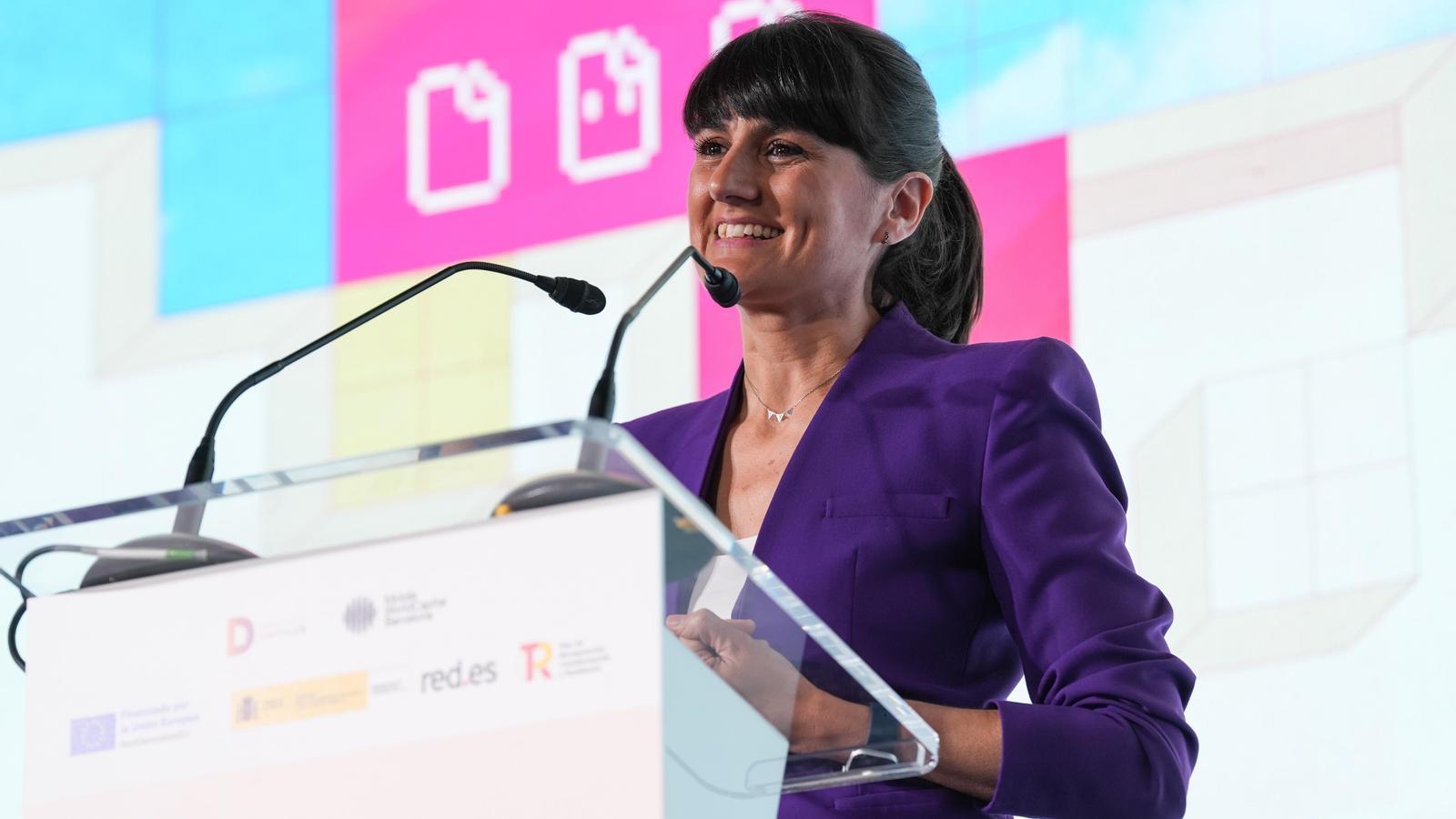
The presentation of the conferences was attended by the Secretary of State for Digitization and Artificial Intelligence, Maria González Veracruz, who praised the spirit of the conferences for "listening, thinking and acting on a topic that affects us all," such as the threats of digitization and the expansion of AI, as well as the solutions that are emerging. In this regard, the digital leader encouraged participants to turn the meeting into a "turning point, a before and after in Spanish citizenship" and its relationship with digital tools.
The event was also introduced by the Minister of Economy and Finance of the Generalitat, Alícia Romero, who celebrated the growing digitization of the Catalan economy. Romero recalled that in Catalonia, 18,000 companies in sectors linked to digital technologies are already operating, invoicing a total of approximately 40,000 million euros. On this productive base, the head of Economy called for "training ourselves, knowing and guaranteeing rights that give confidence and legal certainty to citizens." Finally, the deputy mayor of Economy of Barcelona, Jordi Valls, highlighted the "deeply technological and scientific" character of the capital of the country.
