40 years to infinity and beyond
The study that revolutionized world animation celebrates its 40th anniversary having overcome the worst stage of its history
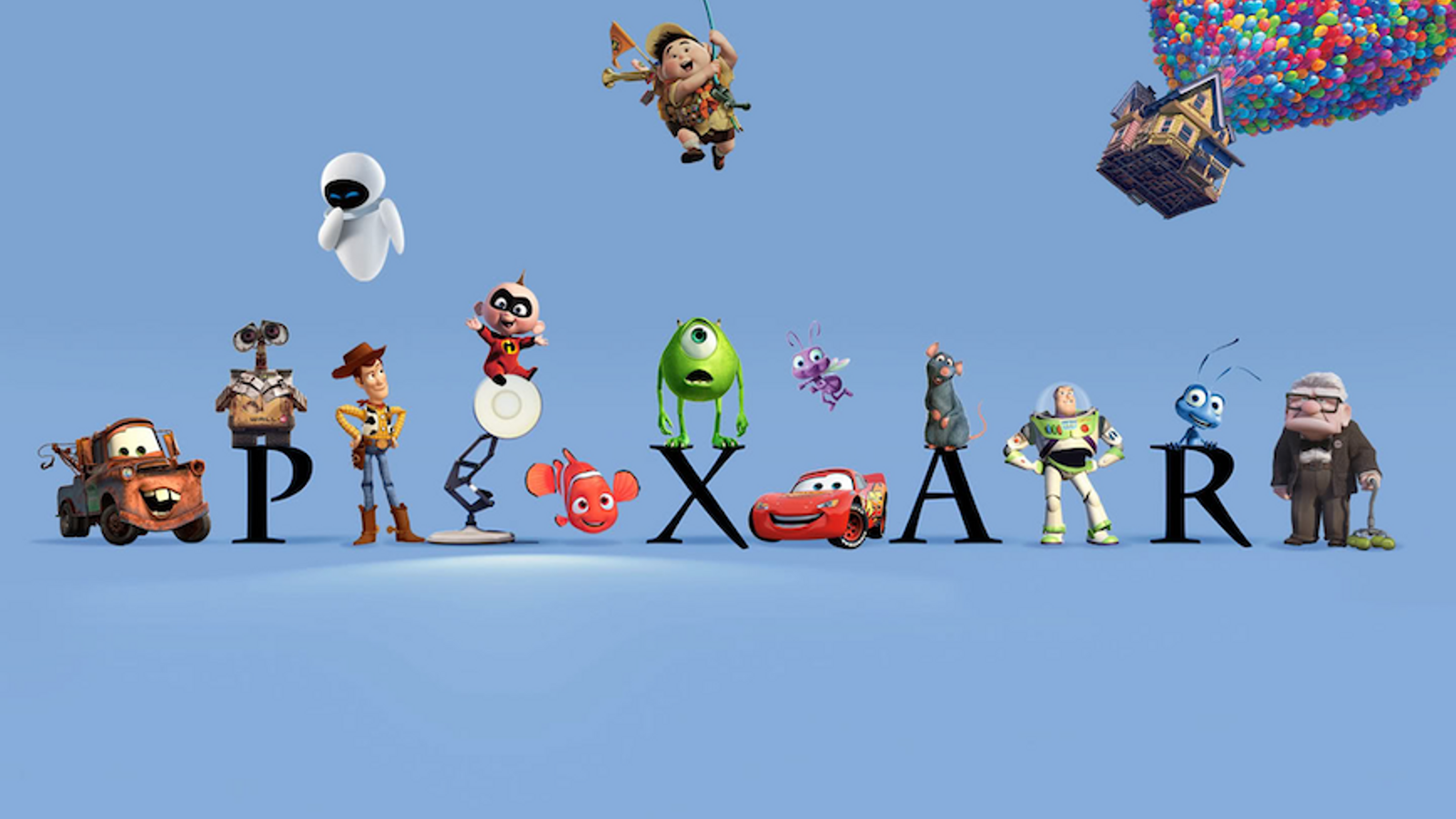
-
CAT -
CAST
When in 1986 Steve Jobs, co-founder of Apple, bought a small computer division of Lucasfilm –producer of Star Wars– for five million dollars, he probably didn't imagine he was acquiring the studio that would revolutionize and dominate world animation. That company came to be called Pixar, and this year, 2026, it turns 40. An anniversary that arrives at a bittersweet moment: after a profound crisis, the release of Hoppers in March – with 45 million dollars grossed on its opening weekend – suggests that the studio has once again found its way.
The story of Pixar is not that of a conventional company. In 1974, Alexander Schure, founder of the New York Institute of Technology, gathered a group of computer scientists led by Ed Catmull, who years later would become the studio's great intellectual architect, with a clear objective: to create the first computer-generated animation film. In 1979, Lucasfilm hired them to form a division called Graphics Group, the embryo of what would become Pixar. Later, when Jobs acquired the company, he agreed to a distribution deal with Disney that would change everything.
The business model was simple but brilliant: Pixar produced, Disney distributed, and both shared the profits. In 1995, Toy Story grossed 365 million dollars on a budget of around 30 million. The profitability was overwhelming. In the following years, Pixar perfected a formula that combined its own technological innovation – the studio holds hundreds of patents – with emotionally sophisticated storytelling. Monsters Inc, Finding Nemo, The Incredibles, Wall-E, or Up. Each title surpassed the previous one in ambition and box office success.
Pixar's success eventually became a problem for Disney. The distribution partner saw how the studio systematically generated value while its own animation division was experiencing a string of failures. In 2006, Bob Iger – CEO of Disney – closed the acquisition of Pixar for 7.4 billion dollars. Between 2006 and 2013, the revenues of Disney's entertainment division – to which Pixar was integrated – grew modestly.
The beginning of a profound crisis
The year 2018 marked the beginning of the decline. The forced departure of John Lasseter – the studio's creative director – over accusations of sexual harassment opened a hemorrhage of talent. Brad Bird, director of TheIncredibles and Ratatouille, left in 2019. Lee Unkrich, director of Coco, also left. Even Catmull left the company that same year. Pixar had lost its foundational creative core.
The effects were immediately noticeable in the accounts. In the results for 2019, despite the release of Toy Story 4 – which grossed over 1 billion – the operating income for the Studio Entertainment segment fell 11% to 2.686 billion. But the decision that proved most costly was another: during the pandemic, Disney opted to release Soul (2020), Luca (2021), and Turning Red (2022) directly on Disney+, its streaming service. The strategic cost was enormous. Comparable films from the competition made between 200 and 500 million dollars. Pixar gave up on that revenue and opened the door to a different way of consumption: it trained the public to watch its films for free, included in the monthly Disney+ subscription.
The pandemic hit the entire company. In the fiscal results for 2020, Studio Entertainment's operating income fell 16% compared to 2018. The immediate response was to bring releases back to cinemas with Lightyear in 2022, but this move did not improve things. The public had stopped associating Pixar with an event worth paying for. The lowest point came in June 2023. Elemental, with a budget of 200 million dollars, grossed 29.5 million on its opening weekend in the United States: the worst debut in its cinematic history.
The solution: "Just keep swimming"
The response was surgical. Pixar President Jim Morris announced in May 2024 the largest staff reduction in the studio's history: 175 layoffs. In parallel, he reformulated the production strategy. The first major test of this new phase was Inside Out 2, released in June 2024. The result exceeded all expectations: $1.7 billion in worldwide box office gross, making it the highest-grossing animated film in history. The impact on Disney's accounts was immediate: the company's total operating income exceeded $15.6 billion in 2024, a new record.
Now, 40 years after those five million dollars from Jobs, the studio has shown that exceptional brands don't die – although they can be damaged. In this context, Hoppers, released in March of this year, grossed $45 million in its opening weekend. This June, Toy Story 5 arrives: the franchise that was born in 1995 returns to close the circle. That is, Pixar is betting again on where it all began. If there is a metaphor for the studio's resurrection, it is this.
