Siri Hustvedt's gaze
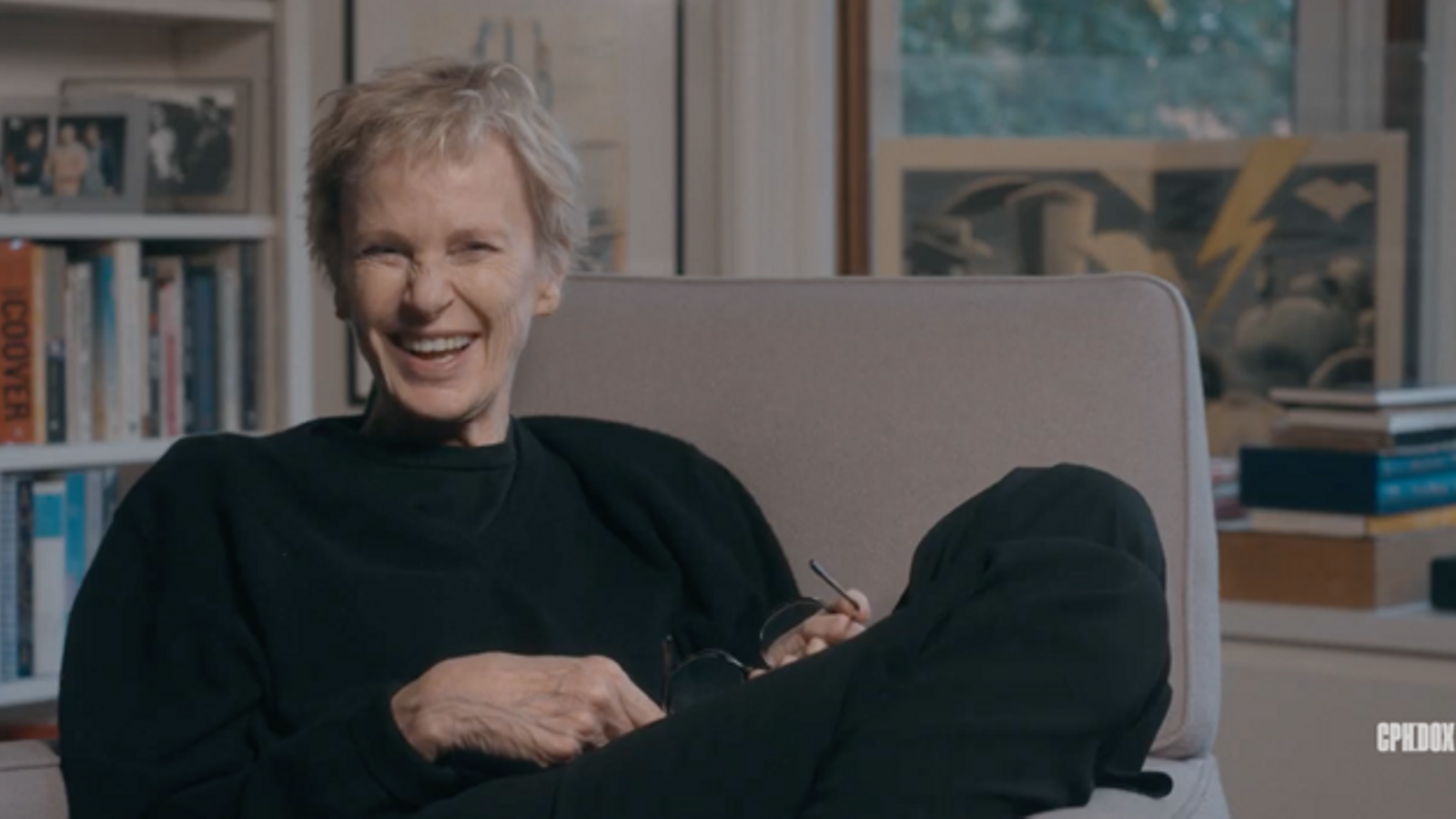

One of the most recommended books in recent months has been Histories of Ghosts, by Siri Hustvedt, in which the writer reflects on grief, love, and memory after the death of her husband, Paul Auster. Now, the platform Filmin has released a documentary about the author that connects, in a way, with this new phase of loss. In principle, Siri Hustvedt: Dance around the self was not intended to explore this most tragic personal episode. But Auster's death inevitably ends up permeating the story. The novelist, in fact, is part of the voices participating in the documentary when he was already ill. And his death occurs when they had not yet finished filming. Therefore, months after being widowed, the documentary picks up the thread and takes the opportunity to also show us this period of adjustment to the absence of her husband. The writer's entire intimate circle, including her sisters, daughter, son-in-law, and best friends, are integrated into the narrative to understand Hustvedt's universe from different points of view.The story unfolds as this “dance around the self” to which the title refers and which the author herself cites. There is a biographical will, but not from a chronological or encyclopedic approach. The main priority is to penetrate Hustvedt's thought and understand how the essayist's entire intellectual corpus is formed.The documentary manages to find a tone and narrative pace that is very close to the protagonist's literature. Hustvedt assumes the narration in the first person, and the rest of the testimonies are added to build points of view, but all in a very fluid way, where images and text enter into a poetic harmony. It is not only the moments, but also the light, the texture of the image, and the meaning of the spaces. The different aspects of her professional career appear progressively. There is an internal structure that organizes the story, but it is porous to facilitate the connection between the different areas being addressed and to understand the coherence and solidity of Hustvedt's world. It mainly explores her literary creation process and, from there, the different branches of her career and research emerge: the essay, psychoanalysis, the study of neurosciences, the theory of knowledge and her desire to dilute the boundary between science and humanities, feminism and cultural inequalities. But, above all, it leaves the viewer with the possibility of understanding where her interests and sensitivity are born. Nothing is by chance. Everything has an origin and a cause.The documentary was directed by Sabine Lidl, also responsible for the documentary Paul Auster, what if? Lidl has the writer's absolute trust. The camera becomes a confidante. She has access to her home, shows the bond with Auster and her subsequent solitude in the splendid Slope Park home in Brooklyn, which they shared. Siri Hustvedt: Dance around the self is a very interesting exercise for understanding how a gaze is constructed.
