"We will finish off all of you"

-
CAT -
CAST
BarcelonaIn 1936, 865 book titles in Catalan had been published in Catalonia, the highest number reached during the republican years. In 1976, with Franco already dead, 872 were published. Four decades had passed and Catalan was barely emerging from the depths. Currently, production is approaching 7,000 titles annually. The cultural battle for the language is also fought today in the audiovisual world. But written culture remains the foundation of everything. Where do we come from?
60 years have passed since the Caputxinada, the meeting of university students and intellectuals against the Francoist regime. Carles-Jordi Guardiola, who would later lead the publishing house La Magrana ("mà grana", meaning red, left-wing) for five years and become a scholar of Carles Riba, was there with other classmates from Romance philology: Montserrat Roig, Josep M. Benet i Jornet, Francesc Parcerisas, Jordi Porta, Manuel Jorba... It was presided over by Jordi Rubió i Balaguer, Salvador Espriu, Joan Oliver, Manuel Sacristán, and the delegates from the various faculties of the UB.
The students from the Partit Socialista Unificat de Catalunya (PSUC) dominated the atmosphere. Guardiola was from the Front Nacional de Catalunya (FNC); he would later join the Partit Socialista d’Alliberament Nacional (PSAN), like the recently deceased Blanca Serra. Although the adhering intellectuals came mostly from Catalanism repressed by the dictatorship, in the constitution of the Sindicat Democràtic d’Estudiants at the Caputxinada, only one document was read in Catalan, recalls the future editor in Memòria imperfecta. 1942-1969 (Llibres Parcir). "Of the Documents de la Caputxinada reported by Crexell, out of 45 pages, only 8 are in Catalan. Even the posters hung in the Capuchin friary in Sarrià are bilingual," notes Guardiola, who the following academic year would organize a tribute to Jordi Rubió in a classroom at the Faculty of Law. It was also a success. It also suffered repression.
In this second act, at the presidential table were again Sacristán and Oliver, Maria Aurèlia Campany, Oriol Bohigas, Joan Triadú, Miquel Coll i Alentorn, Josep de C. Serra Ràfols –father of Blanca and Eva Serra–, Alexandre Galí, the Capuchin Jordi Llimona, Joan Colomines and Rubió’s son –Jordi Rubió i Lois–. When the philologist Joan Coromines arrived, the attendees burst into applause: they had mistaken him for Jordi Rubió... The list of attendees is striking: from Ernest Lluch and Heribert Barrera to Roca i Junyent or Joan Raventós, from José Agustín Goytisolo, Carlos Barral and Josep M. Castellet, from Ricard Bofill to Pere Portabella or Carme Serrallonga. And many more (almost all men, yes). Among the endorsements: Picasso, Pau Casals, Miró, Abbot Escarré, Aranguren, Menéndez Pidal, Espriu, Tàpies, Joan Fuster...
Upon leaving, the list of detainees exceeded twenty after a sinister welcome cry: "We will finish you all, Catholics, communists, separatists. Three years in Burgos, you will spend it!"". The dean of the Bar Association, Frederic Roda Ventura, died of a heart attack the day after a strong argument with the judge handling the case. All of this happened six decades ago. Freedom and Catalan were gaining ground, not without risk and personal struggle from many people at the end of the long dictatorship and during the uncertain Transition. There was the silent mass, and there were those who rolled up their sleeves and took risks.
The prodigious decade of the sixties
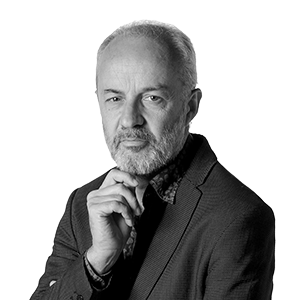
Guardiola reports the intellectual combat between Jordi Solé Tura's Catalanism and Bourgeois Revolution (1967) and Josep Benet, who responded in Serra d’Or by branding the work, which accused the conservative right of instrumentalizing Catalanism, as "biased, ideologized, and simplistic." And above all, Guardiola reviewed the prodigious decade of the 60s: the birth of Òmnium Cultural (1961), Cavall Fort (1961), Edicions 62 (1962), (1962), La plaça del Diamant by Rodoreda (1962), Els Joglars (1962), the declarations of Abbot Escarré to Le Monde (1963), the Picasso Museum (1963), CCOO (1964), (1965), Enciclopèdia Catalana (1965), Antoni Comas as the first professor of Catalan literature at the UB after the war (1965), the outbreak of the Nova Cançó, the 3i4 bookstore in Valencia (1968), the key essays by Joan Fuster, Paco Candel, and Josep Benet...Carles-Jordi Guardiola, who considered one of his great mentors, and Josep Ruaix – the man behind the flashcards for learning Catalan – a friend since adolescence, and who has been a pillar in the recovery of the publishing world in the Catalan language, now reveals his family origins, his time in the seminary of Vic, and his intellectual awakening. Memòria imperfecta is a perfectly necessary memoir to reconstruct the cultural history of the country. In times of narcissism, it is relevant to highlight that, like him, so many others have built a plural and open Catalan identity day by day, doing a lot of quiet work, from a struggling second row.
As Wilhelm Stekel, Freud's most distinguished disciple, wrote: "That which distinguishes an immature man is that he wants to die nobly for a cause, while that which distinguishes a mature man is that he wants to live humbly to serve it." The true heroes of the country are the Guardiolas who make continuity possible. They did not finish us off.
