Historic independence activist Blanca Serra dies
She had been tortured at the Via Laietana police station during Franco's regime, as the Barcelona Prosecutor's Office has recently acknowledged

-
CAT -
CAST
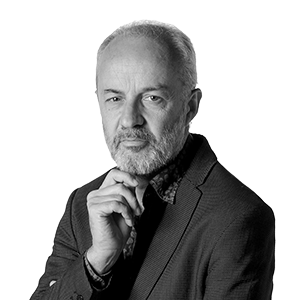
BarcelonaBlanca Serra, a militant of independentism, sister of historian Eva Serra (1942-2018) and daughter of archaeologist Serra i Ràfols (1902-1971), has died at the age of 82 in Barcelona, the city where she was born in 1943, in the midst of the post-war period. She graduated in Classical Philology from the UB and in the 1960s began to militate in the antifranquismo movement, initially in the Front Nacional de Catalunya, which she left in 1969 to join the PSAN (Partit Socialista d’Alliberament Nacional).
Always within left-wing independentism, her political commitment first led her into exile in Northern Catalonia, where she lived through the dictator's death and, years later, in democracy, to prison, in the late 70s and early 80s, accused of collaboration with ETA and Terra Lliure. She remained active until the end. Already very weakened by various health problems that had been undermining her physical state, her last appearance was at the ANC demonstration for the Cercanías chaos.
A year ago, Blanca Serra was the first victim of Francoist torture to file a complaint against the Public Prosecutor's Office. The public ministry concluded its investigation a few weeks ago: despite confirming that she was indeed tortured by the Brigada Político-Social, it could not identify the perpetrators of the crime and, consequently, requested the case be archived. Nevertheless, the Centre Irídia and Òmnium valued Blanca Serra's initiative and the resolution of the Barcelona Prosecutor's Office as the first time torture in the Via Laietana police station in Barcelona had been officially recognized.
In 1971, as a representative of the Col·legi Oficial de Doctors i Llicenciats en Filosofia i Lletres i Ciències de Catalunya, Blanca Serra participated in the promotion of the clandestine Assemblea de Catalunya, a crucial civic and political unitary platform at the end of the dictatorship that decades later had its replica in the Assemblea Nacional Catalana (ANC), in which Serra was also very involved from the outset. With the slogan "Right to decide", the ANC emerged from a long mobilization that had its peak moments in the demonstration against Rodalies in 2007 and the independence referendums of 2009-2011. Blanca Serra was linked to all these grassroots initiatives. In recent decades, apart from the ANC, she had also been linked to and had been a candidate on the CUP's electoral lists.
Her professional life led her to be a language professor at the IES Narcís Monturiol in Barcelona. The personal collection of Blanca and Eva Serra, the result of the political and social activism of the two sisters, and their academic work, is deposited at the National Archive of Catalonia: it contains manifestos, posters, correspondence, statutes, photographs, periodicals, and various papers from parties such as PSUC, POUM, PSAN, FNC, JSC, MCC, and PCE.
The funeral will be on Monday at 12:30 PM at the Les Corts funeral home. On Sunday there will be a wake starting at 4 PM and on Monday starting at 9 AM.
