Alessandro Baricco: "We cannot forget all the good things that we have just because there are fascists"
Writer
-
CAT -
CAST
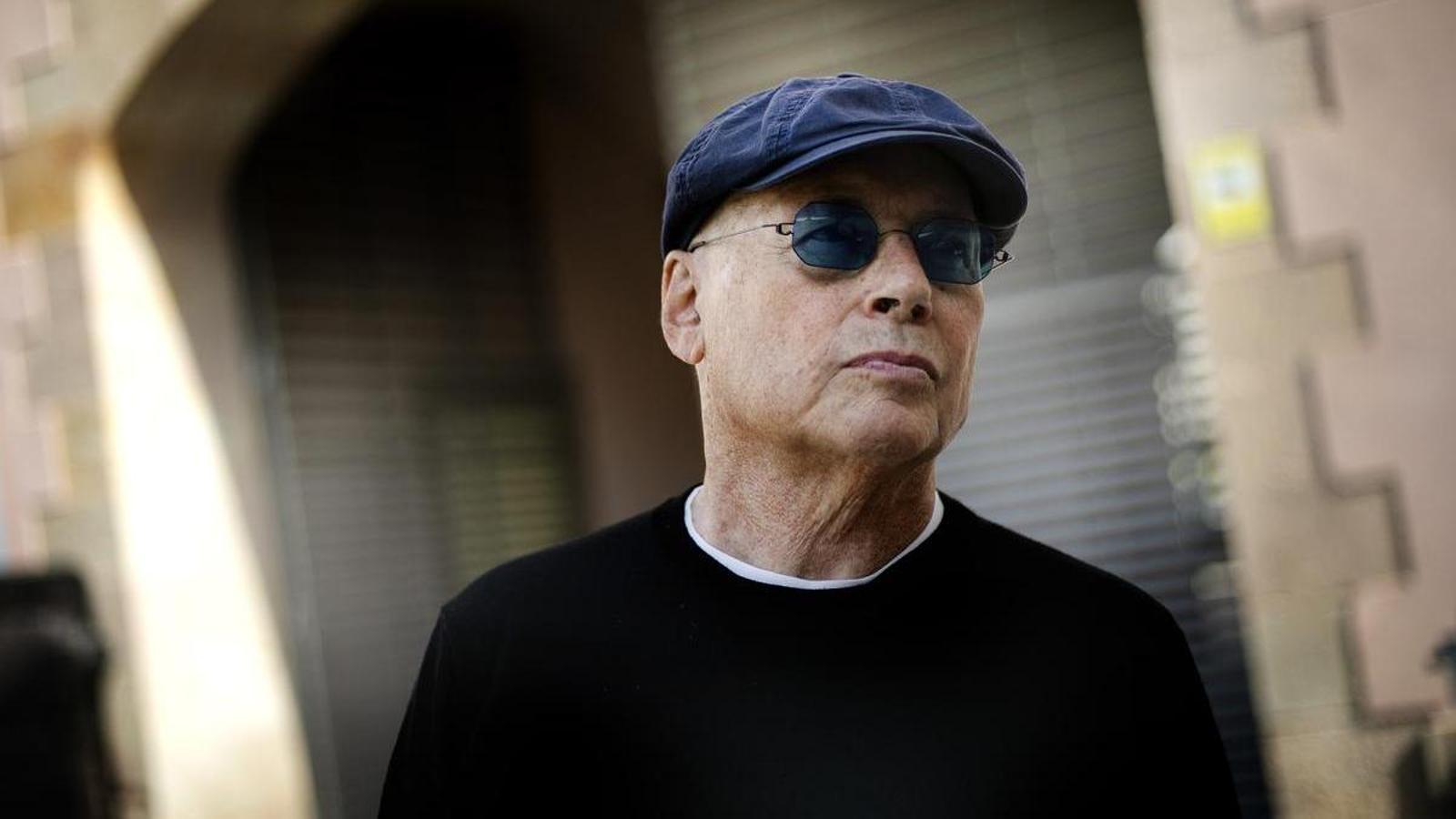
BarcelonaIf the life of Alessandro Baricco (Turin, 1958) had a soundtrack, it would be classical music. As a young man he already went to concerts, worked as a music critic, and his partner is the pianist Gloria Campaner. Despite the chronic leukemia he suffers from, which led him to go to the hospital to undergo a bone marrow transplant, he remains active and has just published A Heretical History of Classical Music (Ara Llibres, translated by Maria Llopis). These days he has been traveling around Catalonia to give a talk at the CCCB with the composer Joan Magrané and has inaugurated the meetings at the Jardins de Cap Roig with a conversation with Josep Ramoneda.
When do you decide to rewrite the history of classical music?
— Classical music has always been present in my life. I saw that there was so much to say about its history, especially because I realized that a large part of it is invented. That is to say, it is a cultural creation. Classical artists did not know they were making classical music. I started to document myself and, the more things I read, the more excited I became. I wanted to destroy many preconceived ideas. That is why it is called "heretical," because it does not respect the official narrative about classical music, which may offend many experts.
In what way can it offend them?
— Of many. My point of view focuses on the times, on the processes, on the context. A perspective that is my own, but many musicians who have read it say they have felt liberated.
The beginning of the book is ambitious. Attempting to explain the origin of music in general.
— I define it as the era of gatherers, since they harvested the sounds of nature. And of the divinities, just as they believed. They were people radically different from us. The history of music evolves in a very slow way. Initially, it was a ritual of welcoming the sounds that for them were a divine message. Therefore, it was not necessary to make it evolve. Do not doubt the divine creation. It will not be until centuries later that everything accelerates. A new man arrives who wants to dominate the world, who challenges God.
Was it necessary to write this book to understand humanity through music?
— It is like that. It is worth telling this story, since it explains us. Through classical music you end up feeling very close to those men and you understand them better.
How can we approach those very different men? In a fragment, it speaks of the moment polyphony was born, when in the 12th century, in a church in Paris, the monk Léonin was the first to compose thinking of having two voices. A magical moment, but we know almost nothing about who he was.
— I cannot know how it was or how it thought. And that is part of the charm. But we do know the exact date when it composed with two voices. When I give presentations for this book, I play its Gregorian chant and suddenly... bam! I make people listen to the second voice. And a world truly opens up. That is to say, for us, accustomed to Wagner, it might seem like a small thing... But moving from one voice to two was incredible. We must not take these things for granted; it is necessary that we continue to marvel. One of the things I like about this story is that it says: "Look at this precise point." And it is exciting. I have wanted to highlight key moments in the history of music that are not the ones many expect. For example, Bach barely appears in it.
In a society as technological as ours, asking for the step of moving from one voice to two to be valued seems like a challenge.
— In the book, I do it. It is enough to tell the story with passion and precision. But in the form of a story, let it be an epic adventure. Anyone who listens to it will value it, young people included. It is easier for young people to understand Léonin's second voice than the music of Berlioz. Usually, it is music that has only been explained by scholars thinking of other scholars... On the other hand, if a narrator takes it and explains it, it is a fascinating story. That first voice was a sound of God. Why did it have to be enhanced and expanded? This famous second voice must have been born out of an excess of narcissism on the part of this Léonin. At the time, it surely caused annoyance. But when they saw that the faithful were fascinated, everything was different. It is like when they started making frescoes with the correct perspective in churches. People would stop and stare. These technical improvements translated into more power over the people. Official musicology thinks that music evolved slowly because they were dim-witted and ignorant. That is not true.
Did evolving mean challenging God?
— At that moment, carrying the music forward meant saying: "Perhaps we are going in a direction different from God's".
Then more than one ended up at the stake.
— Correct. It is a story of brave people. Visionary people who, when it was necessary to make revolutions, did so with incredible determination. The act of reducing all sounds to twelve in an octave is a very violent gesture that generated much opposition. It was about simplifying everything to work better... and bam! That is how we will arrive at Beethoven. And then they went on to make increasingly precise instruments. And then they started making music without words, which is a totally visionary thing! They were geniuses.
Has music always been revolutionary?
— Always, continuously. But not in the sense that is generically believed, that is to say, of improvement and progress. It has not always been like that. To progress is not always to improve. But when they perceived a drastically different landscape that attracted them, they would go there. And they always had people who paid them. That is to say, behind the musicians there was an intellectual elite that was brave and that carried out revolutions. The people who invented lyrical opera risked a lot of money on it, because opera was extremely expensive. It is a story of visionaries who were very brave.
A moment that exemplifies this is when Beethoven presents his Eroica, since he first does it in private for a banker, then for a prince. And, finally, in public.
— A good summary of the 19th century. Who pays and who is in charge before the public. A new century was being born and everything exploded. A century that begins with Beethoven and ends with Wagner. Musicians were very orderly; they were born and died just in time to start and end the centuries. Corelli, key in instrumental music, was just from 1700.
In Italy, they have presented the book in nightclubs. With live musicians. How has the public received it?
— It is very interesting to hold these heretical nights in clubs or other places, because the audience does not understand exactly where it is heading, because they are all somewhat strange rituals. Live, I explain the book in reverse, going towards the past. First, I play Wagner. And I start cutting. That is to say, I remove instruments. We move on to Beethoven, Vivaldi, Corelli and I keep removing instruments. Until I take them all out. And eight voices remain. Then four. Then two. And it ends with a single voice singing a medieval antiphon by Hildegard of Bingen. And the magic happens. Many things are stirred among the public. I do it this way to dispel the laziness with which people usually listen to classical music.
Talk about the importance of the piano.
— The piano is like the mobile phone: a revolution. It is the decisive instrument.
What is your earliest memory of a piano?
— At my house there had always been a piano. There was no one who knew how to play it really well, but my grandfather and my father would try. There was no real musician among us. I lived in a miserable house... but there was a piano. Since the 19th century it was a symbol. It meant that that family could afford the luxury of culture. It was like having a bookcase with books. It meant that you were not in the world just to survive.
In a digital world, books and pianos resist.
— They have survived many things. For example, the paper book has brilliantly survived digital devices. It continues to be a great success, it is a type of tool that works. We have many people studying musical instruments to play all over the world. And that means there will be musicians who will continue playing, and getting better all the time. And if they are there, it means there is an audience, right? If not, they wouldn't study it. I do not believe that AI will have a great impact on creative professions. Artificial intelligence works on what has already been done. But what a human can do, that is to say, invent a completely different scenario, it cannot do. It was not born for that, let's put it that way. It is not structured to do that. There is no need to waste time asking ourselves if novels will be written with artificial intelligence. There are more serious problems.
How can classical music be brought closer to young people?
— I am convinced that this type of music is not made for young people. When you are 20 years old it is better to do other things. It is a type of pleasure and knowledge that begins to be truly attractive when you are 30 years old. And from then on it becomes very interesting. Classical music is a slow passion that requires commitment. And when you are 20 years old everything goes fast. It is not necessary. But it is necessary to think about how to update certain ancient rituals, such as the duration of concerts. Thinking more about those of us who are 60 or those who are 80 years old! Do intervals make sense nowadays? Intervals were made to allow aristocrats to look at each other. They would look at how they were dressed, exchange news about their children... Then they would go back to listening to music. It needs to be made more agile, then, because concerts last too long. I don't want to be four hours in a place where they want to kill you if you have a little cough. Things need to be alive, not have music be a museum of dead things. And that way young people will also come sooner or later.
But when you were young, you did go to concerts.
— I was a maladjusted youth [smiles]. At 16 you shouldn't go to listen to Bruckner like I did. A friend played the bassoon and was at the conservatory, where there was a concert hall; that's why I went for the first time. They were playing the Brandenburg Concertos, by Bach. You could sit on the floor near the stage, it was something quite lively. And look. I went back home to put on my father's vinyls. The boys of my age went dancing and I didn't. That's why I had to learn to dance at 40, which was traumatic, because when I was a teenager I didn't do it. I didn't do the things that young people did.
Some he did attend. He went to football to cheer on his beloved Torino, a club for sufferers.
— That's right. To see Torino with my father. We are a club that always suffers, very tragic. The other day we won a league match, but only because the opposing goalkeeper made an incredible mistake. We only win when things like that happen.
AI, the growing far-right, a world that is too digital... What can be done to be optimistic? Back home, we are all a bit scared.
— We must be realistic. Look around you. I see young people who do not stop doing things. The theaters are full. When I was young, in Italy there was not a single music festival and now we have 2,500. What the far-right defends is ugly, true. They defend a world that denies culture. But look in any direction. There is more culture than ever. Logically, we must understand why we have so much far-right, but we cannot let ourselves be dragged into pessimism. We cannot forget all the good things we have just because there are fascists. In many things we are better off; we have a more vibrant and much more intelligent society than when I was 20 years old. When they tell me that this digital era has caused the death of culture, I answer them no. And I make it clear to them that it is not that I am optimistic, it is that they are blind.
