Wagner Moura: "On stage you have the feeling of being constantly in danger"
The protagonist of 'The Secret Agent' puts the cherry on top of the Grec with the show 'A Trial'

-
CAT -
CAST
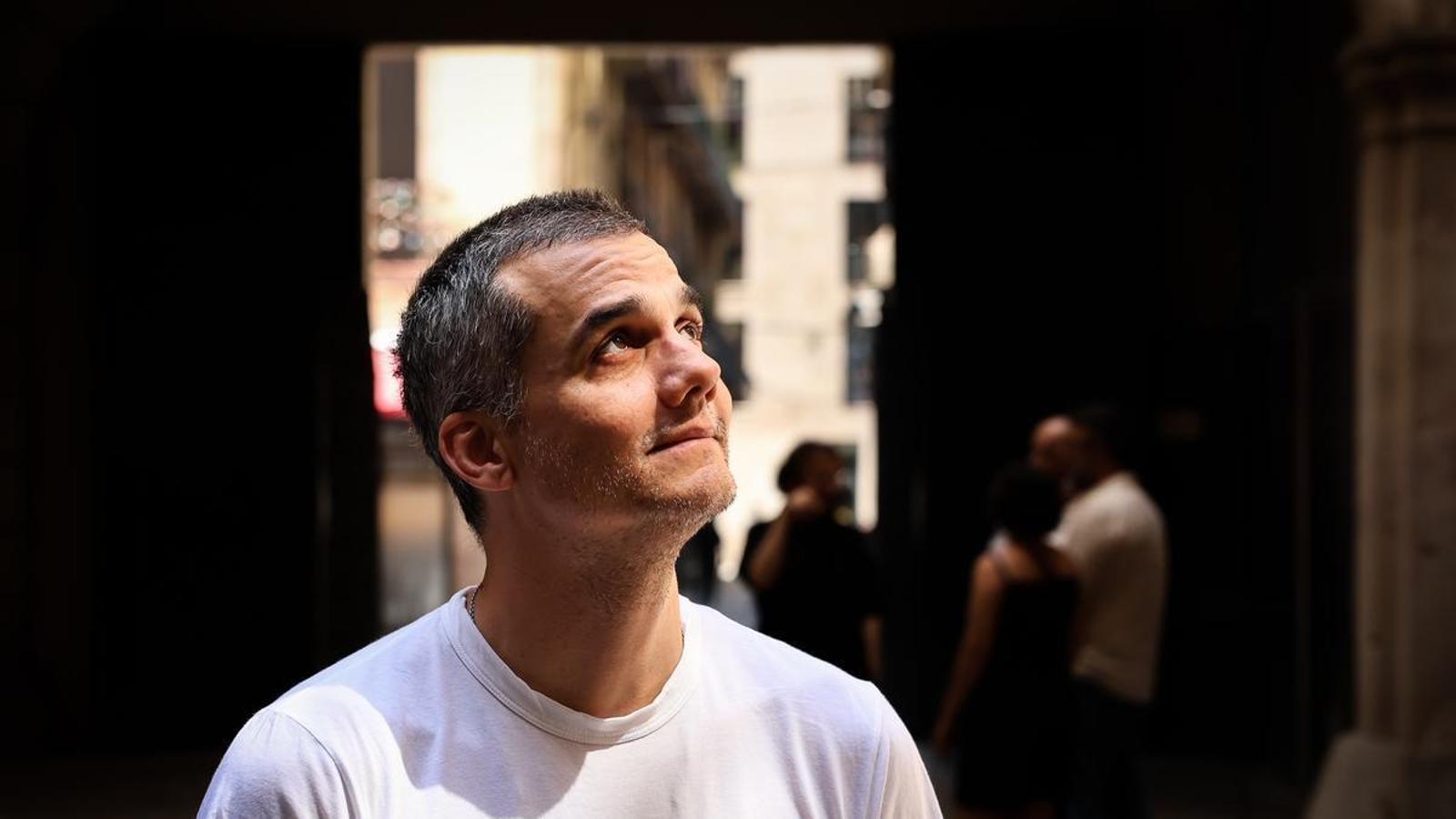
BarcelonaShaved and with short hair like a recruit, the Brazilian actor Wagner Moura almost goes unnoticed. The star of the series Narcos, nominated for an Oscar for his role to The secret agent, it is in Barcelona to finish this edition of the Grec Festival with A judgment [A trial], the show directed by Christiane Jatahy and written in collaboration with Moura himself and fellow actor Danilo Grangheia. The show, which can be seen this Thursday and Friday at the Teatre Grec, resumes the story of the protagonist of An enemy of the people, the doctor Thomas Stockmann, played by Moura himself. Two years after the end of Henrik Ibsen's play, the character returns to his city to demand a neutral process to prove his positions. On stage, this is realized by the fact that each night the character undergoes the judgment of eleven people who have registered before the performance and are randomly selected to form a jury.
In addition to asking questions during the performance, it is these people who ultimately decide whether Stockmann is an enemy of the people from a current perspective. "On stage you feel constantly in danger," says Wagner Moura. "Many times I not only speak with the jury members, I also ask questions to the audience, and there are even spectators who demonstrate without us asking them to," explains the actor. "The theater I like is one where there is a powerful interaction with the audience – Moura states–. That's why it's theater, that's why it's not a movie; people can participate.
For Lucas Paraizo, spectators are "collaborators in dramaturgy". "The audience builds the play with us every night," says Danilo Grangheia, who plays Stockmann's brother. Furthermore, the character of his daughter also appears in the play, played by a long-time collaborator of Christiane Jatahy, Julia Bernat. "In all of Christiane's plays there is great interaction with the audience. Big things don't need to happen with the audience, but simply knowing they are there, feeling their presence," says the actress.

Life within "information bubbles"
The origin of Um julgamento dates back to the desire of Wagner Moura and Christiane Jatahy to work together and address current issues. He was in love with the text of An Enemy of the People. She wanted to imagine a "possible future" for it. After many readings and many shared films, Moura joined Jatahy's characteristic "deconstruction" process. And, as a result of this process, some very current themes emerged, including post-truth and the rise of fascism. "The first thing I say in the play is that the truth as we knew it is over, and that interests me a lot," says Moura. "I'm particularly interested in how the development of technologies makes us all live in information bubbles, and how it affects relationships: how we relate and how we live in society if we no longer look at the same things, if facts no longer matter," warns the actor.
As Jatahy says, in this play the stage becomes a "political agora where the audience has the democratic right to express themselves". Furthermore, she highlights the fact that Moura plays between reality and fiction: there are moments when he completely disappears and becomes Thomas Stockmann. One of Jatahy's distinctive features is that she makes theatre and cinema coexist. And, in this case, she assures that she has incorporated into the staging the reflections shared with Moura about the relationships between theatre and cinema and his career as a film actor. "Wagner always impresses me a lot because he is a very transparent actor, in whom we see that the person is very present, that the construction of the character comes from the person's presence; therefore, he is very human," says Jatahy.
Without wanting to give spoilers, Jatahy says that the audience's verdict changes a lot depending on the country, and that there has never been "unanimity" in the audience's decision. "We hope to perform this play for many years, and the verdicts we collect will remain as a panorama of all these years," she adds.
