Today the world ends and I am eating some olives
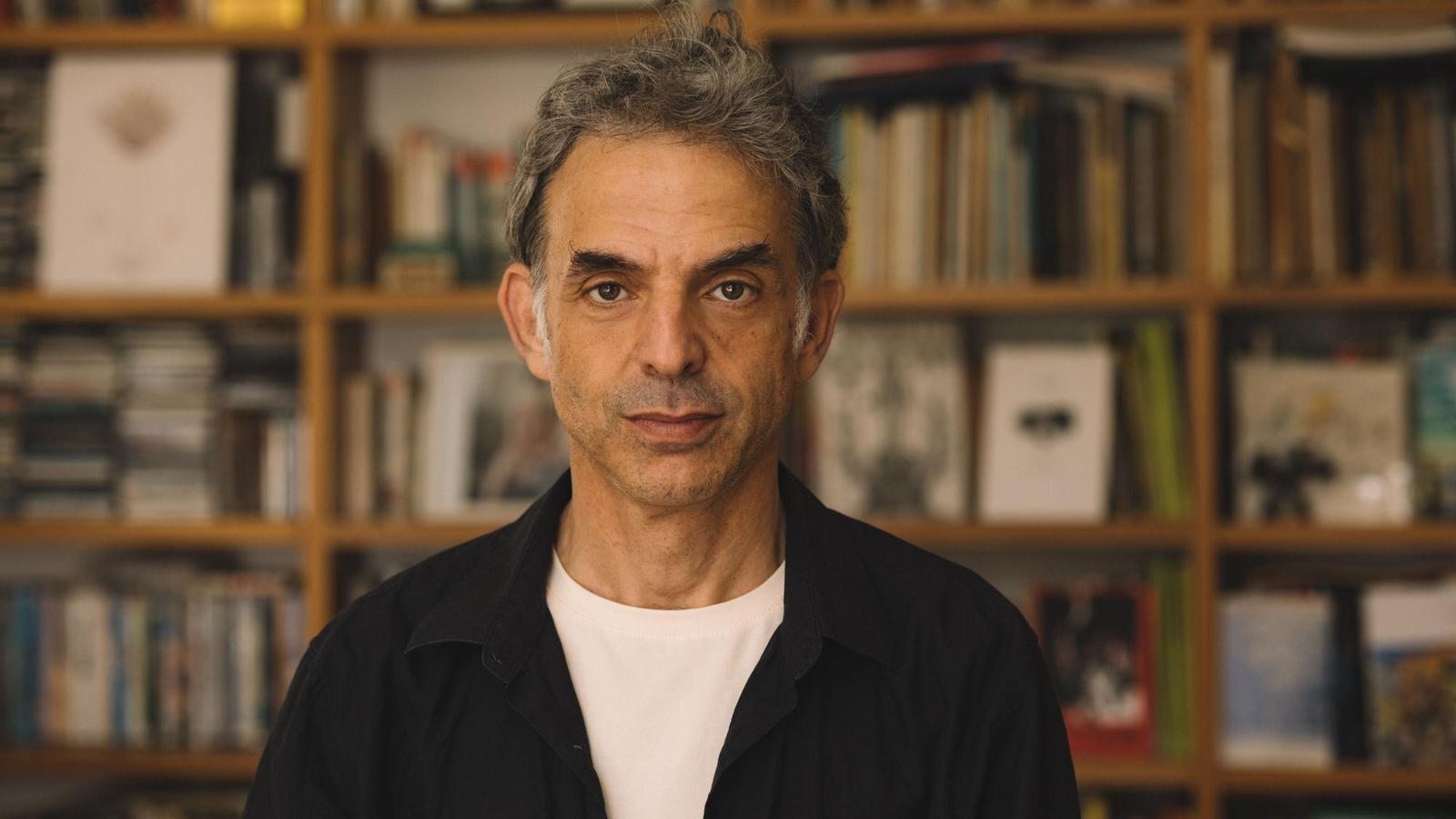
Etgar Keret moves comfortably between genres and between worlds in his new collection of stories, as if he had had the opportunity to travel through the multiverse and returned with a basket full of black humor stories

-
CAT -
CAST
- Etgar KeretLa Segona Perifèria / SiruelaTranslated by Paul Sánchez Keighley192 pages / 18.95 euros
None of the more than thirty stories collected in this volume exceed five pages, and some are only one and a half. Because Etgar Keret, one of the great Israeli authors, widely translated and published in publications like The New Yorker or Le Monde, is content with the shortest distance to leave us laughing in the darkest of darkness. By drawing, with few strokes, an alternative world, an AI-made husband simulation, disobedient robots, or a couple of young people doing mitzvahs (good deeds) while high on MDMA, he touches on serious or directly metaphysical themes with the apparent lightness of a koan, planting a seed that contains the power of an exemplary story. The speed with which he resolves extreme situations with the tools of comedy and realistic fiction, combined with a certain futuristic anticipation, turns these stories into something that resembles science fiction, but isn't quite, because the future he describes is too close to us. Keret moves comfortably between genres and worlds, as if he had had the opportunity to travel through the multiverse and returned with a basket full of black humor stories, the weapon of intelligent pessimists.
One of the themes that runs through the stories is how technology affects human relationships: how do we tell the robot that will help us in the kitchen that we've had a bad day today and we need to watch a shitty series? How will couples continue to deceive each other when they are only holograms? The typically Keretian way of answering these questions is to have the characters act in an earthly, almost carnal way: food and sex (sometimes love) tend to be the solutions for almost everything: "The world is ending today and I'm eating olives."
Besides stories that work with selfie sticks, Tinder dates, or Teams meetings, and that star couples in different stages of crisis, families, or loners queuing to enter the Other World, there are some that touch more closely on the conflict experienced in Israel, which Keret and no one can forget: "An eye for an eye" is a story permeated by the biblical "eye for an eye" where we witness the excursion of some Israeli boys through an Arab neighborhood with the intention of killing a dog for revenge, which only a master of the short story can resolve as he does: without easy solutions, without moral lessons, and with all possibilities always about to emerge from a can of gasoline.
The original title of the collection is the equivalent of Automatic Correction, which is the story I liked the most, because it plays with the various possibilities of destiny and with the small family misunderstandings that become heavy rocks to carry, but it disguises everything as a computer error. As if a programmer, because of looking at an ass on a mobile screen, made a mistake entering a line of code and thus sent a life to hell. It is in this oscillation between the most vulgar and the most profound that Keret moves with the comfort of someone who deeply knows the human soul and knows that any milligram of romanticism, carnality, or religious sentiment will be discarded material for the future intelligence, or whatever it's called, that will dominate the world.
