"Those of my generation left the country unintentionally"
Enric Gasa Valga, based in Innsbruck, brings a version of 'The Great Gatsby' with musicians and dancers to the Victoria Theatre

-
CAT -
CAST
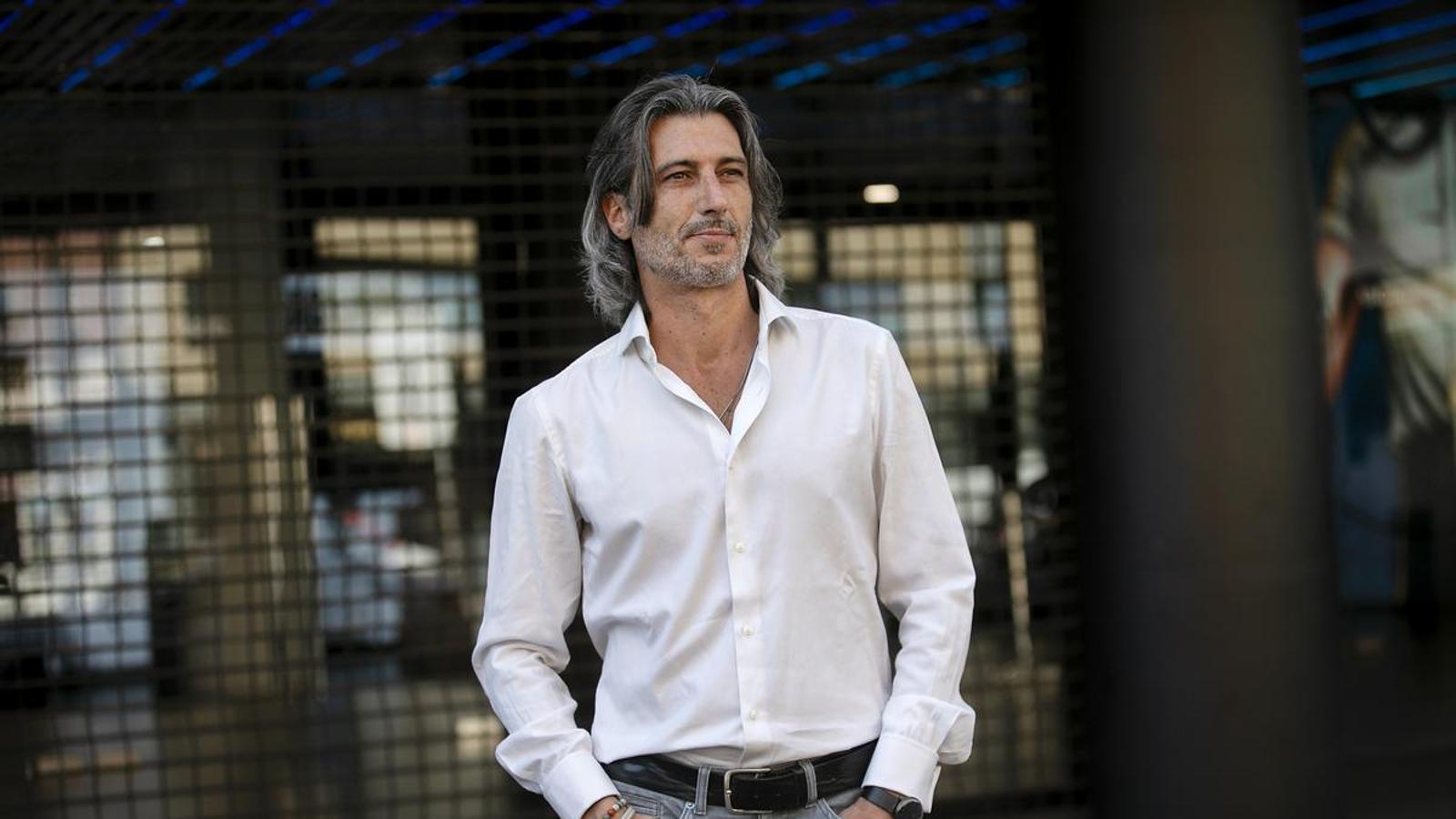
BarcelonaThe choreographer Enric Gasa Valga (Esparreguera, 1976) left his hometown at the height of his youth. "Those of my generation left without wanting to leave. Professionally, to have a strong career, you had many more opportunities abroad. We all believed it was a temporary situation and that we would return later, but unfortunately, Northern Europe continues to offer better working conditions than the South," reflects the artist. Just a few days ago, he arrived in Barcelona with the production The Great Gatsby - The Show, a musical and choreographic adaptation of F. Scott Fitzgerald's classic, which will be performed at the Teatre Victòria from May 20 to 31. The large-scale show premiered in Austria and has been to Munich and Monte Carlo. After Barcelona, it will travel to Bangkok.
Based in Innsbruck, in Tyrol, Gasa Valga has built practically his entire career outside of Catalonia. He trained in Cuba and for a few years traveled the world as a dancer, until in 2009 he took over the direction of the Tyrolean State Theatre. A few years later, in 2023, he created his own company, with which he has essentially dedicated himself to reinterpreting great classics from the perspective of music and choreography. "Sometimes we need classics to understand certain things. With The Great Gatsby, for example, we see the deception of the American dream and appearances, but today we all still want to succeed and show the best of ourselves through our phones. What was a reality a century ago is still a reality today," reflects the artist.
To bring the classic to the stage, Gasa Valga has thirteen dancers, two singers, and six musicians who play live. "There is no moment that is recorded. Even when a phone rings, we do it through the piano. I am a great defender of live music," says the choreographer, who adds that they have worked hard on the sound to evoke the 1920s. "We want to transport the audience to that era, and that's why we have chosen a repertoire with songs by artists like Dinah Washington and Nat King Cole," emphasizes Gasa.

Over the last few years, whenever possible Gasa Valga has tried to set foot in Catalonia. Last February the company brought Carmen to the Factoria Cultural in Terrassa and in 2024 it performed Frida at the Teatre Coliseum in Barcelona. "My lifelong friends, with whom I used to play football during recess, still live in Esparreguera. I'm very much a village person and I love this land dearly," he points out. When assessing the sector, however, he does not overlook the inequalities in working conditions between the north and the south. "Yesterday I read that the Liceu has 10,000 subscribers in a city of three million people. Innsbruck, with about 170,000 inhabitants, has a theatre with 8,500 subscribers. The difference is brutal," Gasa emphasizes.
From his point of view, there are three major pending issues for the performing arts sector: political and institutional support, education, and media presence. "And it is also our responsibility, those of us who create the shows. Our competition is Netflix and, therefore, the great challenge we have is to ensure that the audience that comes wants to return," the choreographer highlights.
Premiere of 'Terra baixa' in Tyrol
He has tried to do it with productions that seek to reach the maximum number of spectators through common references and composers like Wagner and Ravel, but also through his roots. In 2021, the artist created a version of Terra baixa by Àngel Guimerà with sardanas and habaneras that premiered at the Tyrolean State Theatre. "The entire repertoire was Catalan music. The audience loved it; at each performance, they stood up to applaud. But the show stopped there," laments Gasa.
Now, the choreographer also has another production with a Catalan soul underway, Saving Salvador - A Tribute to Dalí. "On this occasion, we have created the music expressly for the show. Everyone sings in Catalan, and the performers have had to learn a bit of our language to be able to perform it," explains the artist, who hopes that the show can be seen not only in Germanic theaters but also that some Catalan venue can bring it to Barcelona.
