This is the Miró that the Generalitat has bought for 1.6 million
The work was in the hands of a private collector and will continue to be deposited at the Joan Miró Foundation
-
CAT -
CAST
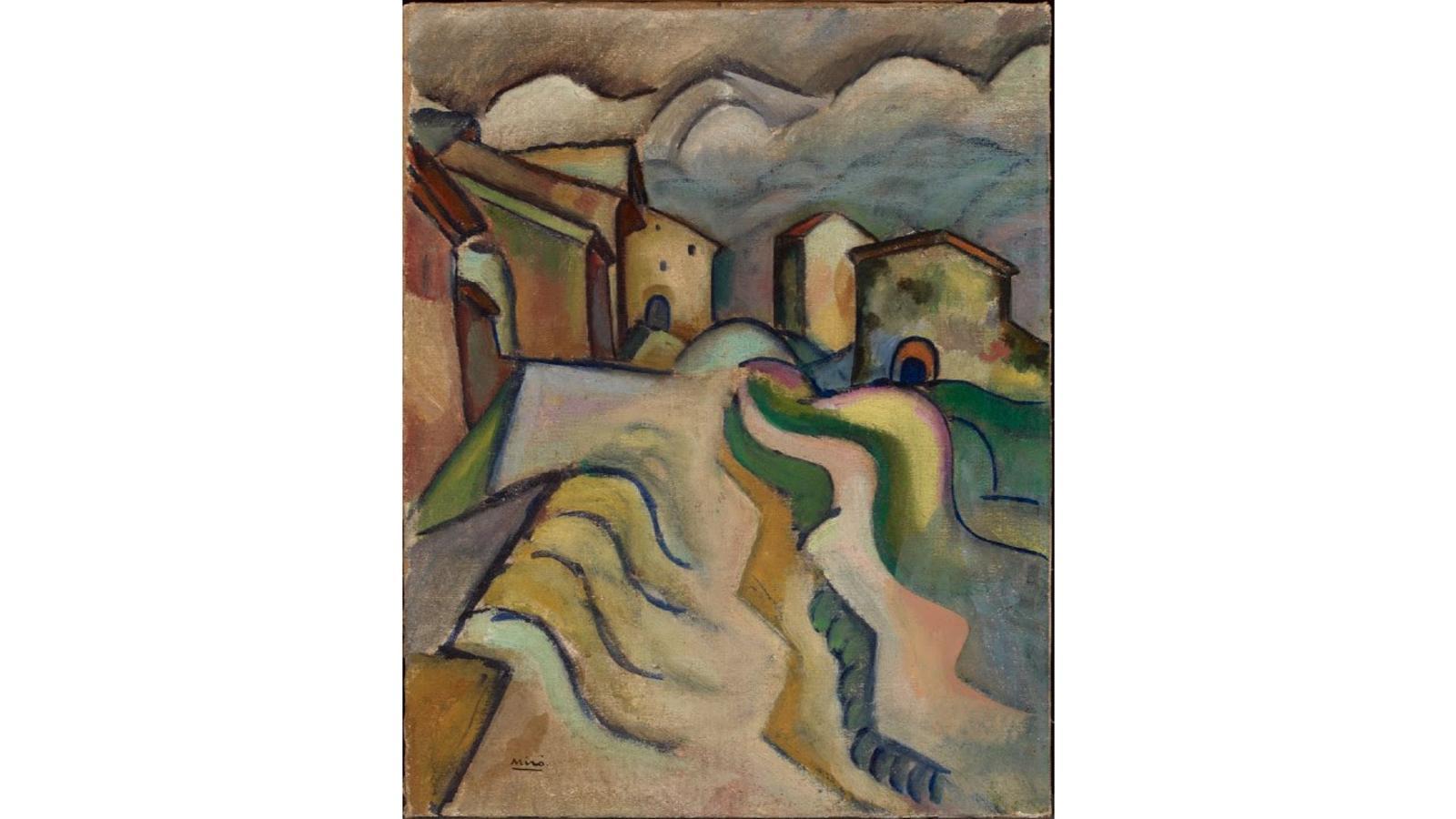
BarcelonaThe Department of Culture has closed the acquisition of Siurana, el poble (1917), an early and key painting by Joan Miró, for an amount of 1.61 million euros. The work, an oil on canvas measuring 49 by 39 centimeters that was previously in the hands of a private collector, is incorporated into the public funds of the National Collection and will remain deposited at the Joan Miró Foundation in Barcelona, where it could already be seen on loan within the permanent collection.
Miró painted this canvas in the spring of 1917, when he was only 23 years old, during a stay in the small village of Siurana, in the Priorat region. That trip marked a turning point in his career; immersed in the so-called Catalan Fauvist and Cubist stage –under the influence of Cézanne and Van Gogh–, the young artist began to synthesize the geometric forms, the intense chromatism, and the telluric references of the landscape that would later crystallize into his most personal plastic language.
The piece is part of a very small series of only eight canvases –six landscapes and two figure scenes– that Miró completed during that stay in the Priorat. In fact, Siurana, el poble dialogues directly with Siurana, el camí (1917), preserved at the Reina Sofia Museum in Madrid, with which it shares chronology, compositional gaze, and style. Furthermore, the painting that now passes to public ownership was part of the historic first individual exhibition of Miró at the Galeries Dalmau in Barcelona, in 1918, a milestone of the avant-garde in Catalonia.
The operation is framed within the purchasing policy of the National Collection promoted by the Department of Culture –which in 2026 has a global allocation of nearly five million euros for heritage acquisitions– with the goal of securing reference pieces of Catalan art and guaranteeing public access to them in the country's museums.
