The writer who had to translate thirty pages a day to survive
The centenary of the birth of Ramon Folch i Camarasa will allow the recovery of one of the most prolific authors and translators of 20th-century Catalan literature

-
CAT -
CAST
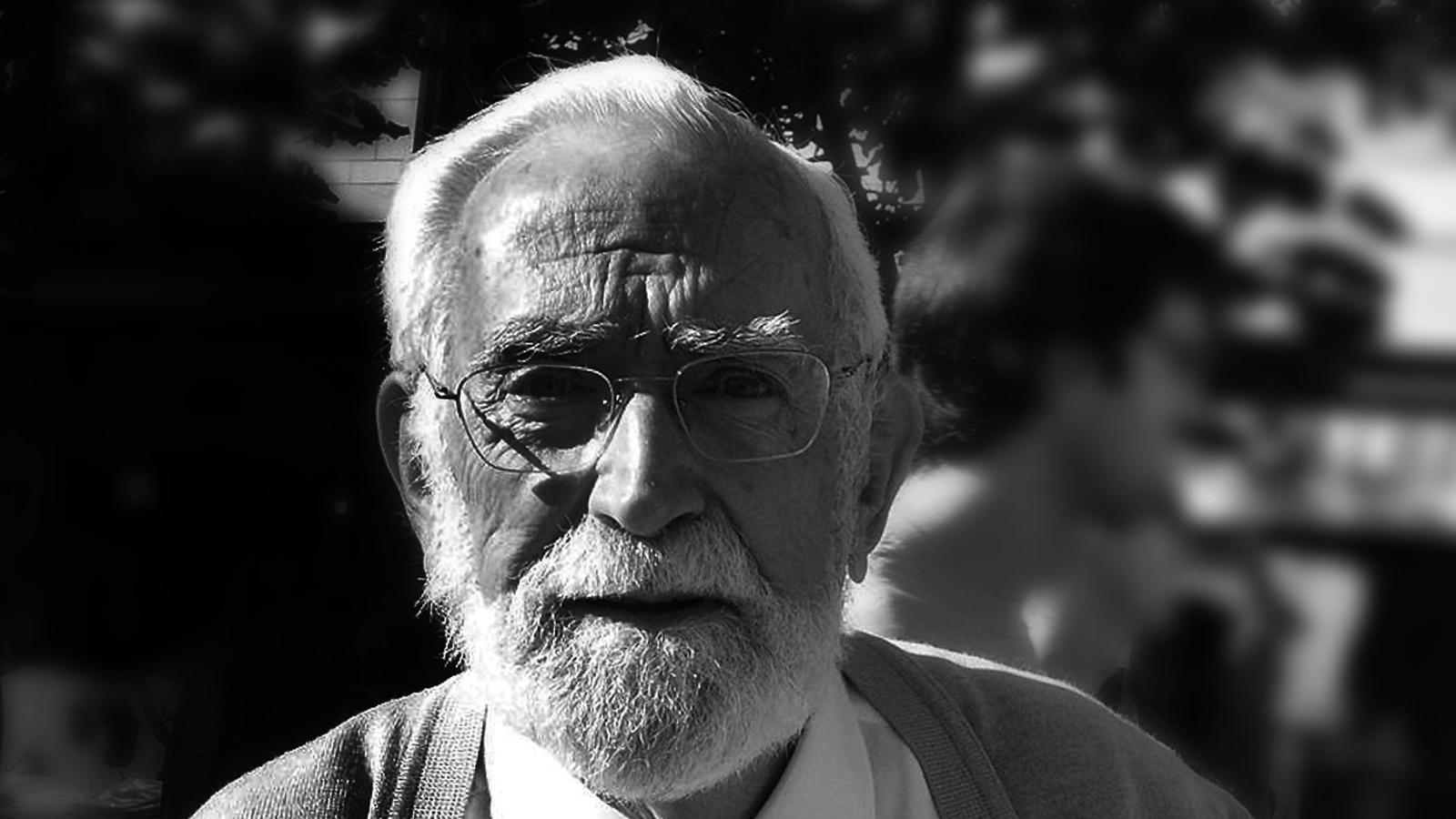
Barcelona"Like a happy castaway, / in October twenty-six, / the thirtieth day, Ramon arrives in the world, / in Barcelona. / Without making much fuss. He is the ninth child". This is how the ballad dedicated by Joan Vilamala to Ramon Folch i Camarasa (1926-2019) begins, one of the key authors of the literary revival in Catalan that started in the late 1950s, alongside Manuel de Pedrolo, Maria Aurèlia Capmany, and Josep Maria Espinàs.
The second to last of Josep M. Folch i Torres's (1880-1950) ten children, Ramon lived through "an atmosphere of intellectual prosperity", as essayist and professor Montserrat Bacardí recalls, until the end of the Civil War, when Catalan became a persecuted language. Folch i Camarasa's aspiration, from a very young age, was to "try to recompose" that pre-Francoist environment "through various initiatives", Bacardí continues, before mentioning the three pillars of his work: theatre, narrative, and translation. "In all three fields, he proceeded with a fluency and agility that recall the mastery of his predecessor", adds the philologist.
(1880-1950), Ramon lived in "a climate of intellectual prosperity", as remembered by the essayist and professor L'ofici de viure la paraula", the republication of the novel "L'estiu més bonic
" (1966), and the publication of the correspondence between the writer and one of his editors, Joan Sales.
From the imposed language to the beloved language
Like other colleagues of his generation, Ramon Folch i Camarasa had to make his way first in Spanish. During the 50s he worked as a proofreader and translator for the Janés publishing house, owned by his friend Josep Janés i Olivé (1913-1959). "He never wanted to take responsibility by signing these translations with his name simply because he had to rewrite the books in an imposed language," comments Bacardí. In parallel, Folch i Camarasa began to make his own work known. 1954 was the year of his triple debut: the play Un vailet entre dos reis, the poetry collection L'aigua negra and the novel Camins de ciutat.
Also in 1954, Folch i Camarasa married Montserrat Pons i Dedeu. They had six children. They grew up while their father continued to translate at an ever-increasing pace. In 1959, having already won the Joanot Martorell prize with La maroma (1956), he published the first translation into Catalan, The Diary of Anne Frank, at Selecta. "Until the early 60s, translations into Catalan had been persecuted by Francoist censorship with a very particular obsession," recalls Montserrat Bacardí. The relaxation of the dictatorship allowed publishing houses such as Aymà, Selecta, Edicions 62, and Club Editor to consolidate. We owe to Ramon Folch i Camarasa the Catalan versions of such significant novels that broadened the reading public, such as Brave New World, by Aldous Huxley (Plaza & Janés, 1963); The man who watched the trains go by, by Georges Simenon (Edicions 62, 1964); The Lady in the Lake, by Raymond Chandler (Edicions 62, 1966), and The Great Gatsby, by Francis Scott Fitzgerald (Edicions 62, 1967).
"During those years he carried out intense activity because he lived by translation – Bacardí continues–. His pace was, by his own confession, thirty pages a day, in an early attempt to turn the task into a profession. Thus, for example, in 1965 he published twenty-one translations and in 1966, eighteen." In the 70s, the pace of translations slowed down: between 1973 and 1986, living in Geneva, he worked as a professional translator, from English and French into Spanish, for the World Health Organization.
Young people full of life doomed to failure
In the seventh volume of Història de la literatura catalana –a project still in progress–, Margarida Casacuberta frames the literary production of Ramon Folch i Camarasa under the heading of Catholic novel, which is born "from a confluence of religious and literary interests in accordance with a conception of the literary fact as inseparable from morality" and which, according to the philologist, includes names such as Joan Sales, Xavier Benguerel and Blai Bonet. Beyond faith, the characters in these authors' novels construct "a stark vision of reality" through "idealists with feet of clay, young people full of life, doomed to existential failure and dragged down by the ruins of the world they seemed destined to conquer".
Besides winning awards such as the Sant Jordi for La visita (1964) and the Ramon Llull for Sala de miralls (1982), among Folch i Camarasa's abundant production are El nàufrag feliç (Albertí, 1959) – which Viena re-edited with very good reception in 2022– and the scripts for the fifteen Massagran albums, illustrated by Josep Maria Madorell, published between 1981 and 2002 by Casals publishing house. They were one of the most resounding successes of comics in Catalan in the 80s – selling over 100,000 copies. Nevertheless, Folch i Camarasa, who continued publishing until 2006 – the last novel was Contra el silenci, published by L'Albí–, complained with a sense of humor about his lack of luck whenever he sent an unpublished work to a literary award: "There is a conspiracy against me, every time I enter a competition there is some writer who decides to submit a much better work, and of course, they win. Many Catalan writers are better than me, but that doesn't mean they are good".
