The giant shadow of Pau Casals continues to be long and very effective
The Palau de la Música inaugurates a new season with the Vallès Symphony Orchestra and the Orfeó Català
-
CAT -
CAST
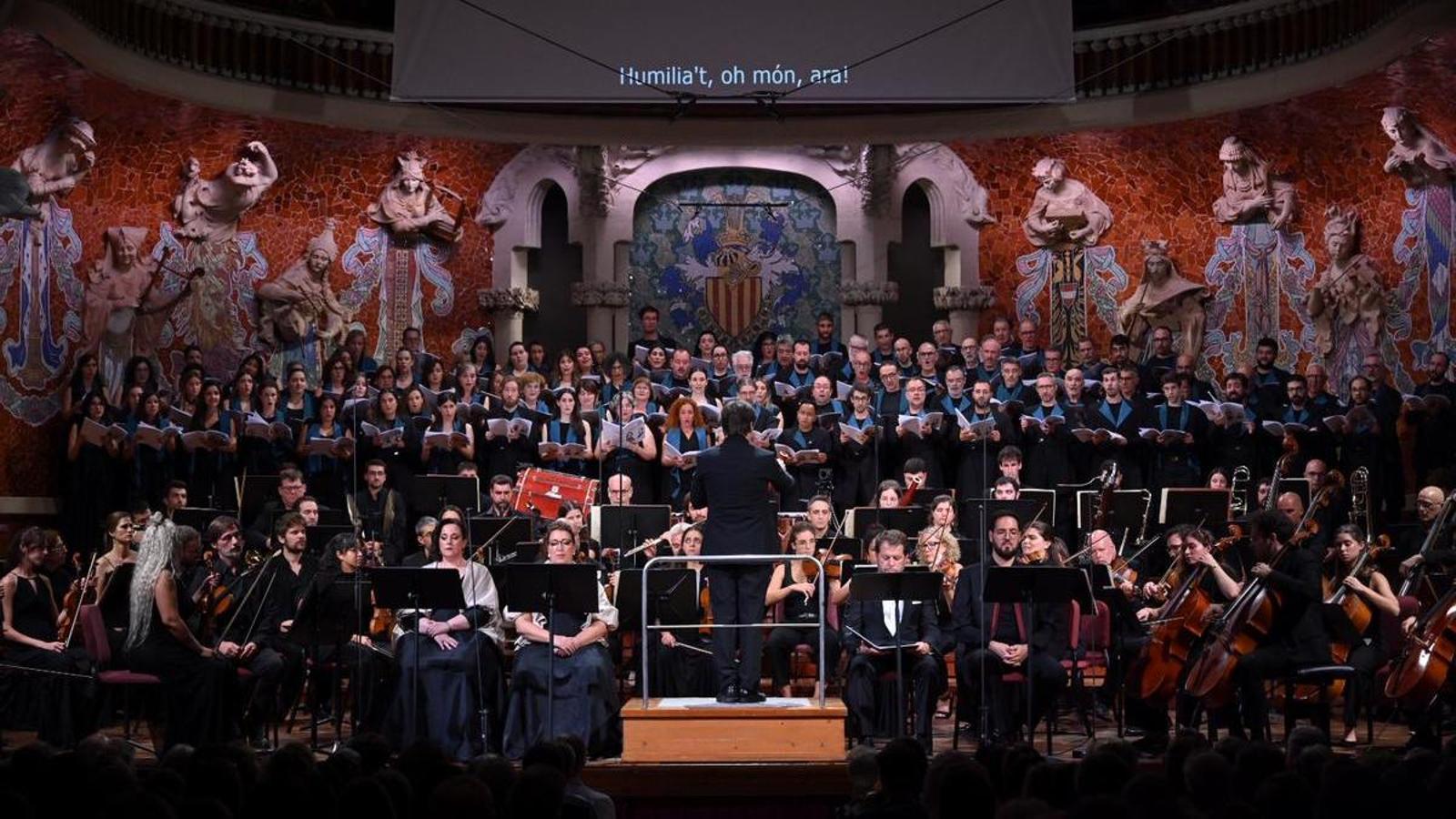
- Orfeó Català, Vallès Symphony Orchestra (Xavier Puig, conductor), Pablo Ferrández, Casals Quartet, Mercè Sanchis, Escolania de Montserrat (Pau Jorquera, conductor), Marta Mathéu, Gemma Coma-Alabert, Roger Padullés and Ferran Albrich.
We have said it on several occasions and now we must return to it: there are concerts that go beyond conventions and their boundaries. Because they end up becoming first-rate cultural events. And the evening with which the Palau de la Música officially inaugurated the season was one of these. First of all, it must be said that this was the case regardless of the artistic assessment we might make (and will make). Because the centrality of the figure of Pau Casals, in the midst of the commemoration of the 150th anniversary of his birth (which will take place on December 29th), means that the shadow of the universal man from El Vendrell continues to be long and highly effective at bringing together musicians and spectators eager to enjoy good and well-crafted music.The recent controversy derived from the tribute to Casals at the Congress of Deputies, with a boycott included by Junts, should not make us forget the universality of the author of The Manger, despite that emotional and sincere declaration of Catalan identity, in 1971, at the headquarters of the United Nations. Because Pau Casals goes much further, as a musician and as a man, as an artist and as a human being committed to just causes that transcend languages and borders.That said, the appropriate concert on Monday night at the Palau de la Música was destined to be an act of culture and civility, with music as the protagonist.The two religious pieces by Casals (Nigra sum and O vos omnes) were one of the most emotional moments of the evening, due to the quality of the pieces and the deep spirituality they breathe. Not to mention the revisit that Bernat Vivancos has made of El cant dels ocells with a language that pivots between yesterday and today, with noble craftsmanship on the part of the Catalan musician and with the cello voice of Pablo Ferrández and the Escolania de Montserrat.One of the greatest attractions was hearing the final section of Beethoven's Ninth Symphony with the Catalan translation by Joan Maragall. It made perfect sense to remember that July 18, 1936, when Casals said goodbye forever to the Palau de la Música, its singers, and the country with that Song of Joy that would give way to a bitter period in our history. A good performance by the Orfeó Català with the Simfònica del Vallès, although the text sounded with some inaccuracies and a partial understanding of the words translated by the poet from Sant Gervasi. Under the direction of Xavier Puig, the piece had expressively intense moments, although one would have liked a deeper reading of the emblematic movement. The soloist team was well-coordinated, consisting of soprano Marta Mathéu, mezzo-soprano Gemma Coma-Alabert, tenor Roger Padullés, and baritone Ferran Albrich.The sinuosities of the first Cello Suite by J.S. Bach (rediscovered, along with the other five, by an adolescent Casals) had in the hands of Pablo Ferrández the assurance of a job well done, something that was also exhibited by the members of the Casals Quartet in the service of the String Quintet in C major, D. 956, op. post. 163 by Franz Schubert.Moving concert, then, more than for the quality of the performances, for what it represented in relation to one of our great figures most universal.
