The first authorized demonstration in Girona after Franco 50 years ago
The construction workers went out into the street on July 24, 1976
-
CAT -
CAST
GironaAfter Franco's death, social movements moved intensely to the streets. During the first semester of 1976, in Girona, unauthorized strikes and demonstrations were seen, which led to detentions and fines by the governmental authority. Those that, during the month of March, were led by construction workers, and the so-called March of Freedom, organized peacefully in the first week of July to claim basic freedoms and the Statute of Autonomy, were especially repressed.
A workers' parade
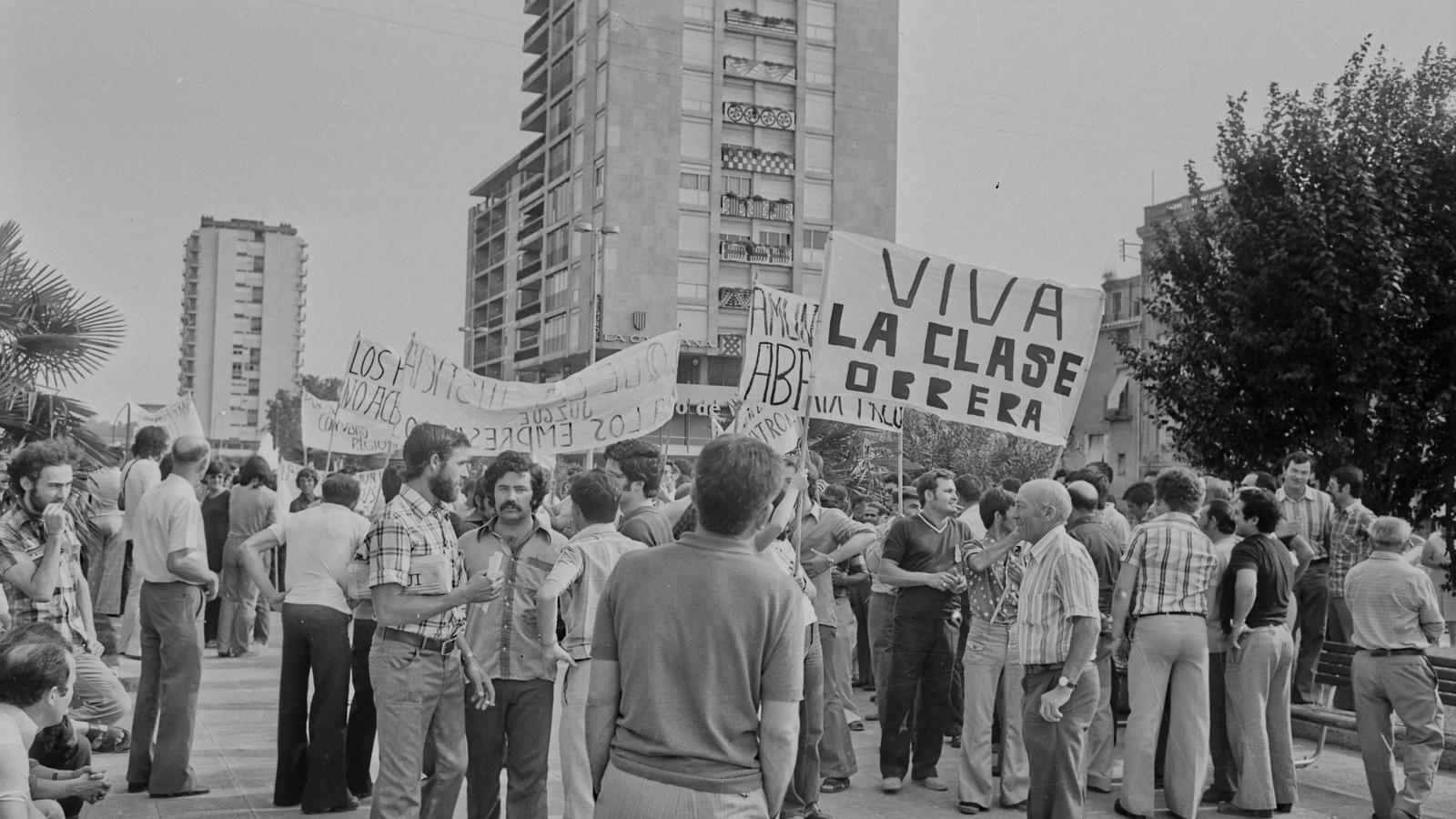
The prohibitions on political conferences and round tables were repeated. Jordi Pujol, Jordi Solé Tura, Josep Andreu Abelló, as well as professors Antoni Comas and Ricard Salvat, were not authorized to explain their projects and lessons. It seemed that reformism was getting stuck in the Girona region. In contrast, on July 24, 1976, after many years of imposed silence, the streets of Girona hosted the first demonstration authorized by the Civil Government, an entity that represented the continuity of Francoist men under the protection of the monarchy. It was the protest parade organized by construction workers to denounce the non-compliance of some companies with the collective bargaining agreement payments, achieved after a long unified struggle.
The demonstration started from Plaça Catalunya, at half past six in the afternoon, and went through La Rambla, els Abeuradors, els Ciutadans, La Cort-reial, the Sant Agustí bridge, Plaça de la Independència, and Jaume I Avenue. It dispersed in front of the provincial Labor delegation. The municipal police regulated traffic, and the internal service of the organizers maintained the proper order of the march. The participants displayed a dozen banners with slogans in Spanish, such as: “Long live the working class”, “We are fed up. They must pay the Agreement”, “Labor amnesty”, “We want a single class union”, “Out with the capitalists”, “The workers of Blanes with those of Girona”, “May justice punish the employers”, etc.
Baby strollers and theatre people
The information note sent by the Police station to the civil governor detailed: “About 250 people attended, mostly men, with two baby strollers with their respective children and a small number of women. During the demonstration, they shouted “worker and comrade, join” and chanted with applause “the people united will never be defeated”. They also hummed “labor amnesty”. Apart from the promoters of the demonstration, elements unrelated to the construction sector were detected, including: Maré Bardera, Mercedes Mercader Domingo, Salvador Suñer Bover, Miguel Tarazona Bellach, José Antonio Palacios Solergastoy and components of the TEI (Independent Experimental Theater). Upon an indication from the leader of the demonstration, José Lafuente López, before the Labor Delegation of this capital, it dispersed peacefully”.The note from the governmental police also indicated that the event had been adjusted, practically, to the planned schedule and itinerary, and that it ended 8 minutes before the established time. The next day, the Movement's newspaper headlined the news: “300 construction workers demonstrated yesterday in the city. The march proceeded peacefully and no incidents were registered”. For its part, the weekly Presència remarked that the number of participants had been 500, and added: “It was, without a doubt, a good proof that disorders only occur when such an elementary right as this is denied by the authority: to demonstrate”.
Everything ends with new fines
The head of the Civil Government, Armando Murga Carazo, an air force officer, was the same one who had severely sanctioned the previous demonstrations by construction workers and participants in the March of Freedom, but in Madrid there had been a change in the executive power (Adolfo Suárez instead of Carlos Arias Navarro) and in the Ministry of the Interior, Manuel Fraga Iribarne had been replaced by Rodolfo Martín Villa. Due to internal and external pressures and interests, something had begun to change to make the new political phase credible. Tolerance, however, had its limits. Thus, Governor Murga again imposed two fines of 25,000 pesetas, for inciting a strike, on November 15, 1976. The public order law of 1959 empowered him to repress in this way.
