The fantastic and striking pathos of La Zaranda
'All the angels took flight', by Eusebio Calonge, impacts the Teatre Romea
-
CAT -
CAST
- Author: Eusebio Calonge. Director: Paco de la Zaranda.
- Performers: Ingrid Magrinyà, Natalia Martínez, Gaspar Campuzano, Francisco Sánchez and Enrique Bustos.
- Teatre Romea. Until October 25, 2026
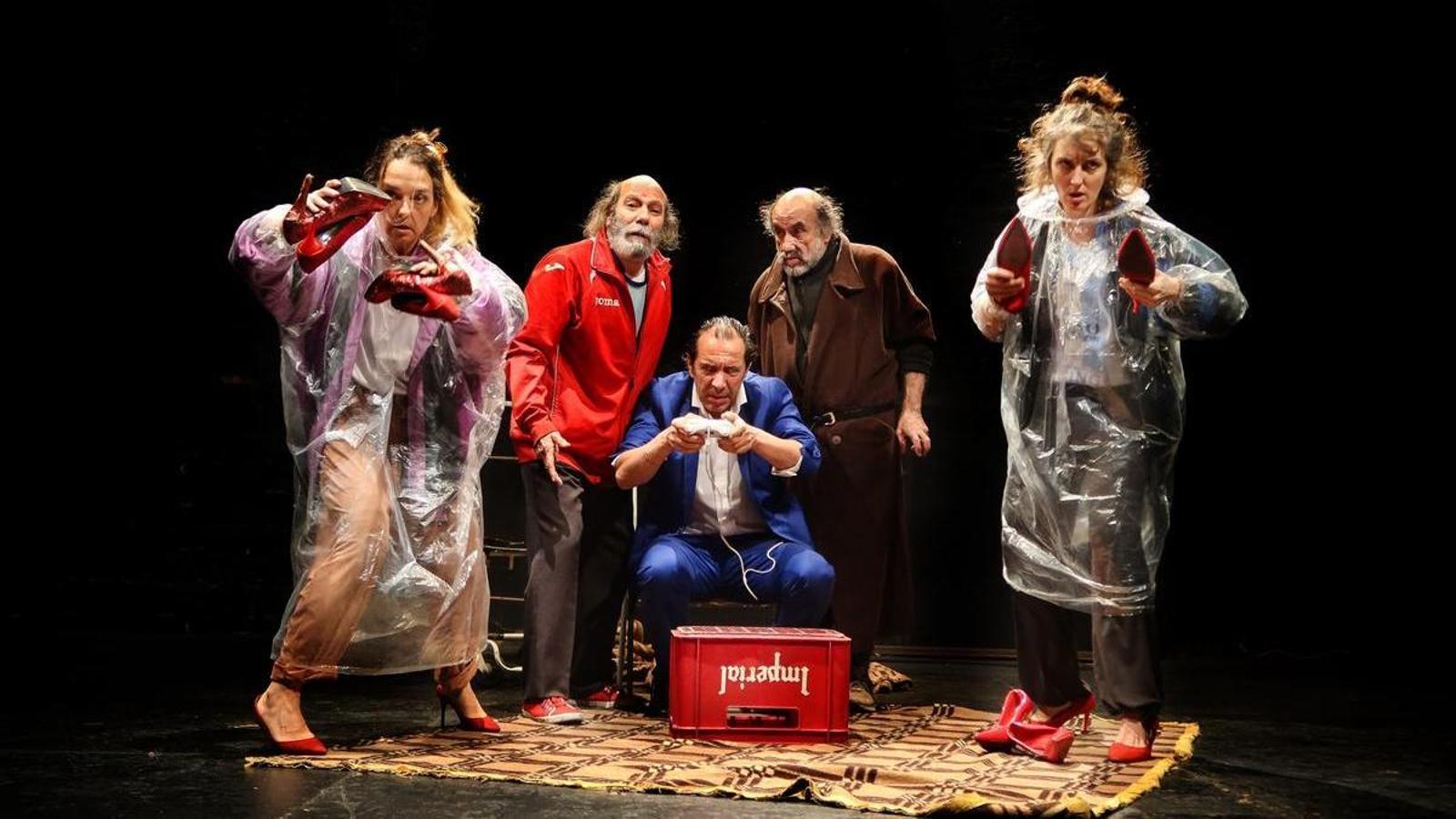
La Zaranda, Teatro Inestable de Ninguna Parte, celebrates its fortieth anniversary with the annual appointment at the Romea by the will of its until now director Josep Maria Pou and in attention to the group of fans that have followed them for so many years. And the fact is that La Zaranda's theater is so peculiar and different from everything that can be seen on stage... A theater stripped of artifices that makes virtue of simplicity and that draws from the classics without performing them. A theater in which the creation of a singular world prevails, crossed by an almost existentialist poetics and inhabited by losers. Displaced characters like Beckett's clowns who do not know what to do or how to do it but who continue with inherited routines. Characters of great pathos like these angels that Eusebio Calonge has imagined and that could just as well inhabit a corner of the Spanish picaresque of the Golden Age as the London neighborhood of Mackie the Knife, from The Threepenny Opera, or the suburbs of a modern city. Through the black space of All the angels took flight –occupied only by four large old books, which will finally be the martyrs' tombstone, a bed frame, a box of Imperial beers and plenty of blankets– walk a robber and drug dealer named Virgilio (Gaspar Campuzano), the Romanian prostitute Micaela (Ingrid Magrinyà), the also prostitute and junkie Alacrana (Natalia Martínez), the pimp Paco Cadena (Enrique Frutos) and Ramonet (Francisco Sánchez), a poor “fool” who speaks little but quotes Shakespeare and Dostoevsky.
La Zaranda is accustomed to working more on themes and situations than on plots, but in this magnificent proposal there is indeed a noir plot knot bathed in the nihilism of The Idiot, by Dostoevsky. There are two particularly striking scenes: when Ramonet and Virgilio roam the streets (and we are in the Raval) asking for money for food and the murder of Alacrana with a bed frame. There are also several choreographic phrases by Ingrid Magrinyà very well incorporated. One can perceive the surprise of the less frequent spectators when the final blackout falls over a symphony and the angels do not come out to bow. They have never done so. It is worth returning to La Zaranda or discovering it.
