The biggest valleys are of tears
In the characters of 'The Grapes of Wrath,' by John Steinbeck, there are no gradients of perception of reality: facts are black or white

-
CAT -
CAST
- John SteinbeckAdesiaraTranslation by Joaquim Mallafrè and Marc Donat296 pages / 23 euros
This volume brings together eleven stories plus the new The little red pony. The Catalan translation of this last work, by the late Joaquim Mallafrè, appeared in 2011. Marc Donat has been responsible for translating the rest of the stories into Catalan.
John Steinbeck, Nobel Prize in Literature in 1962, was born in 1902 in the Californian city of Salinas, and the small country –productive and ungrateful at the same time– takes on a sonorous prominence in these narratives (and, in fact, in all his literary production). A rurality still very much indebted to the 19th century is manifested in the characters' disposition, which does not obey any kind of refinement. Quite the contrary, gruffness, if not brutality, often surfaces. A character who has surprised his wife in bed with another prefigures, in his mind, this: “It occurred to him how his mother used to hold the bucket to collect the blood that came out of a pig’s throat when his father slaughtered it.” Details taken from natural life movingly represent the author's world. In “The Chrysanthemums” we read: “The horse and the donkey stood still, their heads bowed as if they were flowers lacking water.” In Steinbeck's characters, there are no gradients of perception of reality: facts are black or white. If the first story tells us of the dissatisfaction of a farmer's wife, in the second, “The White Quail,” the woman is, rather, hysterical, in love with birds. Her solicitous husband, who is not willing to kill an intrusive and menacing cat, as she wants, points to the quail, as one who, out of spite, does so at his wife's breast.
Predominance of the tragic factor
“Fugida” is a beautiful story about loss. The young protagonist has to flee his village because, in an inconsequential dispute, a man has died by his precise knife. First, he loses his innocence (he was still too young to kill someone). Then, already far from the paternal home, from the maternal shelter, in his hurried flight, he loses, first, the rifle and, then, the horse, wounded by a stray bullet. Finally, he will lose the most valuable asset we have: his own life. Almost all the stories (not “L’esmorzar”, a fortunate exception) include the tragic factor, which determines, more or less, the course of the characters’ existence, their destiny. “Johnny l’Ós” recreates the character of this name, who has the terrifying ability to imitate the voices of his neighbors and reveal their private conversations. Some of these stories delve into the intimate life of a marriage, in terms that remind me of Strindberg. Yes, with the narrative material transplanted to the American West and the rigors of rural life. “L’arnès”, for example, presents us with a man who all his life has worn a corset and harness to hide his belly and appear more robust; all this, by the explicit wish of his wife (a pure spirit weighing just over forty kilos). Once widowed, the man feels liberated, he sheds all his stays, but something almost atavistic of his wife continues to resonate within him, almost deafening him.
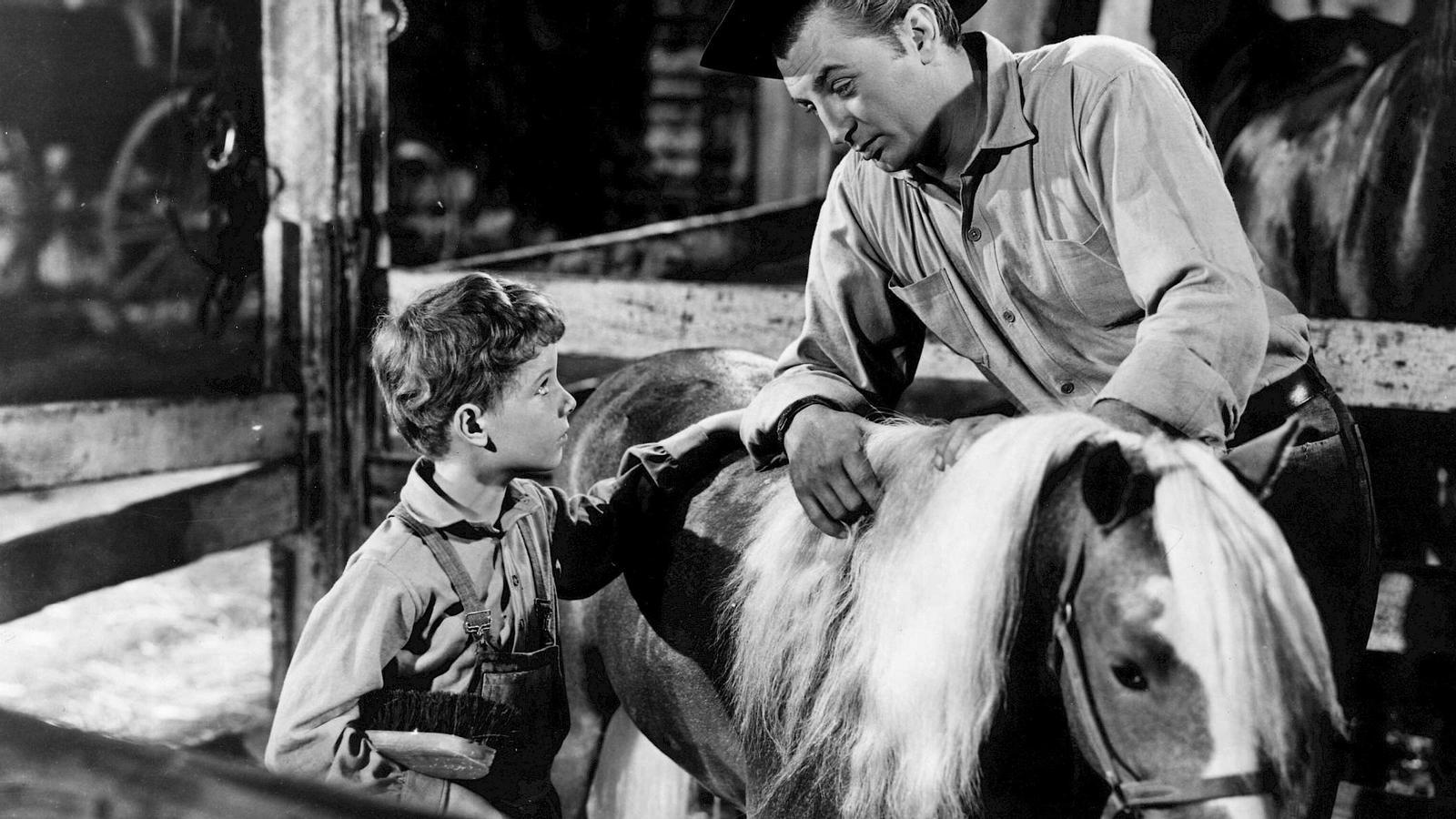
El poni roig is a delicate coming-of-age story. With the death of his beloved pony, Jody – not yet an adolescent – will learn, by force, the first valuable lesson of life. They are four linked tales, whose action takes place on the same family ranch, which reflect on some of the moral foundations of our existence. Good feelings have their share of prominence in the novel, but, in the end, death respects no one (or, if you prefer, takes care of everyone). And evil, which leaves nothing undone and lurks everywhere. And, always, the immense, awe-inspiring nature, which seems to invite us to take us away, upwards, towards the vastness of the universe: “He heard the dull, persistent noise that space and silence make”.
