Perifèria Cultural claims "living and conflictive culture" with the "most ambitious" edition
The cycle extends its presence to 45 municipalities of the Catalan Countries, and for the first time includes Mallorca, Terra Alta and Matarranya
-
CAT -
CAST
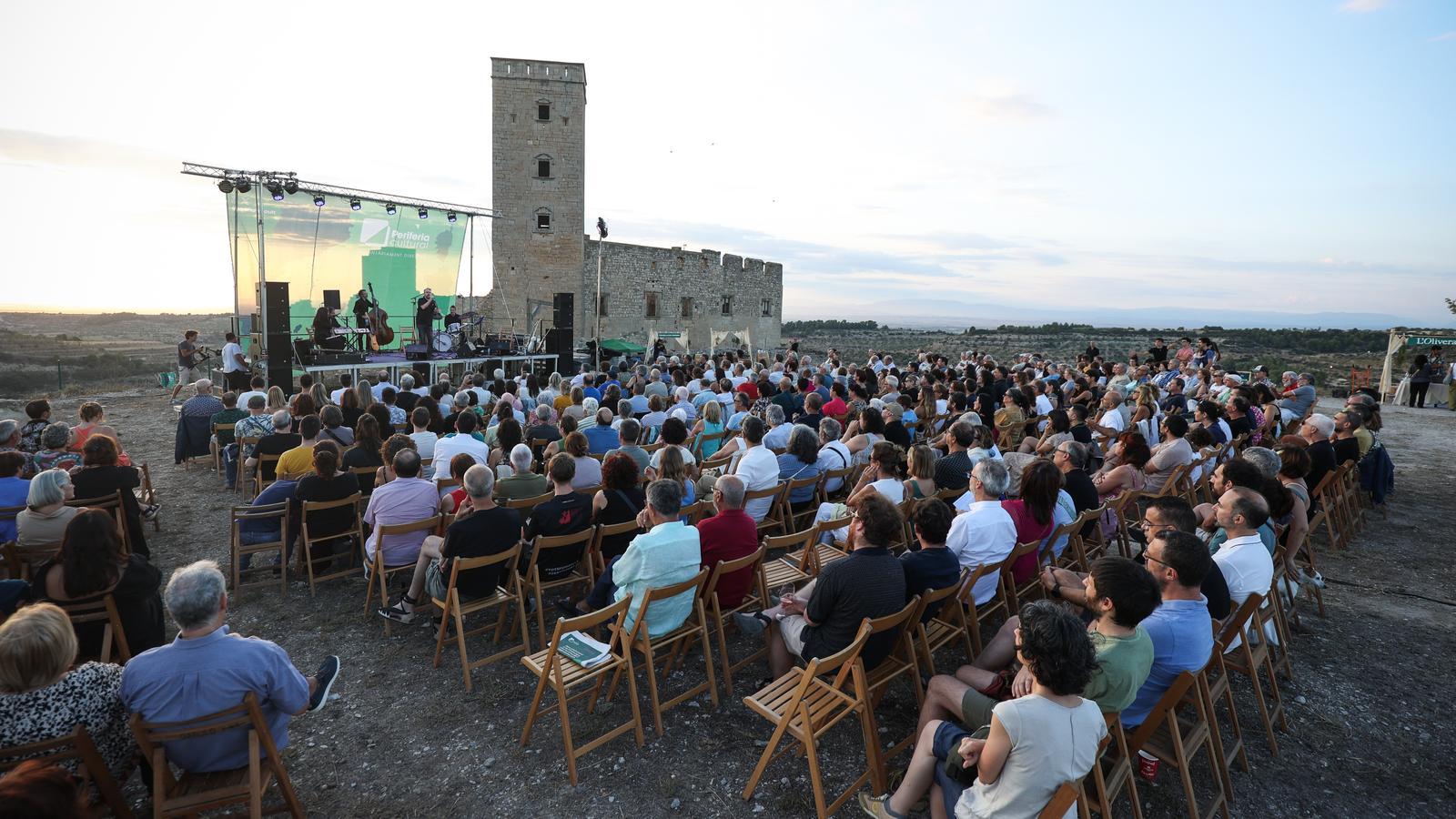
Barcelona"Culture is alive to the extent that it is conflictive," wrote Manuel de Pedrolo in his diary. This idea is the starting point for the fifth edition of Perifèria Cultural, the cycle of music, land, and gastronomy that since 2021 has been traveling through the Catalan Countries, bringing artistic proposals outside the big commercial circuits to equally peripheral spaces: towns and corners of the country that are left out of tourist and cultural radars. For six months, from May 23 to November 15, the cycle will feature over 100 shows in forty-five municipalities.
For the first time, the cycle will take root in Mallorca, Terra Alta, and Matarranya, three new territories that lead the expansion of a musical cycle that continues to grow. "Although this year there are more artists, more dates, and more municipalities than ever, Perifèria's intention is the opposite of massification: to do things tailored to the conditions and characteristics of each town to create something with lasting impact that goes beyond a one-day concert," explains Francesc Ribera, Titot, the new artistic director of Perifèria Cultural. The lineup includes over one hundred artists, such as Maria del Mar Bonet, Miquel Gil, Pau Alabajos, Tomeu Penya, Judit Neddermann, Magalí Sare, and Miquel Lladó, among many others.
Pain and memory
The proposal topping the bill is War, Exile, Revenge, a production by Joan Lluís Bozzo and Annabel Villalonga that will tour Corbera d’Ebre, Argelers and Porreres, three places marked by war, exile, and repression. It is not a show that seeks to console: "We take a journey through pain so that the audience has to search for hope within themselves," points out Titot. "It is from pain that culture emerges," adds Villalonga.
In this same vein is inscribed Llach-Gener 76, with Manel Camp, Joan Reig, and Gemma Humet recovering those concerts at the Palau dels Esports in Barcelona that were a valve of political expression just after Franco's death. Fifty years later, the show returns with young musicians and surprising relevance: "We don't want to talk about nostalgia – says Reig –, because these songs make more sense right now".
Another noteworthy proposal is
Teva-Meva, a format in which two artists of different registers respond to each other through their songs, building an unrepeatable dialogue live. The programming also includes theatrical productions such as Acorar, by Toni Gomila, and El Ventorro, by the company Pot de Plom, affected by the floods in Valencia on October 29, 2024.
Gastronomia viva
One of the three pillars that underpin Perifèria Cultural is gastronomy. Sergi de Meià repeats as chef in charge of designing a whole proposal that works with local products and chefs rooted in each region. This edition will also feature the participation of other chefs such as Héctor Holgado in Penedès, Jordi Parés in La Selva, and Xavier Latorre in Alta Ribagorça. "Gastronomy is one of the strongest sources of Catalan identity. In the kitchen, people have always sung, there is a permanent cultural transmission. In the face of dark times, what better way than to give love through cooking," claims De Meià.
